


Table of Contents
- Why Electrical Outlets Spark When Plugging In
- Is a Small Spark Normal?
- Common Causes of Sparking Outlets
- Signs of Faulty Electrical Wiring
- When to Replace Electrical Outlets
- When to Call a Professional Electrician
- How to Reset Main Electrical Breaker After Outage
- Preventing Electrical Fires and Hazards
- Frequently Asked Questions
Last Updated: September 30, 2026
Why Electrical Outlets Spark When Plugging In
Electrical outlets spark when plugging in for several reasons. A small spark during insertion isn’t always cause for alarm, but persistent sparking signals a problem that needs immediate attention. Voltedge Electrical helps homeowners and business owners identify when sparking outlets require professional repair or replacement.
When you insert a plug, the metal prongs make contact with the outlet’s internal contacts, creating a brief arc of light and heat. Most of the time this happens so quickly you barely notice it. But when sparking becomes visible, loud, or accompanied by burning smells, you’re dealing with a safety issue.
Is a Small Spark Normal?
A tiny, barely visible spark when you first plug something in is generally normal. A small arc forms when the prongs touch the contacts, and it’s quick and harmless.
Pay attention to the context:
- Normal: Single, quick spark during initial insertion lasting less than a second
- Not normal: Repeated sparking, visible arcing with crackling, or burning smell
If you see a spark every time you plug something in at the same outlet, worn contacts or loose connections are likely at fault.
Common Causes of Sparking Outlets
The key distinction is between inrush current sparks (normal) and resistance-based arcing (dangerous).
Inrush Current: Why High-Draw Appliances Spark on Startup
When you plug in a high-powered appliance, it draws a large surge of current in the first fraction of a second. This inrush current can cause a brief, small spark, completely normal and not a sign of a problem.
High-draw appliances that commonly produce inrush sparks: space heaters, air conditioning units, electric water heaters, microwave ovens, electric dryers, refrigerators, and toaster ovens. A tiny spark during the first millisecond of connection is the electrical system reaching equilibrium, it’s not a fault.
An inrush spark is normal if it’s barely visible, lasts less than 0.5 seconds, happens only on initial plug-in, produces no burning smell or heat, and the outlet doesn’t feel warm afterward.
Loose Connections and Worn Contacts: The Real Danger
Loose connections are the most common reason outlets spark excessively and dangerously. Over time, metal contact points wear down from repeated use, becoming pitted, corroded, or misaligned. When contacts are loose, they don’t grip prongs tightly, creating a gap where electrical current jumps across, producing visible arcing from resistance.
Sparking from loose contacts occurs every time you plug in the same outlet (even with low-draw appliances), lasts more than a second, makes the outlet feel warm, shows visible scorching, or leaves plugs sitting loosely.
Loose connections develop from vibration (refrigerators, washing machines, HVAC units), repeated insertion and removal, manufacturing defects in older outlets, or thermal cycling from repeated heating and cooling.
Overloaded Circuits: When Multiple Appliances Exceed Capacity
Overloading happens when you draw more electrical current than the circuit is designed to handle. Most household circuits are rated for either 15 or 20 amperes, with safe continuous loads of about 1440 and 1920 watts respectively.
Common overload scenarios include running a space heater and microwave on the same circuit, or plugging an air conditioning unit into a kitchen circuit with the refrigerator. Extra current heats contact points, causing sparking and accelerating degradation. Your circuit breaker should trip to protect you, but older homes may have faulty breakers, worn breakers, or illegally replaced breakers with higher-amp versions.
Overload sparking typically happens when you first turn on a high-draw appliance, then the breaker trips. Loose-contact sparking happens repeatedly at lower loads without tripping the breaker.
Outdated Outlets and Casing Breakdown
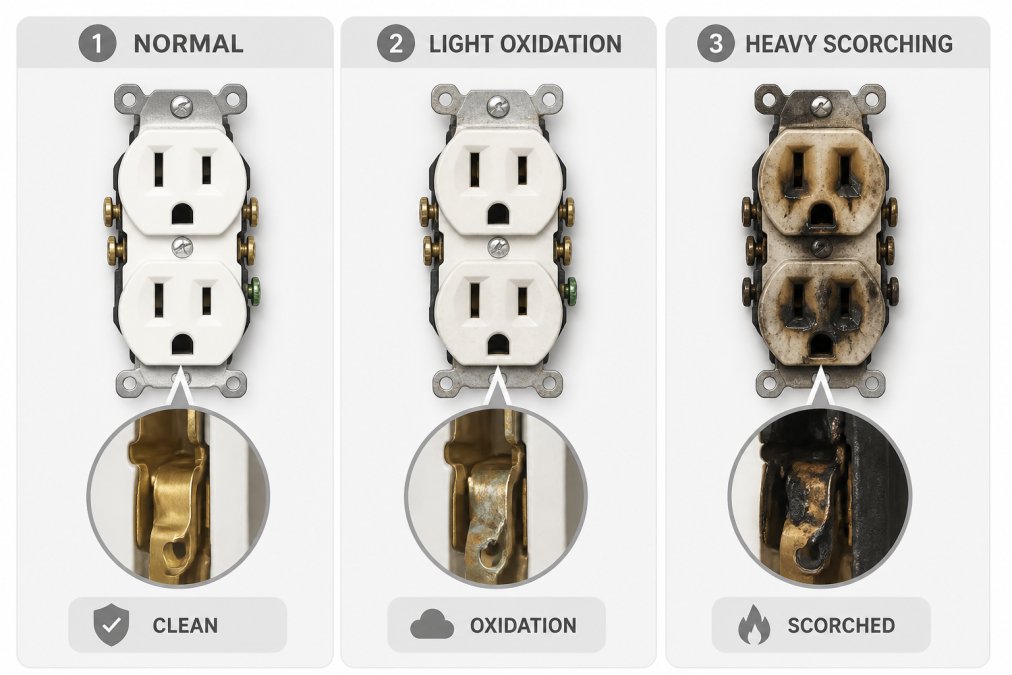
Outlets installed in the 1970s and 1980s have often deteriorated significantly. Plastic casing breaks down, exposing internal contacts to dust and moisture. Oxidation creates resistance on metal surfaces, forcing current to work harder and generating heat and arcing. Older outlets also have looser contact springs; modern outlets hold plugs more securely.
Signs of Faulty Electrical Wiring
Sparking outlets are one sign of faulty wiring, but several other symptoms indicate deeper electrical problems. The challenge is distinguishing between cosmetic wear and genuine safety hazards, a distinction most homeowners struggle with.
Visual Warning Signs and What They Mean
Scorch marks: Light gray or brown discoloration suggests past arcing; fresh black or charred marks indicate active arcing. If the outlet feels warm, stop using it immediately. Pitting and corrosion: Deep pits or greenish oxidation mean contacts are failing. Cracks in the faceplate: Expose contacts to dust and moisture, accelerating oxidation. Melted or warped plastic: Indicates sustained high heat and fire risk, do not use the outlet.
Electrical Behavior Warning Signs
Sparking every time you plug in the same appliance indicates loose contacts or worn outlets; if it happens at multiple outlets, the appliance’s plug prongs may be bent or corroded. Flickering lights when an appliance turns on suggests voltage drop and a circuit near capacity. Outlets that won’t hold plugs securely mean contact springs have lost tension, creating intermittent contact that degrades contacts faster.
Physical Sensations (Handle with Caution)
Tingling when touching an outlet indicates a ground fault, current is leaking where it shouldn’t. This is rare with modern outlets but dangerous. Do not touch the outlet again; call an electrician.
When to Replace Electrical Outlets
Replace outlets when they show clear signs of wear, damage, or safety issues. Don’t wait for a fire to start. Modern outlets are inexpensive compared to the cost of fire damage or electrical injuries.
Replace outlets immediately if:
- Sparking occurs every time you plug something in
- The outlet feels warm or hot during normal use
- You see visible scorching or burn marks
- The outlet won’t hold plugs securely
- Cracks or chips appear in the casing
- You smell burning plastic or electrical odors
- The outlet is damaged from water exposure
Consider replacement if:
- Outlets are more than 30 years old
- You’re upgrading your electrical system
- You’re installing new appliances with higher power demands
- You’re adding outlets to meet modern usage needs
When to Call a Professional Electrician
You should call a professional electrician immediately if you experience sparking outlets or any of the other warning signs mentioned. Electrical work is not a DIY project for most homeowners. Mistakes can cause electrical fires, shocks, or worse.
Call a professional if:
- Outlets spark visibly or repeatedly
- You smell burning or electrical odors
- Outlets feel warm or hot
- Breakers trip repeatedly
- You experience electrical shocks
- Lights flicker or dim unexpectedly
- You’re unsure about your outlet’s safety
A licensed electrician will:
- Test outlets with specialized equipment
- Identify the root cause of sparking
- Check for loose connections throughout your home
- Assess your circuit breaker and panel
- Recommend necessary repairs or upgrades
- Ensure all work meets electrical code
How to Reset Main Electrical Breaker After Outage
If your power goes out, you may need to reset your main electrical breaker. This is a straightforward process that most homeowners can handle safely.
Steps to reset your main breaker:
- Locate your electrical panel (usually in the basement, garage, or utility room)
- Open the panel door carefully
- Look for the main breaker switch at the top or bottom of the panel
- Check if the switch is in the “off” position or middle position
- Flip the switch firmly to the “on” position
- Wait a few seconds and check if power has returned
- If breakers inside the panel are tripped, flip them to “on” as well
Important safety notes:
- Never touch the main breaker terminals directly
- Don’t attempt repairs inside the panel
- If the breaker won’t stay on, stop and call an electrician
- If you’re uncomfortable opening the panel, call a professional
Preventing Electrical Fires and Hazards
Preventing electrical fires starts with proper maintenance and smart usage habits. Most electrical fires are preventable with basic awareness.
Maintenance steps:
- Have outlets inspected every 5-10 years
- Replace outdated outlets proactively
- Keep outlets clean and free from dust
- Avoid covering outlets with furniture or curtains
- Check outlets for signs of damage regularly
- Install GFCI outlets in kitchens and bathrooms
- Use surge protectors for valuable electronics
Usage best practices:
- Don’t overload circuits with multiple high-powered appliances
- Avoid using power strips as permanent solutions
- Unplug appliances when not in use
- Never force plugs into outlets
- Don’t use damaged cords or plugs
- Keep water away from electrical outlets
- Replace frayed or damaged extension cords immediately
Signs to act on immediately:
- Any visible sparking or arcing
- Burning smells near outlets or appliances
- Outlets that feel warm
- Flickering lights or intermittent power
- Breakers that trip repeatedly
Frequently Asked Questions
Should I be worried if my outlet sparks when I plug something in?
A tiny spark lasting a fraction of a second is normal, it’s inductive arcing as electrical current flows through contact points. However, sparks that are bright, loud, repeated, or accompanied by a burning smell indicate a serious problem. If you see sustained arcing, scorching on the faceplate, or smell burning plastic, stop using the outlet immediately and call a professional electrician. Don’t assume it will resolve on its own.
What are the signs of a failing electrical outlet?
Warning signs include visible scorching or discoloration on the outlet faceplate, flickering lights when devices are plugged in, a burning or acrid smell, warm faceplate to the touch, intermittent power loss, and frequent sparks. Outlets that feel loose or won’t grip plugs securely also indicate worn contacts or internal damage. Any combination of these signals means the outlet has faulty wiring or damaged internal components and should be replaced immediately.
How do I know when to replace electrical outlets?
Replace outlets if they show visible damage, produce sparks regularly, feel warm, have discolored faceplates, or won’t hold plugs securely. Outdated two-prong outlets should be upgraded to three-prong grounded outlets or GFCI outlets in kitchens and bathrooms per electrical code. If your home is over 20 years old with original outlets, consider a full inspection, aging outlets lose contact integrity and become fire risks. When in doubt, contact a licensed electrician for assessment.
When should I call a professional electrician for outlet problems?
Call immediately if outlets spark visibly, feel hot, smell burnt, or cause circuit breaker trips. Don’t wait for multiple warning signs, even one is enough. Sparking outlets pose an electrical fire hazard and indicate loose connections, wiring damage, or overloaded circuits. Professional electricians have the tools to diagnose the root cause, whether it’s worn contacts, loose wiring, or circuit overload, and can safely replace outlets or upgrade your electrical system to prevent future hazards.
