


Table of Contents
- What Constant Light Flickering Actually Tells You
- The Most Common Reasons Your Lights Flicker Constantly
- Loose Light Bulbs and Socket Contact Problems
- Faulty Switches, Dimmers, and Wattage Mismatch
- Overloaded Circuits and Voltage Fluctuations
- Outdated Electrical Panels and Breakers
- LED-Specific Flickering Issues and Driver Problems
- Smart Home Device Interference
- Appliance-Specific Triggers and Electrical Load Spikes
- Signs of Loose Electrical Wiring in Your House
- How to Diagnose Flickering Lights: A Step-by-Step Approach
- How to Reset Your Main Electrical Breaker After an Outage
- When to Call an Electrician for Flickering Lights
- Frequently Asked Questions
Last Updated: August 27, 2026
What Constant Light Flickering Actually Tells You
If your lights flicker constantly, you’re dealing with more than an annoyance, you may have a developing electrical safety hazard. Constant flickering is your home’s electrical system sending a signal that points to something minor or something that warrants immediate action.
Lights flicker constantly when there is an interruption or instability in the electrical current reaching the fixture. That interruption can originate anywhere from the bulb itself to the utility service drop outside your home.
Occasional Flicker vs. Constant Flicker: Why the Difference Matters
A single flicker when a large appliance kicks on is normal. Constant flickering, repeated, rhythmic, or ongoing flicker without a clear trigger, is categorically different. Occasional flicker points to load-related voltage fluctuation. Constant flicker points to a connection problem, compatibility issue, or circuit fault. The distinction matters because one is benign and the other can escalate to an arc fault, tripped breaker, or fire.
Safety Warning Hierarchy: Low, Medium, and High Risk Causes
Not every flicker carries the same risk:
| Risk Level | Cause | Action Required |
|---|---|---|
| Low | Loose bulb, LED driver incompatibility, dimmer mismatch | DIY fix, replace component |
| Medium | Overloaded circuit, faulty switch, voltage fluctuation | Reduce load, monitor; call if persists |
| High | Loose neutral connection, loose wiring at panel, outdated breaker | Stop using circuit, call licensed electrician |
High-risk causes involve loose or degraded connections carrying live current, where arc faults originate. Arc faults are a leading cause of residential electrical fires according to the U.S. Fire Administration electrical fire data.
The Most Common Reasons Your Lights Flicker Constantly
Most flickering problems fall into one of seven categories.
Loose Light Bulbs and Socket Contact Problems
A bulb that isn’t fully seated creates intermittent socket contact, producing rhythmic flicker. Turn off the fixture, let it cool, and reseat the bulb firmly. If the socket contact is corroded or bent, the socket needs replacement. If flicker continues after reseating, move on.
Faulty Switches, Dimmers, and Wattage Mismatch
Dimmer switch compatibility is a major cause of constant LED flickering. Most older dimmers were designed for incandescent bulbs and can’t regulate the low wattage of LEDs without producing a strobe effect. Replace the dimmer with one rated for LED loads, checking the minimum wattage spec against your LED bulbs’ total wattage.
A faulty switch with worn contact produces similar symptoms. If flickering is isolated to one fixture and the switch feels loose or makes noise when toggled, the switch is the culprit.
Overloaded Circuits and Voltage Fluctuations
If lights dim and flicker every time a large appliance starts its cycle, you’re seeing voltage drop from an overloaded circuit or insufficient amperage. Voltage fluctuations at startup are normal, but severe drops affecting other circuits or persistent flicker beyond startup indicate an undersized circuit, failing appliance motor, or loose connection.
If lights throughout your entire home flicker simultaneously when an appliance starts, that’s a main service panel or utility service drop issue. Whole-house flickering under load is a medium-to-high risk scenario warranting professional assessment.
Outdated Electrical Panels and Breakers
Older electrical panels were designed for lower loads than modern households demand. A failing circuit breaker may allow intermittent current flow producing flickering, especially under load. Panels predating current National Electrical Code standards maintained by NFPA may not meet modern safety standards. If your home has a 100-amp panel running central AC and multiple large appliances, the panel’s capacity is likely the bottleneck.
LED-Specific Flickering Issues and Driver Problems
LED bulbs flicker when the internal LED driver, which converts AC power to DC voltage, fails or degrades. A failing driver produces high-frequency flicker sometimes visible as eye strain or headaches. LED bulbs are sensitive to voltage fluctuation in ways incandescent bulbs are not. If flickering occurs only with LED bulbs, swap one fixture to a different LED brand. If flicker stops, the original bulb’s driver was the problem.
Smart Home Device Interference
Smart switches, dimmers, and hubs communicate over your home’s electrical wiring using protocols that introduce electrical noise onto circuits, manifesting as flickering in LED fixtures. If flickering started after installing smart devices, test by temporarily replacing the smart switch with a standard switch. If flicker stops, the smart device was introducing interference. Check manufacturer compatibility lists before purchasing smart dimmers.
Appliance-Specific Triggers and Electrical Load Spikes
HVAC compressors, refrigerator compressors, and well pumps pull several times their running amperage at startup, causing momentary voltage drop and flicker. If flicker correlates with a specific appliance cycling on, the appliance may be drawing excess current due to a failing motor or capacitor. An HVAC technician or electrician can measure startup amperage to confirm.
Signs of Loose Electrical Wiring in Your House
Loose wiring is the most serious cause of constant flickering. Loose electrical wiring occurs when wire connections at outlets, switches, junction boxes, or the electrical panel have worked free from terminals, creating intermittent contact and resistance heating.
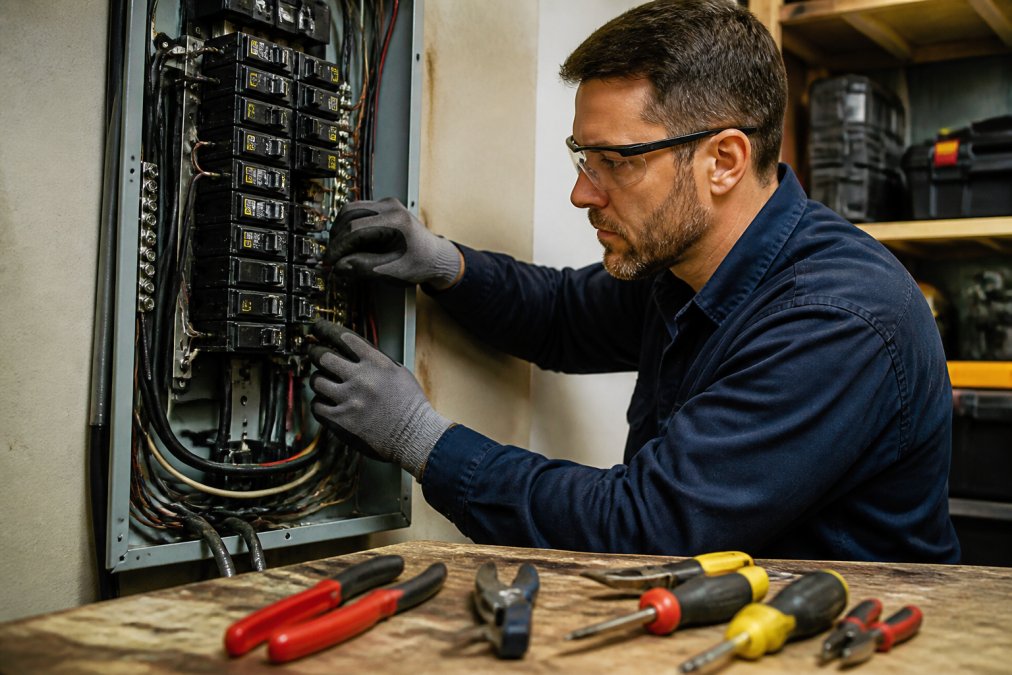
Watch for these indicators:
- Outlets or switches that feel warm to the touch
- Burning smell near outlets, switches, or the panel
- Discoloration or scorch marks around outlet covers
- Breakers that trip repeatedly without obvious overload
- Flickering affecting multiple rooms or circuits simultaneously
Any combination of flickering with burning smell is a fire risk. Turn off the affected circuit and call a licensed electrician before using it again.
Loose Neutral Connection vs. Loose Terminal at the Panel
A loose neutral connection at an outlet or junction box typically affects one circuit, with flicker worsening when other loads are active. A loose neutral at the main service panel is far more dangerous, the neutral is the return path for current from every circuit. A loose neutral terminal can cause voltage fluctuations across multiple circuits and drive voltage above safe levels, creating shock and fire hazards.
According to the Electrical Safety Foundation International’s home safety resources, loose connections are among the most common causes of residential electrical fires. This requires a licensed electrician with tools to safely de-energize and retorque the connection.
How to Diagnose Flickering Lights: A Step-by-Step Approach
Diagnosing constant flickering follows a logical sequence, starting with least invasive checks.
Step 1: Identify the Pattern and Scope
Observe the flicker carefully:
- Is it one fixture, one room, or the whole house?
- Does it correlate with an appliance cycling on or off?
- Is it constant, or does it come and go?
- Did it start after a change, new bulbs, smart devices, recent storm?
Whole-house flickering points to the panel or service drop. Single-fixture flickering points to the bulb, socket, or switch. Appliance-correlated flickering points to circuit load or the appliance.
Step 2: Check the Obvious Causes First
Work through low-risk causes:
- Reseat all bulbs in the affected fixture
- Swap the bulb for a known-good replacement
- Check if the dimmer is LED-compatible
- Verify the bulb’s wattage is within the fixture’s rating
- Test the fixture on a different circuit if possible
If flickering stops after any of these steps, you’ve found the cause.
Step 3: Test Circuits and Switches
If obvious fixes don’t resolve it:
- Toggle the switch repeatedly; a scratchy or inconsistent feel indicates worn contacts
- Check the circuit breaker and reset it once to rule out a partial trip
- Plug a lamp into nearby outlets on the same circuit to determine if the issue is fixture-specific or circuit-wide
- Note whether flicker worsens when other devices on the circuit are active
A non-contact voltage tester costs under $20 and lets you safely confirm whether voltage is reaching a fixture. It won’t diagnose a loose connection, but it can rule out a dead circuit leg.
Step 4: Know When DIY Stops and Professional Work Begins
DIY troubleshooting is appropriate for bulb replacements, dimmer swaps, and switch replacements. It stops being appropriate when looking at wiring inside walls, connections at the electrical panel, or anything involving the main service entrance. If the fix requires opening the panel or working with wiring not controlled by a switch or outlet, call a licensed electrician.
How to Reset Your Main Electrical Breaker After an Outage
Resetting your main electrical breaker after an outage is straightforward but requires care.
What you’ll need: A flashlight, dry hands, rubber-soled shoes.
- Locate your main service panel. It’s typically in a utility room, garage, or exterior wall.
- Turn off all branch circuit breakers first. Work from top to bottom, switching each breaker to OFF. This prevents a surge when power is restored.
- Locate the main breaker. It’s the large double-pole breaker at the top, usually rated 100A, 150A, or 200A.
- Reset the main breaker. If tripped, it will be in a middle position. Push it firmly to OFF first, then back to ON.
- Restore branch circuits one at a time. Turn each breaker back to ON, waiting a few seconds between each.
- Monitor for immediate re-tripping. If a breaker trips again immediately, leave it off and investigate before resetting.
Never reset a breaker that trips repeatedly. A breaker that won’t stay on is protecting you from a fault. Forcing it to stay on bypasses that protection and creates a fire risk.
If the main breaker trips during normal operation, that indicates the panel is drawing more current than its rated amperage or there is a circuit fault. Either scenario warrants professional inspection.
When to Call an Electrician for Flickering Lights
Knowing when to stop troubleshooting and call is the most important part of this guide.
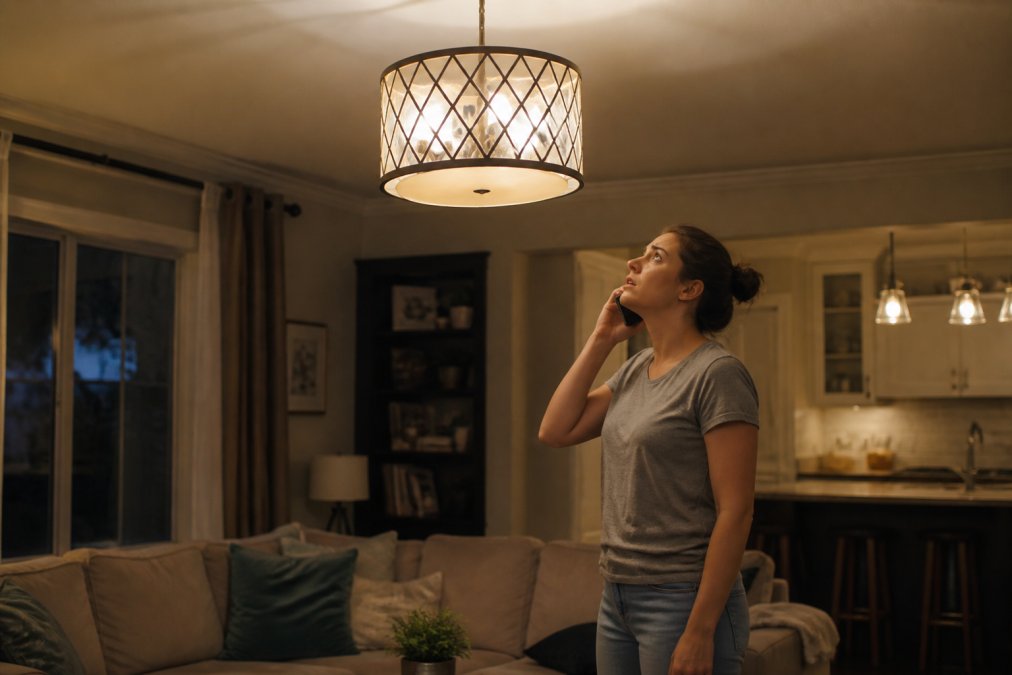
Call a licensed electrician immediately if you observe:
- Flickering accompanied by burning smell or visible scorch marks
- Flickering affecting multiple rooms or the entire house
- Breakers that trip repeatedly or won’t reset
- Warm or discolored outlet and switch covers
- Flickering that started after lightning strike or power surge
- An older home with a panel you’ve never had inspected
Voltedge Electrical provides licensed and insured electricians. For homes with older panels, professional inspection identifies the flicker source and establishes a baseline for overall system condition. As noted in the Consumer Product Safety Commission’s electrical safety guidance, aging electrical systems disproportionately contribute to residential fire risk, and many show early warning signs like flickering well before failure occurs.
Don’t wait for a breaker to fail or a connection to arc. If your lights flicker constantly and simple fixes haven’t resolved it, the cost of professional diagnosis is far less than the alternative.
Constant flickering is easy to dismiss until it isn’t. If you’ve worked through basic checks and your lights still flicker constantly, the wiring or panel needs professional assessment. Voltedge Electrical provides licensed, insured electrical inspections, panel assessments, and emergency services for residential and commercial properties. Our team brings diagnostic tools and code knowledge to find and fix the problem correctly the first time. Inquire Now to schedule an assessment and get your electrical system back to safe, stable operation.
Frequently Asked Questions
Q: Can flickering lights be a fire hazard?
A: Yes. Lights that flicker constantly can signal arc faults or loose wiring connections, both of which generate heat and can ignite surrounding materials over time. The National Electrical Code (NEC) requires arc fault circuit interrupter (AFCI) protection in bedrooms and living areas for this reason. If your lights flicker alongside a burning smell, warm outlets, or tripped breakers, treat it as a potential fire hazard and contact a licensed electrician right away rather than waiting to see if it resolves.
Q: Does a loose neutral wire cause flickering lights?
A: A loose neutral connection is one of the most serious causes of lights that flicker constantly across multiple rooms. The neutral wire completes the circuit and keeps voltage balanced. When it is loose at the panel or at a junction box, voltage fluctuates unpredictably, which can damage appliances and create an arc fault risk. Unlike a loose bulb you can fix yourself, a loose neutral at the main service panel requires a licensed electrician to diagnose and repair safely.
Q: How do I know if my flickering lights are an emergency?
A: Treat flickering lights as an emergency when they occur house-wide, are accompanied by a burning smell or buzzing sound, cause breakers to trip repeatedly, or started immediately after a power surge or storm. These patterns point to issues at the main service panel, the utility service drop, or loose wiring that carries a real risk of arc fault or fire. Call a licensed electrician immediately rather than resetting breakers and hoping the problem clears.
Q: Why do my lights flicker only when I run large appliances?
A: Large appliances like HVAC units, refrigerators, and washing machines draw a high electrical load when their motors start up. That startup surge causes a brief voltage drop on the circuit, which dims or flickers lights sharing the same panel. Occasional, very brief flickers when an appliance kicks on are generally normal. If the flicker lasts more than a second or happens on circuits throughout the house, the panel amperage or wiring may be undersized for the electrical load and should be evaluated by a licensed electrician.
This article was written using GrandRanker
