


Table of Contents
- Step 1: Immediate Safety and Emergency Response After Power Loss
- Step 2: Isolate the Source of the Power Loss in Business Operations
- Step 3: Protect Sensitive Equipment from Power Surges and Voltage Fluctuations
- Step 4: Follow a Commercial Electrical Troubleshooting Checklist
- Step 5: Recognize the Signs of a Failing Electrical Panel
- Step 6: Electrical Code Compliance for Businesses During Recovery
- Step 7: Restore Operations and Build Business Resilience
- Frequently Asked Questions
Last Updated: September 13, 2026
Step 1: Immediate Safety and Emergency Response After Power Loss
Troubleshooting power loss in business starts with one rule: get people safe before you touch anything electrical. When the lights die, your first move is not the breaker panel. It is confirming that every employee can exit the building without tripping, panicking, or walking into a live hazard.
Start with these actions, in this order:
- Account for every person on site and move them toward natural light or marked exits.
- Kill non-essential equipment at the switch, not by yanking cords.
- Check for smoke, burning smells, or scorch marks before approaching any panel.
- Call your utility provider to report the outage and get a restoration timeline.
- Keep flashlights on hand; never use candles near commercial equipment.
The OSHA electrical safety guidance treats de-energized equipment verification as a core safety step, not an optional one.
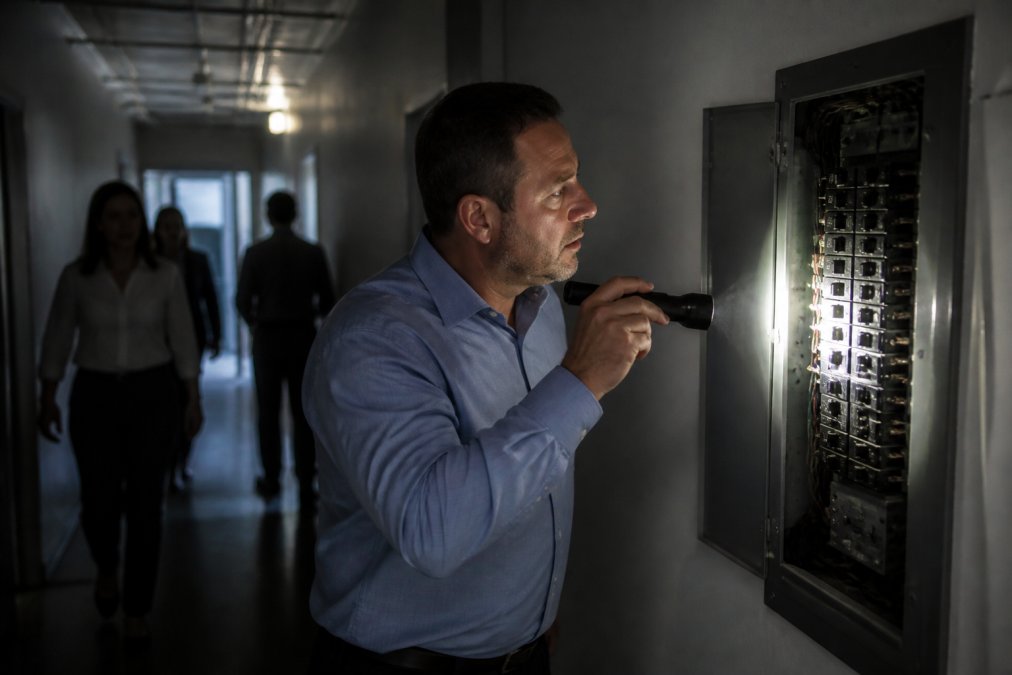
Never reset a breaker you did not personally turn off, and never reset the same breaker twice. A breaker that trips again is telling you a fault exists. Forcing it back on can arc, weld the contacts, or start a fire inside the panel.
Step 2: Isolate the Source of the Power Loss in Business Operations
Determining whether the problem sits with the grid or with your own building is the fastest way to stop guessing. Look out the window first. If neighboring businesses are dark too, the fault is upstream and your job is damage control, not repair. Once you confirm the issue is internal, shifting your focus toward reducing business IT downtime ensures that your systems remain resilient against the inevitable fluctuations of the local power supply.
If you are the only dark building on the block, the issue is inside your service entrance, main panel, or a downstream circuit. Walk the panel and note which breakers are tripped, which are warm, and whether the main breaker itself has tripped. A tripped main points to an overload or a serious fault; a single tripped branch circuit usually points to one piece of equipment.
A common mistake is assuming a partial outage means “half the power is out.” In practice, a partial outage often means one leg of your service has failed, which can damage three-phase motors and compressors if you keep running them.
Step 3: Protect Sensitive Equipment from Power Surges and Voltage Fluctuations
Sensitive electronics rarely die from the outage itself. They die when power returns. Restoration is not a clean switch-flip. Utilities re-energize feeders through a sequence of recloser operations, and each attempt can send a spike, a sag, or a brief single-phase condition down the service wires. Equipment that was merely asleep can wake up fried, and a server that loses power mid-write can corrupt a database that costs far more to rebuild than the hardware it ran on.
What actually happens during restoration
- Recloser cycling. A recloser is an automatic breaker that tries to clear a fault by re-energizing the line a few times in quick succession. Your building may see power flicker on and off three or four times in under a minute. Each cycle is a surge event.
- Voltage sag on restart. When a whole neighborhood comes back at once, voltage can dip well below nominal for several seconds. Motors draw higher current at low voltage, which is why compressors and elevators are the first things to trip a main.
- Single-phasing. On three-phase service, one leg can restore before the others. Running a three-phase motor on two legs overheats the windings in minutes. If your panel shows one phase live and two dead, shut the three-phase loads down until all legs are confirmed.
- Neutral and ground disturbance. A damaged service neutral can push voltage onto the ground path and into sensitive electronics. If lights brighten noticeably when a large load starts, that is a symptom worth an electrician’s attention.
Protection layers worth having in place
- Uninterruptible power supply (UPS) units on servers, point-of-sale terminals, phone systems, and any device holding unsaved state. Size them for the load, not the outlet count.
- Whole-building surge protection at the service entrance to clamp large spikes before they reach branch circuits. This is the layer that protects equipment you cannot put a strip on.
- Individual surge strips as a last line of defense for workstations and network gear. Replace them after a significant event; many lose effectiveness after a single large hit.
- Load management discipline. Bring systems back in stages instead of all at once. A cold-start surge across every load simultaneously can trip a main that was never actually overloaded.
Data integrity during the on-off cycle
A UPS buys you minutes, not hours. Use them. Configure servers to shut down cleanly when battery reaches a set threshold, and enable journaling or write-ahead logging on databases so an abrupt loss does not leave a half-written transaction. Network-attached storage and virtual machines should be set to quiesce before the UPS drains. If you run on-site backups, confirm the backup job completed before the outage; a backup that was mid-write when power dropped is not a backup.
Bring your largest motor loads online last. HVAC compressors, refrigeration, and elevators draw heavy inrush current. If they start simultaneously with everything else, you can trip a main breaker that was never actually overloaded.
Do not assume a flicker means the event is over. Wait for stable voltage on all phases before re-energizing sensitive loads. A second recloser cycle after you have already brought systems up is how equipment gets damaged twice.
Step 4: Follow a Commercial Electrical Troubleshooting Checklist
A commercial electrical troubleshooting checklist turns a chaotic morning into a repeatable process. Print it, tape it inside the panel room, and assign one person to own it.
- Confirm all personnel are accounted for and safe
- Report the outage to the utility provider and log the reference number
- Verify whether the outage is grid-wide or building-specific
- Inspect the main panel for tripped breakers, heat, or discoloration
- Check the service entrance, weather head, and service wires for visible damage
- Confirm UPS and surge protection status
- Shut down sensitive equipment that is not on backup power
- Document everything with timestamps and photos
- Restore loads in stages once power is stable
- Schedule an inspection if anything looks burned, loose, or warm
| Problem | Likely Cause | First Fix |
|---|---|---|
| Whole building dark | Grid outage or main breaker | Call utility, check main |
| One area dark | Tripped branch circuit | Isolate load, reset once |
| Lights flicker | Voltage fluctuation | Log it, schedule inspection |
| Burning smell at panel | Overheating connection | Cut power, call an electrician |
Step 5: Recognize the Signs of a Failing Electrical Panel
Recognizing the signs of a failing electrical panel early prevents the outage from becoming a fire. Panels do not fail overnight; they warn you for months.
Watch for breakers that trip repeatedly under normal load, a panel that feels warm to the touch, a faint burning or fishy smell near the box, discolored or scorched breaker faces, and lights that dim when a large appliance kicks on. Buzzing or crackling from inside the panel is an immediate call-an-electrician signal, not a wait-and-see.
Older panels are the usual suspects. If your building still runs a 100-amp panel from decades ago while carrying modern loads like EV chargers, commercial kitchen equipment, or added HVAC, the panel is likely running past its design limits.
A panel that has been hot enough to discolor breakers has already sustained internal damage. Resetting it and hoping for the best risks an arc fault. Have it inspected before re-energizing.
Step 6: Electrical Code Compliance for Businesses During Recovery
Electrical code compliance for businesses is not paperwork you handle after the fact. Any repair, replacement, or re-energizing work has to meet current code, and insurers and inspectors will check.
Two points matter most during recovery. First, repairs to damaged service equipment generally require permits and inspection, so a licensed electrician should perform and document the work. Second, if you are upgrading a panel or adding circuits while you are already down, that is the moment to bring the system up to current standards rather than restoring an outdated setup.
The NFPA 70 National Electrical Code overview sets the baseline most jurisdictions adopt, and local amendments can be stricter. Confirm what your authority having jurisdiction requires before work begins.
Step 7: Restore Operations and Build Business Resilience
Restoring operations is a staged process, not a single switch. Bring up critical infrastructure first: servers, security systems, refrigeration, and anything holding perishable inventory. Then general office loads. Then heavy mechanical systems. Confirm stable voltage on all phases before each stage, and log the time each system came back so you have a record of downtime by function.
Post-outage audit checklist
Before you declare recovery complete, walk the building and confirm:
- Every panel breaker is in its intended position and none are warm to the touch
- No discoloration, scorch marks, or burning smell at panels, receptacles, or equipment cords
- UPS units passed a self-test and batteries are not swollen or hot
- Servers, switches, and storage came back without RAID or filesystem errors
- HVAC, refrigeration, and elevators ran a full cycle without tripping
- Security cameras, access control, and alarm panels are online and reporting
- Phone system and point-of-sale terminals processed a test transaction
- Any equipment that behaved abnormally is tagged and scheduled for inspection
Hardware can survive an outage and still be degraded. A surge that does not kill a power supply can shorten its life, and a motor that ran single-phase for a few minutes may fail weeks later. Document what you saw so a future failure can be traced back.
Legal and contractual recourse
Most guides stop at safety. The financial side is where sustained outages actually hurt, and it is where businesses leave money on the table.
- Review your utility tariff and service agreement. Utilities are generally regulated on reliability, and some tariffs provide for credits or adjustments when outages exceed defined thresholds. The terms are usually published by your state public utility commission, not handed to you.
- Check your service level agreements (SLAs). If your internet, cloud, colocation, or managed services provider failed during the outage, the SLA may entitle you to service credits. These are almost always claim-based: you must notify the provider within a defined window, often 30 days, and provide outage evidence. Miss the window and the credit is gone.
- Read your commercial property and business interruption coverage. Business interruption coverage typically responds to direct physical loss, and whether a utility outage triggers it depends on endorsements such as utility service interruption or off-premises power. Notify your carrier promptly and keep a running loss log.
- Document losses as they happen. Revenue lost per hour, perishable inventory discarded, overtime paid, temporary generator rental, and customer credits issued are all recoverable categories under the right policy or contract. Timestamps, photos, utility reference numbers, and vendor invoices are the evidence that makes a claim credible.
- Watch your lease and vendor contracts. Some commercial leases allocate responsibility for utility interruptions, and some customer contracts contain uptime commitments you may have just breached. Knowing your exposure early lets you communicate before a customer does.
Building resilience before the next event
Business resilience comes from what you build before the next outage. A written emergency response plan, a tested backup generator or battery system, preventative maintenance on panels and connections, and a clear restoration timeline for staff all reduce operational downtime when the grid fails again. Test the generator under load, not just at startup. Confirm transfer switches operate. Keep fuel fresh.
Remote visibility helps too. Network monitoring tools and cloud-based communication let you confirm system status and coordinate staff even when you are not on site, which shortens the window between “power is back” and “we are open.” A documented plan also speeds insurance and SLA claims, because you can show what failed, when, and what it cost.
FEMA business continuity planning resources outlines how a documented plan speeds recovery after disruptive events.
Frequently Asked Questions
What are the first steps to take when a business loses power?
Start by checking for smoke, burning smells, or sparking near your electrical panel. If you see any, evacuate and call 911. If it is safe, confirm whether neighboring businesses also lost power; if they did, the issue is likely with your utility provider, so report the outage. If only your building is affected, turn off your main breaker and call a licensed electrician. Document the time and conditions for insurance claims, and activate your emergency response plan to protect equipment and people.
How do I determine if a power outage is internal or utility-related?
Look at your surroundings. If nearby buildings or streetlights are also dark, the outage is utility-related. Check your main breaker: if it is tripped, reset it once. If it trips again immediately, you have an internal fault. A licensed electrician can test your service entrance and meter to confirm. Utility-related outages should be reported to your provider, while internal faults require an electrician to diagnose issues like a failing panel or damaged wiring.
What are the common causes of electrical failure in commercial buildings?
Common causes include overloaded circuits, outdated or failing electrical panels, loose connections, damaged wiring, and power surges from utility switching or storms. In older commercial buildings, corrosion and rodent damage are frequent culprits. Preventative maintenance, such as thermal imaging and tightening connections, can catch these issues early. If your building has a 100-amp panel and you have added equipment over the years, it may be time for an upgrade to handle the load.
How can I protect sensitive equipment during a power surge or outage?
Install uninterruptible power supplies (UPS) for critical devices like servers, point-of-sale systems, and security cameras. Use whole-building surge protection at your service entrance to divert large surges. For extended outages, a backup generator with an automatic transfer switch keeps operations running. After power returns, wait a few minutes before turning equipment back on to avoid voltage fluctuations. Regular preventative maintenance and a risk assessment can identify vulnerable equipment and improve business resilience.
