


Table of Contents
- Why Outdated Electrical Wiring Is a Hidden Hazard
- 8 Warning Signs of Outdated Electrical Wiring to Never Ignore
- Frequent Circuit Breaker Trips and Blown Fuses
- Flickering or Dimming Lights
- Burning Smells, Buzzing, and Crackling Sounds
- Discolored or Scorched Outlets and Switches
- Two-Prong Outlets and Missing Grounding
- No GFCI Protection in Wet Areas
- Knob-and-Tube or Aluminum Wiring
- An Overloaded Electrical Panel or Fuse Box
- How to Identify Old Wiring Materials Yourself
- Electrical Safety Inspection Checklist for Homeowners
- How Much Does Rewiring a House Cost?
- Insurance, DIY Limits, and When to Call a Licensed Electrician
- Conclusion: Don’t Wait for a Spark to Act
- Frequently Asked Questions
Last Updated: September 17, 2026
Why Outdated Electrical Wiring Is a Hidden Hazard
The most dangerous electrical problems in a home are the ones you cannot see. Outdated electrical wiring is a leading cause of residential electrical fires, yet it rarely announces itself until something fails. At Voltedge Electrical, we inspect older South Florida homes.
Outdated wiring is not just an inconvenience. It is a fire risk that compounds over time. The signs below are your early warning system.
8 Warning Signs of Outdated Electrical Wiring to Never Ignore
These eight signs range from nuisance trips to genuine fire hazards. Treat any one as a reason to schedule an inspection.
| Sign | What It Usually Means | Urgency |
|---|---|---|
| Frequent breaker trips | Overloaded circuit or failing breaker | Moderate |
| Flickering or dimming lights | Loose connection or undersized wiring | Moderate |
| Burning smells or buzzing | Overheating at a connection point | High |
| Scorched outlets or switches | Heat damage from arcing or overload | High |
| Two-prong outlets | No grounding path | Moderate |
| No GFCI in wet areas | Shock risk near water | High |
| Knob-and-tube or aluminum wiring | Aged or incompatible materials | High |
| Overloaded panel or fuse box | Capacity exceeded | High |
Frequent Circuit Breaker Trips and Blown Fuses
A breaker that trips occasionally is normal; one that trips repeatedly signals a problem. The usual cause is an overloaded circuit, too many high-draw devices on one run, because older wiring was sized for far fewer appliances. If it trips with minimal load, the breaker may be faulty or the wiring may have a short.
Flickering or Dimming Lights
Lights that flicker when an appliance kicks on point to a voltage drop: the circuit cannot supply enough current for both. Loose connections at outlets, switches, or the panel cause the same symptom.
Burning Smells, Buzzing, and Crackling Sounds
Any burning smell near an outlet, switch, or panel is an emergency. Buzzing or crackling indicates arcing, where current jumps a gap and generates heat, a primary mechanism behind electrical fires. Turn off the circuit at the breaker, call an electrician immediately, and do not use the outlet again until inspected.
A burning smell or crackling sound at an outlet means arcing is likely already happening inside the wall. Every additional use increases the chance of ignition. Cut power at the breaker and call for service.
Discolored or Scorched Outlets and Switches
Brown or black discoloration around an outlet faceplate means heat has been generated there, usually from a loose connection, an undersized wire, or a device drawing more current than the circuit can handle. Replacing the outlet does not fix the underlying problem, the wiring feeding it needs inspection, and damage often extends into the junction box behind the wall.
Two-Prong Outlets and Missing Grounding
Two-prong outlets have no grounding conductor. Without that safe path for fault current, a fault can energize the metal chassis of an appliance, a shock hazard. Installing three-prong outlets without running a ground wire creates a false sense of safety; a proper fix means running a new grounded circuit or, in specific cases, installing a GFCI as a code-acceptable alternative.
No GFCI Protection in Wet Areas
GFCI stands for ground fault circuit interrupter, a device that cuts power when it detects a current imbalance indicating a ground fault. The U.S. Consumer Product Safety Commission guidance on GFCIs explains that GFCIs are required in areas where water and electricity can meet, including kitchens, bathrooms, garages, and outdoors.
Knob-and-Tube or Aluminum Wiring
Knob-and-tube wiring routed conductors through framing on ceramic knobs and tubes, with no grounding conductor and insulation that becomes brittle with age. Aluminum wiring, common in 1960s and 1970s homes, expands and contracts differently than copper, loosening connections over time.
An Overloaded Electrical Panel or Fuse Box
A panel that is full, warm to the touch, or fitted with mismatched breakers is a red flag. Fuse boxes carry their own risks: oversized fuses installed to stop blowing defeat the protection entirely.
How to Identify Old Wiring Materials Yourself
Most articles tell you to “look for old wiring” without telling you what old wiring actually looks like. You can identify the major wiring types visually at an outlet, switch, or panel without opening walls, but anything beyond removing a faceplate should be handled by a licensed electrician.
What Each Wiring Type Looks Like
Knob-and-tube (roughly 1880s-1940s). Two separate conductors, one black, one white, run individually through framing, supported by ceramic knobs and passing through ceramic tubes where they cross wood. There is no ground wire, and the cloth or rubber insulation has usually hardened and may flake when touched. White ceramic spools in an attic or basement mean knob-and-tube.
Quick Reference Table
| What You See | Likely Type | Era | Ground? |
|---|---|---|---|
| Ceramic knobs, separate wires, cloth insulation | Knob-and-tube | 1880s-1940s | No |
| Braided cloth outer jacket, paper wrap | Cloth-wrapped cable | 1920s-1950s | Usually no |
| Spiral metal jacket | Armored cable (BX) | 1930s-1950s | Sometimes (unreliable) |
| Silver-colored conductors | Aluminum branch wiring | 1965-1973 | Yes, but connection risk |
| Smooth plastic sheath, bare copper ground | NM-B (Romex) | 1980s-present | Yes |
What You Can Safely Check vs. What You Cannot
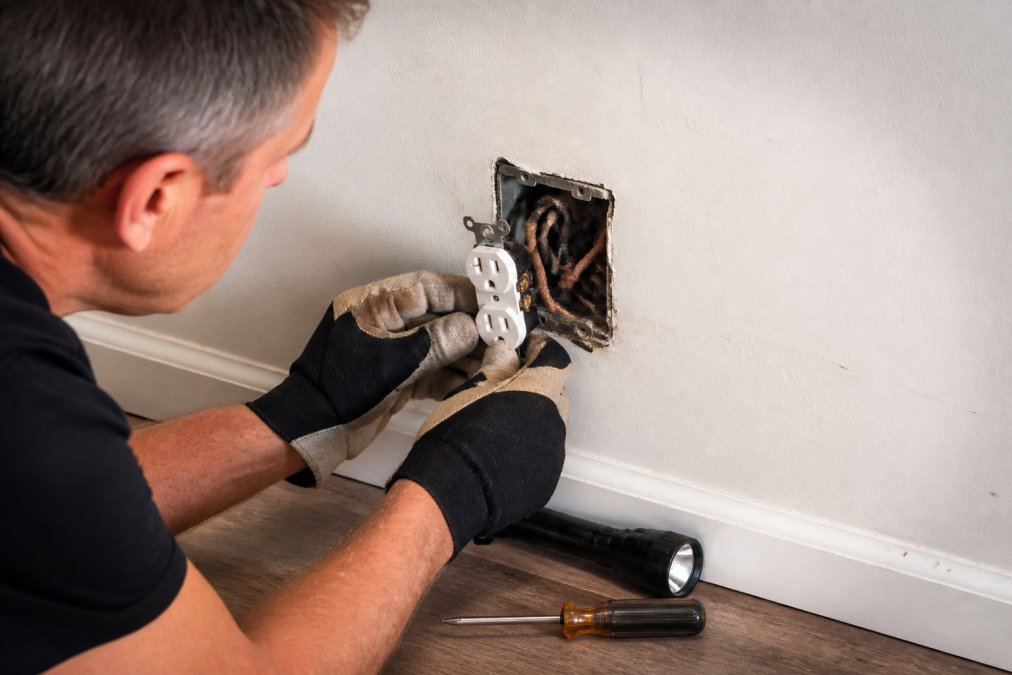
A homeowner can safely: turn off a breaker, remove an outlet or switch cover plate, inspect wire color and jacket material with a flashlight, and photograph what they see for an electrician.
Check the panel first. Breakers indicate a modern panel; screw-in fuses indicate an older one. That single observation tells you a lot about the era of the wiring behind the walls.
Cloth and rubber insulation on knob-and-tube and early cable becomes brittle with age. Simply disturbing it during an inspection can crack it and expose live conductors. If the insulation flakes when you look at it, do not touch it, call an electrician.
Electrical Safety Inspection Checklist for Homeowners
Use this checklist to document what you find before calling a professional. It gives the electrician a head start and helps you describe the problem accurately.
- Note the panel type: breakers or fuses
- Record the main amperage rating on the panel label
- Test every GFCI outlet in wet areas
- Check for warm faceplates on outlets and switches
- Listen for buzzing at outlets, switches, and the panel
- Note any discoloration or scorch marks
- Count two-prong outlets still in use
- Identify visible wiring material at one or two outlets
- List any breakers that trip repeatedly
- Document flickering lights and when they occur
How Much Does Rewiring a House Cost?
Rewiring is one of the largest electrical projects a homeowner can undertake, and cost varies widely, but that does not mean you should accept a vague answer. Here is how the numbers break down.
What Drives the Cost
- Square footage and number of circuits. A larger home needs more circuits, more wire, and more labor hours.
- Full vs. partial rewire. Replacing every circuit is far more expensive than replacing the two or three circuits that actually show problems.
- Wall access. Finished walls mean cutting and patching drywall. Unfinished basements, attics, and crawlspaces reduce labor significantly.
- Wiring type being removed. Knob-and-tube and aluminum wiring take longer to remove and replace than modern cable because of how they are routed and terminated.
- Panel condition. If the panel also needs an upgrade, that is a separate line item.
- Permits and inspection. Most jurisdictions require a permit for a rewire, and the cost is passed through.
- Number of devices. Every outlet, switch, and fixture is a termination point and adds labor.
Partial Rewire vs. Full Rewire
A partial rewire targets specific circuits, typically the kitchen, bathrooms, laundry, and any circuit showing heat damage or repeated trips. It is right when the rest of the system is sound and the problem is localized. A full rewire replaces every circuit, usually recommended when knob-and-tube wiring runs throughout, when aluminum branch wiring is present, or when the system has failed inspection.
The ROI Question
Rewiring is not a cosmetic upgrade, so it does not return value the way a kitchen remodel does. What it returns is insurability and safety. Many insurers will not write or renew a policy on a home with knob-and-tube or aluminum branch wiring until it is addressed. The “return” is keeping coverage and selling to a buyer whose lender requires a clean inspection, a documented rewire with permits and inspection records removes a major negotiating point.
How to Get a Real Number
Because pricing depends on your home’s specifics, the only reliable figure comes from an on-site assessment. A qualified electrician will walk the home, count circuits and devices, check the panel, and note wall access before quoting. Be wary of any quote given over the phone without an inspection.
Ask for a quote that separates labor, materials, panel work, and drywall repair. A single lump-sum number tells you nothing about where the cost is going.
Insurance, DIY Limits, and When to Call a Licensed Electrician
Homeowners insurance policies often ask about the age and condition of the electrical system, and some insurers require an inspection or upgrade before issuing or renewing coverage on an older home. Undisclosed outdated electrical wiring that causes a fire can complicate a claim.
Conclusion: Don’t Wait for a Spark to Act
Every sign in this guide is a message from your electrical system. Some are minor; some mean a fire is waiting to happen behind your walls. The risk of waiting is that the failure point stays invisible until it ignites.
Frequently Asked Questions
What are the most common signs of outdated electrical wiring?
The most reliable signs include frequent circuit breaker trips, flickering or dimming lights, buzzing or crackling sounds, burning smells, and discolored or scorched outlets. Two-prong outlets, missing GFCI protection in kitchens and bathrooms, and knob-and-tube or aluminum wiring are also strong indicators. If you notice more than one of these, schedule an electrical safety inspection before the problem escalates.
Is it dangerous to live in a house with old wiring?
Yes. Aged wiring, especially knob-and-tube or aluminum, can overheat, short circuit, or spark inside walls. That raises the risk of an electrical fire and can expose occupants to shock. Insurance carriers may also refuse coverage or deny claims tied to known outdated systems. A licensed electrician can assess the condition and recommend whether repair or replacement is needed.
How much does rewiring a house cost, and what affects the price?
Rewiring costs vary widely based on square footage, number of circuits, wall access, and whether the panel also needs an upgrade. Homes with plaster walls, finished basements, or aluminum wiring typically cost more because of added labor. Because pricing depends on your specific home, request an on-site estimate from a licensed electrician rather than relying on national averages.
How often should home electrical systems be inspected?
An electrical safety inspection checklist should be run every three to five years for most homes, and annually for properties over 40 years old or those with known aluminum or knob-and-tube wiring. New homeowners should schedule one before moving in. Regular inspections catch loose connections, overloaded circuits, and missing GFCI protection before they become fire hazards.
