


Table of Contents
- Flickering or Dimming Lights
- Frequent Circuit Breaker Trips and Blown Fuses
- Burning Smells and Discolored Outlets
- Buzzing Sounds and Sparking Outlets
- When to Call an Emergency Electrician
- Electrical Safety Inspection Checklist for Homeowners
- Age-Specific Wiring Risks and the Cost to Rewire a House
- Conclusion
- Frequently Asked Questions
Last Updated: September 19, 2026
Flickering or Dimming Lights
Flickering or dimming lights often signal faulty electrical wiring, typically caused by loose connections in outlets, circuit breakers, or deeper wiring.
Loose connections create resistance and voltage fluctuations. Flickering in one room suggests a localized circuit issue; throughout the home suggests a problem at the electrical panel or service entrance.
Persistent flickering signals faulty electrical wiring requiring professional attention. Loose connections generate heat that degrades insulation and increases fire risk.
If lights dim when specific appliances run (like air conditioning), you may have an undersized service or loose main panel connection, a distinction that determines whether you need a simple repair or system upgrade.
Frequent Circuit Breaker Trips and Blown Fuses
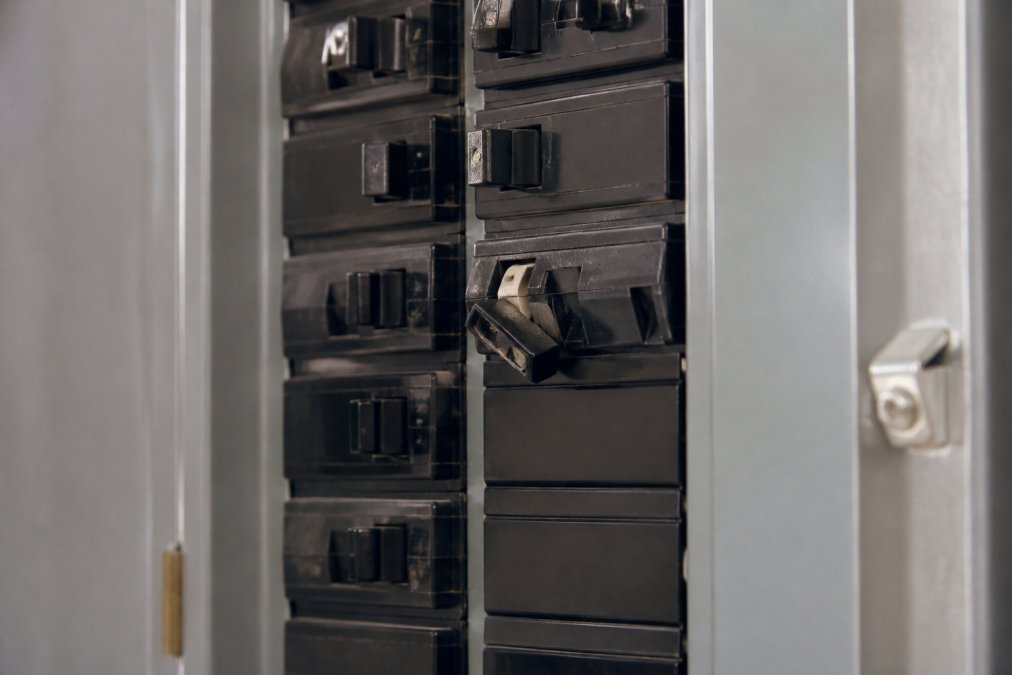
Frequent circuit breaker trips or blown fuses indicate faulty electrical wiring requiring immediate investigation. These devices protect against fire by cutting power when current exceeds safe levels.
If the same breaker trips multiple times per week without high-draw appliances running, you likely have a wiring problem, not an overloaded circuit.
Common causes include frayed insulation, loose connections, or short circuits. Aluminum wiring (common in 1960s-1970s homes) is prone to this because it expands and contracts more than copper, gradually loosening connections.
Never replace a breaker with a higher-amperage one to stop the trips. This removes the safety mechanism and creates serious fire hazard. Instead, have a licensed electrician test the circuit to identify the actual problem. They’ll use specialized equipment to find where the fault exists, whether it’s a damaged wire, a corroded connection, or something else entirely.
Burning Smells and Discolored Outlets
A burning smell near outlets or switches indicates faulty electrical wiring is overheating and your home is at immediate risk of electrical fire. Act immediately.
Discolored outlet plates (brown, black, or charred) confirm heat damage and insulation degradation, increasing fire risk.
If you find discolored or scorched outlets, stop using them and have them professionally evaluated, the problem may extend beyond the visible outlet.
If you smell burning near your breaker box, leave your home and call an electrician immediately, panel overheating puts your entire home at risk.
Buzzing Sounds and Sparking Outlets
Buzzing or humming from outlets, switches, or panels indicates loose connections or arcing, electricity jumping across gaps, creating miniature fires that generate intense heat.
Sparking outlets indicate worn, corroded, or misaligned contacts. Do not use them, sparking is visible evidence of dangerous arcing.
Buzzing at the electrical panel suggests loose or corroded connections and requires immediate professional inspection.
When to Call an Emergency Electrician
Call an emergency electrician immediately for: burning smells near outlets or panels, visible sparking, frequent breaker trips affecting multiple circuits, flickering lights with buzzing sounds, or any situation where faulty electrical wiring creates fire risk.
Do not troubleshoot yourself, electrical systems operate at lethal voltages. A licensed electrician has the proper tools and training to safely diagnose and repair these problems.
Voltedge Electrical offers 24/7 emergency services. When you call, describe what you’re experiencing clearly, burning smells, sparking, and repeated breaker trips warrant immediate dispatch.
Electrical Safety Inspection Checklist for Homeowners
Regular inspections catch problems before they become emergencies. Understanding the boundary between safe homeowner observation and professional work prevents dangerous DIY attempts.
What Homeowners Can Safely Inspect (Visual and Sensory Only)
These observations require no tools or opening of walls:
- Outlets and switches: Look for discoloration or scorch marks. Feel outlet covers with the back of your hand, they should be cool. If warm or hot, stop using and call an electrician.
- Cords and plugs: Inspect for visible damage, fraying, or burn marks. Replace damaged cords immediately.
- Lights: Document any flickering or dimming and which rooms are affected.
- Appliances: Watch for visible sparks or unusual sounds (buzzing, crackling). Do not investigate further, call an electrician.
- Extension cords: Ensure they are not pinched, run through walls, or daisy-chained. If used for more than a few weeks, install permanent outlets.
- Power strips: Plug directly into wall outlets only; do not overload (max 1,500 watts).
Document anything unusual with photos and notes to help an electrician diagnose problems faster.
What Requires Immediate Professional Attention (Do Not Inspect Yourself)
Call a licensed electrician immediately for: burning smells, visible sparking, warm/hot outlet covers, buzzing or crackling sounds, scorch marks, frequent breaker trips (more than once per week), or flickering lights with other warning signs. Do not open panels or troubleshoot inside walls, electrical systems operate at lethal voltages. Licensed electricians have proper testing equipment and training to safely diagnose and repair these problems.
When to Shut Off Power and Evacuate
Leave your home immediately and call 911 if you experience: burning smell with visible smoke or flames, sparking from the electrical panel, persistent burning smell, or any unsafe situation. Do not re-enter until a professional clears the home as safe.
Age-Specific Wiring Risks and the Cost to Rewire a House
Understanding your home’s age and wiring type is essential, as different eras introduced different hazards and solutions.
Knob and Tube Wiring (Pre-1950)
Knob and tube wiring (pre-1950) consists of individual copper wires through ceramic knobs and tubes. Critical flaws include: no ground wire (creating electrocution risk), insulation degradation after 70+ years (exposing live wires), unpredictable current return paths, and insurance/resale problems. Many insurers won’t cover homes with knob and tube wiring, and lenders may refuse financing unless it’s replaced.
If your home has knob and tube wiring, full rewiring is necessary for safety and insurability.
Aluminum Wiring (1960s-1970s)
Aluminum wiring (1960s-1970s) oxidizes when exposed to air and moisture, creating insulating oxide layers that increase resistance and heat at connections. Aluminum expands and contracts more than copper, gradually loosening connections. Galvanic corrosion occurs where aluminum contacts copper, accelerating oxidation and loosening.
Homes with aluminum wiring need inspections every 3-5 years and often require special outlets. If you notice flickering lights, warm outlets, or frequent breaker trips, have an electrician test connections immediately. Partial rewiring (replacing aluminum branch circuits with copper) may be possible, but a licensed electrician must assess whether service entrance and main panel connections are safe.
Cloth and Rubber Insulation (1950s-1970s)
Cloth and rubber insulation (1950s-1970s) becomes brittle and cracks over time, exposing live copper. It absorbs moisture, creating short-circuit risk in damp areas. Many homes from this era lack ground wires, creating shock hazards.
If your home was built in the 1950s-1970s and never rewired, partial or full rewiring is recommended, especially if you plan to stay long-term or upgrade to high-draw appliances.
Modern Wiring (1980s-Present)
Modern wiring (post-1980) uses plastic-insulated copper with ground wires, but can fail if installation was substandard, connections are loose, or modifications were unpermitted. Inspect every 5-10 years, especially if you’ve added high-draw appliances.
Rewiring Scope and Cost Considerations
The decision to rewire depends on your home’s age, current condition, and future plans:
- Full rewiring means replacing all wiring throughout the home. This requires opening walls, running new copper wire, installing new outlets and switches, and upgrading the breaker panel. Permits and inspections are required. This is necessary for homes with knob and tube or severely degraded insulation.
- Partial rewiring addresses specific circuits or areas. For example, a home with aluminum wiring might have only the kitchen and bathrooms rewired to copper, with the rest of the home monitored. This is less disruptive and less expensive than full rewiring but requires careful planning.
- Service upgrade increases the amperage capacity of your home’s electrical service (typically from 100 amps to 200 amps). This is often paired with rewiring if your home has an undersized service and you’re adding major appliances.
The scope and cost depend on your home’s size, layout, current condition, and local labor rates.
Insurance and Resale Implications
Identifying faulty wiring early can protect your home’s insurability and resale value:
- Insurance requirements. Homes with knob and tube wiring are often uninsurable or require expensive rewiring before coverage is available. Aluminum wiring may trigger higher premiums or require special inspection.
- Disclosure obligations. When selling your home, you must disclose known electrical hazards in most states. Buyers and their lenders will often require inspection and remediation before closing.
- Inspection contingencies. Home buyers increasingly include electrical inspections in purchase agreements. Faulty wiring discovered during inspection can delay closing, reduce the offer price, or cause the buyer to walk away.
- Lender requirements. Some lenders will not finance homes with knob and tube wiring or severely degraded electrical systems. Identifying and addressing these issues early prevents financing problems later.
Conclusion
Faulty electrical wiring puts your home and family at serious risk. Flickering lights, frequent breaker trips, burning smells, and sparking outlets are all warning signs that demand professional attention. Ignoring these signals gives the problem time to worsen, increasing fire risk and potential damage.
Frequently Asked Questions
What are the early warning signs of an electrical fire?
Burning smells from outlets or the electrical panel, visible scorch marks around outlets and switches, sparking when plugging in devices, and consistently tripped circuit breakers are critical warning signs. Hot or discolored outlet plates also indicate dangerous arcing inside the wall. If you notice any of these, stop using that outlet and contact a licensed electrician immediately. Do not attempt to investigate further yourself.
When should I call an emergency electrician versus scheduling a regular appointment?
Call an emergency electrician immediately if you see sparks, smell burning, notice flames or smoke, experience shock when touching outlets, or see visible scorch marks. These indicate active electrical hazards. For flickering lights, tripped breakers, or discolored outlets without burning smells, schedule a same-day appointment. Many licensed electricians offer 24/7 emergency response for true safety threats.
How often should residential electrical wiring be inspected?
The National Electrical Code recommends inspection when buying a home, after major renovations, and every 3-5 years for older homes. Homes built before 1970 with knob-and-tube or aluminum wiring should be inspected annually. If you notice any warning signs like flickering lights or burning smells, don’t wait for a scheduled inspection, call an electrician immediately.
What’s the typical cost to rewire a house, and is it worth it?
Rewiring costs depend on your home’s size, age, current panel capacity, and whether walls must be opened. Contact a licensed electrician for an inspection and quote specific to your situation. Many homeowners find rewiring essential for safety, insurance compliance, and supporting modern electrical loads. Your electrician can explain which upgrades are urgent versus optional based on your home’s condition.
