


Table of Contents
- What Does Rewiring a House Actually Include?
- Rewiring House Cost: Key Factors That Drive the Price
- Labor vs. Material Costs: Where Your Money Goes
- Electrical Panel Upgrade Cost: What to Budget Alongside Rewiring
- Signs a House Needs Rewiring Before You Buy or Renovate
- How Long Does It Take to Rewire a House?
- Hidden Costs of Rewiring: Drywall, Insurance, and Smart Home Integration
- How to Get an Accurate Rewiring House Cost Estimate
- Frequently Asked Questions
Last Updated: August 29, 2026
What Does Rewiring a House Actually Include?
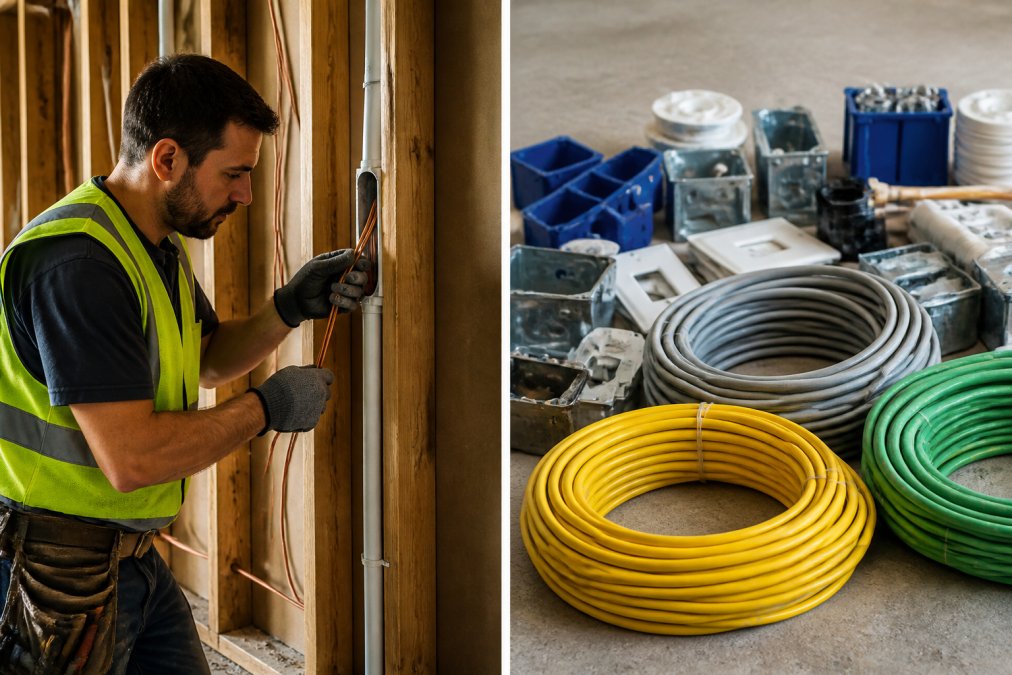
A full house rewire replaces every wire, outlet, switch, junction box, and circuit with new copper wiring that meets current National Electrical Code (NEC) requirements. This is a ground-up replacement of your home’s entire electrical system.
A complete rewire typically covers:
- Removal of all existing wiring, including knob and tube or aluminum wiring
- Installation of new copper wiring throughout every room
- Replacement of all outlets and switches with AFCI/GFCI protection where required by code
- New junction boxes and conduit where applicable
- Updated service entrance cable connections
- Coordination with a licensed electrician for electrical rough-in, inspection, and final sign-off
Rewiring also requires opening walls to run new wire through wall cavities, which means some drywall removal is unavoidable. This restoration work adds meaningfully to overall project cost and is often underestimated at the estimate stage.
Understanding the full scope upfront separates a smooth project from a budget nightmare. The Voltedge Electrical team approaches every rewiring project with a transparent scope review before work begins, so you know exactly what is included.
Rewiring House Cost: Key Factors That Drive the Price
Rewiring house cost varies widely depending on several interconnected variables. No single number applies to every home.
Square Footage and Home Layout
Square footage is the most straightforward cost driver. A larger home requires more wire, more outlets, and more labor hours. Layout matters equally: a single-story ranch is significantly cheaper to rewire than a multi-story home with the same square footage, because running wire vertically through floors adds complexity. Finished basements, attic spaces, and tight crawl spaces also increase labor costs due to access difficulty.
Type of Existing Wiring
The existing wiring type is one of the biggest cost variables:
- Knob and tube wiring (common before 1950) is the most labor-intensive to remove, often embedded in insulation.
- Aluminum wiring (1965-1973) presents a fire hazard due to expansion and contraction, requiring careful documentation for code compliance and insurance.
- Older two-wire systems lacking grounding must be fully replaced to meet NEC compliance and AFCI/GFCI protection requirements.
The older and more complex the existing system, the higher the estimate.
Labor Rates and Permits
Labor rates for licensed electricians vary by region. An electrical permit is required for any full rewire and is non-negotiable for NEC compliance and home inspection requirements. Permit fees vary by municipality but are essential.
According to the National Electrical Contractors Association labor and wage data, labor costs represent the largest single line item in most residential rewiring projects. Plan for permit fees, inspection fees, and potential re-inspection costs as separate budget items.
Labor vs. Material Costs: Where Your Money Goes
For a typical residential rewire, labor accounts for the majority of total project cost. Materials, copper wiring, circuit breakers, outlets, switches, junction boxes, conduit, and service entrance cable, represent a meaningful portion, but skilled labor hours for wire pulling, connections, and inspection drive the overall number.
| Cost Category | What It Covers | Relative Weight |
|---|---|---|
| Labor | Wire pulling, connections, rough-in, trim-out | Highest |
| Copper wiring and conduit | Linear footage of new wire and conduit runs | Moderate |
| Outlets, switches, and fixtures | New devices at every location | Moderate |
| Electrical panel and breakers | Circuit breaker replacement or new sub-panel | Varies |
| Permits and inspections | Municipal permit fees, inspection visits | Lower |
| Drywall and restoration | Patching and painting after access cuts | Varies widely |
Copper wiring prices fluctuate with commodity markets. A rewiring estimate from six months ago may not reflect current material costs. Always request a current, itemized quote.
For an accurate rewiring house cost specific to your home, contact Voltedge Electrical directly for a transparent, itemized estimate.
Electrical Panel Upgrade Cost: What to Budget Alongside Rewiring
A full house rewire almost always surfaces the need for an electrical panel upgrade. An outdated electrical system often pairs old wiring with an undersized or obsolete panel. Running new circuits through a 100-amp panel that predates modern load calculation standards creates a bottleneck. Most licensed electricians recommend upgrading to a 200-amp service panel during a rewire, because the cost is substantially lower when done as part of the same project.
The electrical panel upgrade cost depends on:
- Current amperage and whether a service entrance cable upgrade is needed
- Whether a sub-panel is required for a detached structure or large home
- Local utility coordination requirements for meter disconnection
- Any NEC compliance updates required by local authority
The National Fire Protection Association’s NFPA 70 (National Electrical Code) sets baseline standards for panel installations, but local amendments apply in many municipalities.
Skipping a panel upgrade during a rewire to save money upfront is a false economy. The access is already open, the permit is already pulled, and the electrician is already on site.
Signs a House Needs Rewiring Before You Buy or Renovate
Recognizing the signs a house needs rewiring before you commit to a purchase or renovation can save you from a costly surprise after closing.
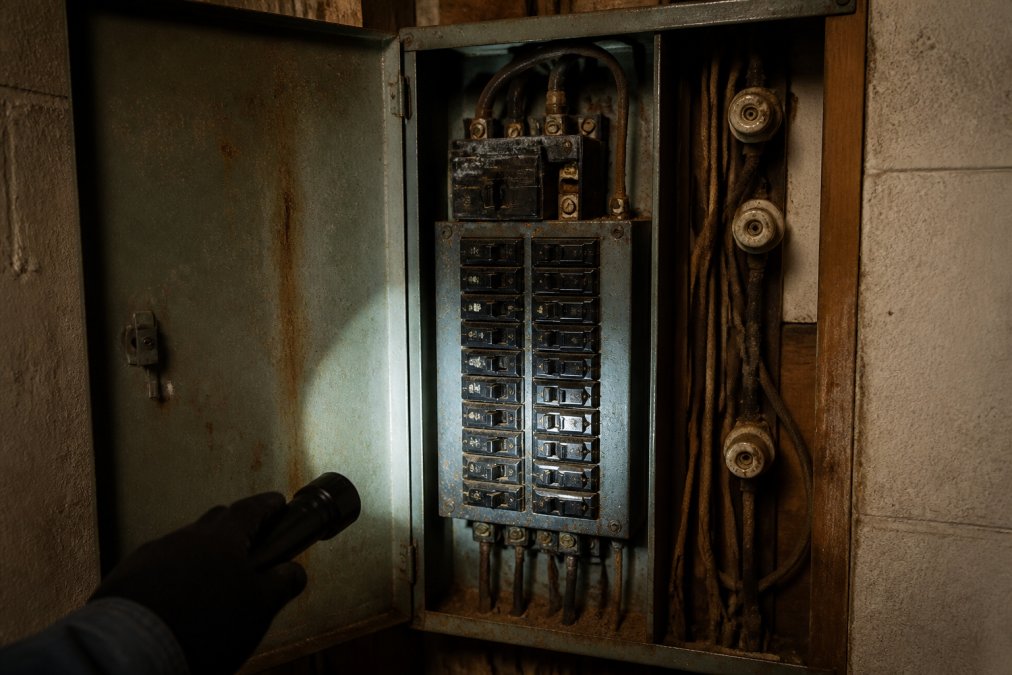
The most common warning signs include:
- Frequent circuit breaker trips with no clear overload cause
- Flickering or dimming lights unrelated to bulb issues
- Burning smell or discoloration around outlets or switches, a direct fire hazard
- Two-prong ungrounded outlets throughout the home
- Aluminum wiring visible at the panel or in the attic
- Knob and tube wiring still active anywhere in the home
- A panel with fuses instead of circuit breakers, common in homes built before the 1960s
- Outlets that spark or feel warm to the touch
A home inspection will flag many of these issues, but inspectors are not licensed electricians. If the inspection report mentions any of the above, commission a dedicated electrical assessment before finalizing the purchase.
Knob and tube wiring buried under insulation is a serious fire hazard. Many homeowner’s insurance carriers will not issue or renew a policy on a home with active knob and tube wiring. Confirm the wiring type before closing on any older home.
How Long Does It Take to Rewire a House?
How long it takes to rewire a house depends primarily on square footage, existing wiring complexity, and crew size. For most single-family homes, a full rewire runs between three and ten business days of active work.
A rough timeline framework:
- Small home under 1,000 sq ft: 3-5 days
- Mid-size home 1,000-2,500 sq ft: 5-7 days
- Larger home over 2,500 sq ft: 7-10+ days
Permit approval timelines, inspection scheduling, and drywall restoration add calendar time beyond the electrical work itself. Homes with finished walls throughout require more careful access cuts, which slows the rough-in phase. Homes under active renovation with walls already open are much faster to rewire.
If you are already planning a kitchen renovation, bathroom remodel, or addition, coordinate the rewiring project to run concurrently. Open walls during renovation are the single best opportunity to update wiring at the lowest possible labor cost.
Hidden Costs of Rewiring: Drywall, Insurance, and Smart Home Integration
The rewiring house cost in an initial estimate often excludes three categories that can add meaningfully to the final bill.
Post-Rewire Drywall and Restoration
Rewiring requires access to wall cavities, which means cuts. Even with minimally invasive techniques, a full rewire leaves dozens of patched openings that need taping, mudding, sanding, and painting. This work is typically performed by a separate drywall contractor. Budget for this work as a separate line item; it is rarely included in the electrical estimate.
Homeowner’s Insurance Implications
Rewiring a home has a direct relationship with homeowner’s insurance. Many carriers charge higher premiums or decline to cover homes with knob and tube wiring, aluminum wiring, or outdated panels. Completing a full rewire can make a home insurable at standard rates and may reduce premiums.
According to the Insurance Information Institute’s guidance on home electrical systems, outdated wiring is one of the leading causes of residential fires. Notify your insurance carrier after completing a rewire and request a policy review. Documentation from your electrical permit and final inspection is the evidence they need.
Adding Smart Home Wiring During the Project
A full rewire is the most cost-effective time to add smart home infrastructure. Running low-voltage wiring for structured networking, smart lighting circuits, whole-home surge protection, or EV charger pre-wiring costs a fraction of what it would cost post-rewire.
Common smart home additions worth planning during a rewire:
- Dedicated EV charger circuit (240V)
- Whole-house surge protection at the panel
- Structured wiring for networking and AV
- Smart switch wiring (requires neutral wire at every switch location)
- Landscape lighting low-voltage circuits
These additions require planning before rough-in begins.
How to Get an Accurate Rewiring House Cost Estimate
Getting an accurate rewiring house cost estimate requires more than calling three electricians and taking the lowest bid. The lowest bid often has the most exclusions.
Here is a practical checklist for evaluating any rewiring estimate:
- Does the estimate include permit fees and inspection costs, or are those separate?
- Is drywall restoration included, or explicitly excluded?
- Does the quote specify copper wiring gauge and brand of devices?
- Is the electrical panel upgrade included or quoted separately?
- Does the estimate cover AFCI/GFCI protection at all required locations per NEC?
- Is the electrician licensed and insured? Request license number and verify it with your state licensing board.
- Does the quote include a project timeline with inspection milestones?
- Are smart home additions or EV charger pre-wiring discussed?
The U.S. Department of Energy’s guidance on home electrical systems recommends homeowners verify contractor licensing and pull permits for all electrical work, because unpermitted work can complicate home sales and insurance claims.
The most important thing to verify before signing any rewiring contract is that the electrician is licensed, insured, and will pull the required permits. Unpermitted electrical work creates liability that follows the property, not the contractor.
A transparent estimate will itemize labor, materials, permits, and exclusions clearly. If an estimate is vague about what is included, that vagueness will cost you money before the project is finished.
Voltedge Electrical provides detailed, itemized estimates for full house rewires, panel upgrades, and all associated electrical work. Our licensed and insured electricians handle the permitting process, coordinate inspections, and communicate clearly at every stage, so the final bill matches what you were told upfront.
Rewiring a home is one of the largest electrical investments a homeowner makes. The gap between a smooth project and a costly one usually comes down to preparation and contractor quality. Voltedge Electrical brings licensed expertise, transparent pricing, and 24/7 availability to every residential rewiring project. Whether you are dealing with knob and tube wiring, an undersized panel, or planning a full renovation with smart home integration, our team delivers code-compliant work with no surprises. Inquire Now to get a clear, itemized estimate for your home.
Frequently Asked Questions
How much does it cost to rewire a 2,000 sq. ft. house?
Rewiring house cost for a 2,000 sq. ft. home varies widely based on wiring complexity, the type of existing wiring (knob and tube, aluminum, or copper), local labor rates, and whether an electrical panel upgrade is needed. Homes with outdated systems or difficult layouts cost more. Because every project is different, the best way to get an accurate number is to have a licensed electrician assess the property and provide a detailed estimate before any work begins.
Does a house need rewiring after 25 years?
Not automatically, but a 25-year-old home is worth inspecting. Signs a house needs rewiring include frequently tripping circuit breakers, flickering lights, burning smells near outlets, two-prong ungrounded outlets, and wiring that predates modern NEC compliance standards. Knob and tube or aluminum wiring from that era can be a fire hazard. A licensed electrician can assess whether a full rewire, partial upgrade, or AFCI/GFCI protection additions are the right call.
Can a house be rewired without removing drywall?
In some cases, yes. Electricians can fish new wiring through existing walls using flexible conduit and access points, which limits drywall damage. However, complete access is often needed in older homes with complex layouts or hazardous outdated wiring like knob and tube. Expect at least some patching and repainting. Post-rewire drywall restoration is a real cost to factor into your total budget, and a good contractor will be upfront about the extent of wall work required.
Is it worth rewiring your house?
For most homeowners with outdated electrical systems, rewiring is worth the investment. It eliminates fire hazards from aging wiring, brings the home into NEC compliance, supports modern electrical loads, and can lower homeowner’s insurance premiums. It also adds home value and makes future upgrades like EV charger installations or smart home integration far simpler. The cost of rewiring is almost always lower than the cost of an electrical fire or a failed home inspection.
This article was written using GrandRanker
