


Table of Contents
- What Constitutes an Electrical Emergency
- When to Call an Emergency Electrician
- Emergency Electrician Cost and Pricing Factors
- Is 24-Hour Electrical Service Worth It for Your Situation
- Electrical Troubleshooting Tips Before You Call
- Safety Risks of Delaying Electrical Repairs
- How to Find a Licensed and Insured Professional
- Conclusion
- Frequently Asked Questions
Last Updated: October 4, 2026
What Constitutes an Electrical Emergency
An electrical emergency poses immediate risk to safety or property: sparking outlets, burning smells, exposed wiring, complete power loss affecting critical systems, or dangerous voltage fluctuations.
True emergencies could cause fire, electrocution, or damage to critical systems. A repeatedly tripping breaker signals an underlying fault. Smoke or burning odors near your electrical panel require immediate shutdown and professional assessment.
A complete power outage at 2 AM feels urgent, but if isolated to one circuit, it’s often a tripped breaker, a quick fix that doesn’t justify premium pricing. Understanding what qualifies as an emergency helps you decide when to call.
When to Call an Emergency Electrician
Call an emergency electrician immediately if you see sparks, smell burning plastic or insulation, notice exposed wiring, experience electrical shocks from appliances or outlets, or lose power to critical systems like heating or medical equipment.
Contact emergency service if a circuit breaker repeatedly trips despite being reset, indicating a serious fault. Voltage fluctuations suggest problems with your electrical panel or service connection.
Many problems that feel urgent can wait: a single non-working outlet, dimmed lighting in one room, or a breaker that tripped once and stayed reset. Schedule these during business hours to avoid additional cost.
Avoid waiting when genuine warning signs exist, or calling emergency service for routine problems. A burning smell demands immediate action; a blown light bulb does not.
Emergency Electrician Cost and Pricing Factors
Emergency electrical service costs more due to after-hours availability and rapid response. Understanding the cost structure and comparing it to potential damage helps you decide whether to call.
Typical Cost Breakdown
Most emergency electricians charge a service call fee of $75-$150 depending on time and day of week. Weekend and holiday premiums add 25-50% to standard rates.
Emergency labor rates typically run $100-$200 per hour versus $75-$125 for standard work. A simple repair (breaker or outlet replacement) costs $150-$300 total; complex diagnostics or repairs reach $500-$1,500 or more.
Diagnostic fees typically range from $50-$150. Some providers apply this toward repairs; others keep it separate. Clarify this policy before authorizing service.
Regional and Temporal Cost Variance
Emergency costs vary by region and time. Rural 3 AM calls may cost more than urban 6 PM calls due to travel distance. Sunday service costs more than Wednesday. Holiday calls add 50-100% to standard rates.
Cost factors include time of day (10 PM-6 AM highest), day of week (weekends/holidays more), problem complexity, travel distance, and local market rates.
Cost-Benefit Analysis: Emergency Call vs. Delayed Repair
The real question is whether calling now costs less than waiting. This depends on the specific problem:
Call immediately if:
- Sparking, burning smells, or exposed wiring present (fire risk). A $300 emergency call prevents $50,000+ in fire damage.
- Complete power loss affecting heating, cooling, or medical equipment.
- Electrical shocks from appliances or outlets (electrocution risk).
Wait for business hours if:
- A single outlet doesn’t work (isolated, no hazard).
- Lights dim in one room (inconvenient but not dangerous).
- A breaker tripped once and stayed reset (likely one-time overload).
Most homeowners policies cover fire damage from electrical faults but not routine repairs. Delaying repair of genuine hazards (sparking outlets, burning smells) creates uninsured risk. If a fire occurs from a known fault you ignored, your insurer may deny the claim.
How to Verify Costs Before Committing
Ask the dispatcher: service call fee, hourly labor rate, diagnostic fee policy, estimated total cost, and payment terms. Get a written estimate before authorizing work. If an estimate seems significantly lower than others, ask why.
Is 24-Hour Electrical Service Worth It for Your Situation
Whether 24-hour electrical service justifies its premium cost depends on your circumstances and the problem’s nature.
For non-emergency problems at inconvenient times, waiting makes sense. If your kitchen outlet stops working at 11 PM Saturday, you can safely wait until Monday.
Older homes with outdated electrical systems face higher emergency risk. A 1970s property with a 100-amp panel makes 24-hour availability more valuable.
Your financial situation matters. Some homeowners budget for emergency services; others minimize costs and accept waiting. Match the service to your priorities and resources.
The real value emerges at 2 AM when something is actively dangerous, or on holidays when regular electricians aren’t available.
Electrical Troubleshooting Tips Before You Call
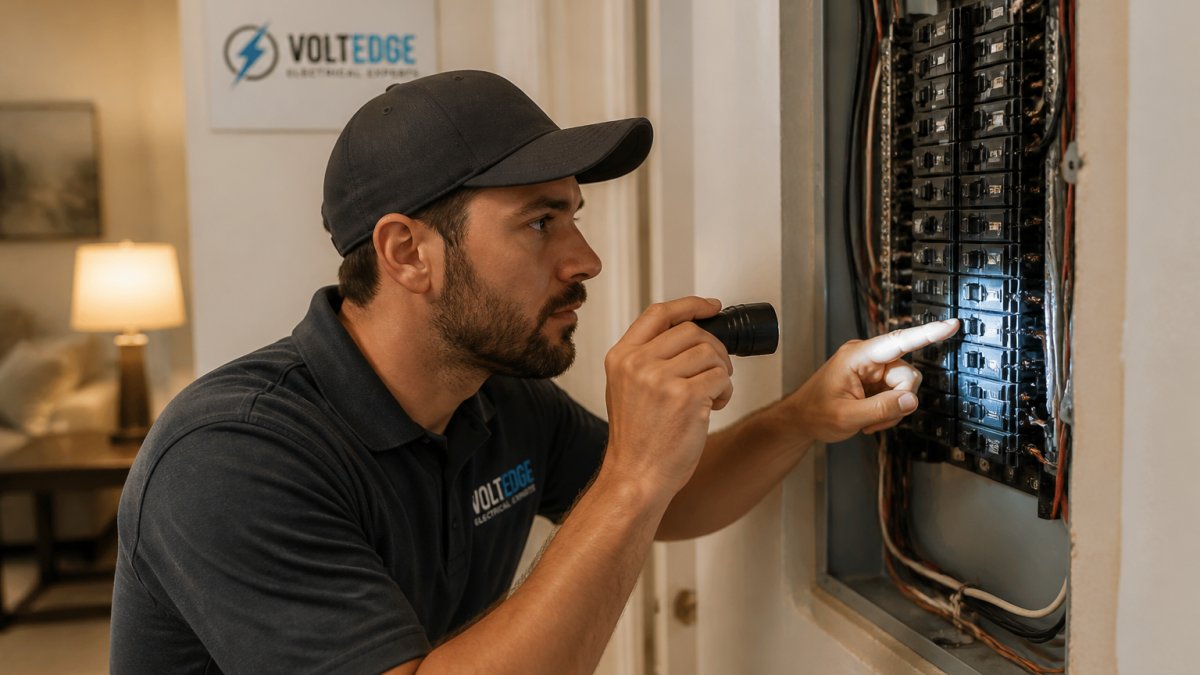
Before contacting an emergency electrician, perform a structured triage to determine if the problem is genuinely urgent or can wait. This checklist helps you avoid unnecessary charges while ensuring you don’t delay when safety is at risk.
Step 1: Identify Immediate Hazards (Stop Here If Any Are Present)
If you observe any of these, stop troubleshooting and call emergency service immediately:
- Sparks or arcing from outlets, switches, or the electrical panel
- Burning smell (plastic, insulation, or electrical odor) anywhere in your home
- Smoke or visible fire near electrical components
- Exposed wiring or damaged insulation
- Electrical shocks when touching appliances, outlets, or water
- Water pooling near the electrical panel or outlets
These are fire and electrocution hazards. Do not attempt repairs. Unplug affected appliances if safe to do so, then call emergency service. Safety first; cost second.
Step 2: Check the Main Breaker Panel
If you don’t observe immediate hazards, check your main circuit breaker panel:
- Locate your panel (usually in a basement, garage, or utility closet).
- Look for tripped breakers. A tripped breaker switch is in the middle position (between fully on and fully off), or it may be in the off position. Normal breakers are fully on.
- If a breaker is tripped, flip it firmly to the off position, then back to on. If it stays on, the problem may be resolved.
- If it trips again immediately, stop. This indicates a serious fault (short circuit or overload) requiring professional diagnosis. Do not reset it repeatedly; this is dangerous.
- If the main breaker (the large switch at the top of the panel) is tripped, this indicates a serious fault affecting your entire home. Call emergency service.
What this tells you: A single tripped breaker that stays reset suggests a one-time overload (you plugged in too many devices). A breaker that trips repeatedly indicates a fault in that circuit. A tripped main breaker indicates a serious problem requiring immediate professional help.
Step 3: Identify the Scope of the Problem
Determine which outlets, lights, or appliances are affected:
- One outlet not working? Likely a local problem. Check for a GFCI reset button (see Step 4). If no GFCI, this can wait for business hours.
- All outlets in one room not working? A breaker for that circuit may have tripped. Check the panel (Step 2). If the breaker is on, this suggests a wiring fault in that room; call during business hours unless it’s a safety hazard.
- All lights in one room not working, but outlets work? Likely a breaker issue or a light switch problem. Not urgent.
- Entire house without power? Check with neighbors. If they have power, your main breaker or service connection has a problem; call emergency service. If the neighborhood is dark, the outage is utility-side; call your power company, not an electrician.
- Intermittent power loss (lights flicker, appliances turn off and on)? This suggests a loose connection or failing breaker. Not immediately dangerous, but call during business hours to prevent escalation.
Step 4: Check GFCI Outlets
GFCI (ground fault circuit interrupter) outlets have test and reset buttons and are commonly found in kitchens, bathrooms, and outdoor areas. If an outlet near one of these locations doesn’t work:
- Look for a GFCI outlet (it has two buttons labeled test and reset).
- Press the reset button firmly. This restores power to that outlet and any standard outlets downstream on the same circuit.
- If power is restored, the problem is solved. If the GFCI trips again when you plug in a specific appliance, that appliance may be faulty; unplug it and use a different outlet.
- If pressing reset doesn’t restore power, the GFCI itself may be faulty. This is a routine repair that can wait for business hours.
Step 5: Document Observations for the Electrician
Whether you call emergency service or schedule a routine appointment, document what you’ve observed:
- When did the problem start? (Exact time if possible)
- What happened immediately before? (Storm, power surge, appliance use, water exposure)
- Which circuits or rooms are affected?
- Any unusual sounds? (Buzzing, humming, crackling)
- Any unusual smells? (Burning plastic, ozone, electrical odor)
- Have you reset any breakers? (Which ones, and did they stay reset?)
- Is the problem constant or intermittent?
This information helps the dispatcher assess urgency and helps the electrician arrive prepared with the right tools and parts. It also demonstrates that you’ve attempted basic troubleshooting, which some providers appreciate when calculating fees.
Decision Tree: Emergency Call or Wait?
Call emergency service if:
- Any immediate hazard is present (sparks, burning smell, shocks, exposed wiring, water near panel)
- The main breaker is tripped and won’t stay reset
- A circuit breaker trips repeatedly despite being reset
- You’ve lost power to critical systems (heating, cooling, medical equipment) and it’s unsafe to wait
- You’re uncertain about safety (when in doubt, call)
Schedule routine service if:
- A single outlet doesn’t work and no GFCI reset fixes it
- Lights are dim or flickering in one room
- A breaker tripped once and stays reset
- A GFCI outlet is faulty (won’t reset)
- You want an inspection of an aging electrical system
The key principle: Genuine hazards justify emergency cost. Inconvenience does not.
Safety Risks of Delaying Electrical Repairs
Delaying repairs when genuine warning signs exist creates serious risks. Exposed wiring causes electrocution. Burning smells indicate insulation breakdown preceding fires.
Repeated circuit breaker trips signal dangerous conditions.
Voltage fluctuations that cause lights to dim and brighten can damage appliances.
Water damage near electrical systems poses electrocution and fire risks. If you notice moisture near outlets, panels, or wiring, treat it as an emergency.
A small electrical problem ignored often becomes large. A failing breaker replaced promptly costs far less than replacing a burned-out panel or repairing fire damage.
How to Find a Licensed and Insured Professional
Verify licensing before hiring any electrician. Licensed electricians have passed exams demonstrating knowledge of electrical codes and safety.
Confirm insurance coverage. A licensed and insured electrician carries liability insurance and workers’ compensation. This protects you if something goes wrong.
Ask for references and check online reviews. Look for comments about reliability, professionalism, and transparent pricing.
Get written estimates before authorizing work. A professional provides detailed breakdowns of service call fees, diagnostic charges, and repair costs.
Ask how the provider handles emergency calls. Can they respond at 2 AM, or do they use an answering service? Do they guarantee response times?
Conclusion
The decision to use 24-hour electrical service depends on whether you face genuine emergencies or inconvenient timing. Real hazards, sparks, burning smells, exposed wiring, or complete power loss affecting critical systems, absolutely justify emergency service costs.
For non-emergency problems outside business hours, waiting typically makes financial sense. The key is knowing the difference and acting quickly when genuine danger exists. Contact Voltedge Electrical today to discuss your electrical needs.
Frequently Asked Questions
What do electricians normally charge for emergency service calls?
Emergency electrician costs vary by location, time of day, and complexity. Most charge a service call fee to dispatch a technician, plus hourly labor rates that are typically higher during nights, weekends, and holidays than standard business hours. After-hours premiums can range significantly. Contact a licensed professional for a specific quote based on your situation and location.
When to call an emergency electrician versus waiting until morning?
Call immediately if you notice burning smells, sparking outlets, exposed wiring, complete power loss affecting safety systems, or electrical shocks. These pose fire and electrocution risks. Wait for business hours for non-urgent issues like a single dead outlet or dim lighting. If you’re unsure whether your situation is dangerous, calling for a quick diagnostic is safer than guessing.
How can I troubleshoot minor electrical issues before calling a pro?
Start by checking your circuit breaker panel for tripped breakers and resetting them if needed. Test outlets with a lamp or phone charger to confirm they’re dead. Look for obvious hazards like exposed wires or scorch marks. If the issue is isolated to one outlet or room, it’s often a tripped breaker. If multiple areas are affected or you smell burning, stop troubleshooting and call a licensed electrician immediately.
Are there safety risks in waiting until morning for electrical repairs?
Yes, certain electrical problems create immediate hazards. Burning smells, sparking, exposed wiring, and voltage fluctuations can cause fires or electrocution. Power outages affecting heating in winter or cooling in summer also pose health risks. Even if the issue seems minor, delaying repair of faulty wiring or damaged panels increases fire risk and can lead to code violations. When in doubt, have a licensed professional assess the danger level.
