


Table of Contents
- Is a Panel Upgrade Necessary?
- Signs You Need a Panel Upgrade
- Understanding the Difference Between 100 Amp and 200 Amp Service
- Cost to Upgrade Electrical Panel to 200 Amp
- Steps to Upgrade Your 100 Amp Panel
- NEC Electrical Panel Code Compliance and Safety Requirements
- Professional Installation vs. DIY Considerations
- Frequently Asked Questions
Last Updated: September 2, 2026
Is a Panel Upgrade Necessary?
Not every home needs a panel upgrade, but many do. Modern households draw significantly more power than homes built in the 1980s and 1990s. Air conditioning units, electric vehicle chargers, heat pumps, and multiple high-demand appliances running simultaneously stress older 100-amp systems.
The real question isn’t whether your panel is old, it’s whether it’s adequate. A licensed electrician can perform a load calculation to determine whether your current setup meets code and handles your requirements. This assessment is the foundation for deciding whether to upgrade to 200 amps or pursue other solutions.
Signs You Need a Panel Upgrade
Frequent breaker trips are the most obvious warning sign. If your main breaker or individual circuit breakers flip regularly when running normal appliances, your panel is overloaded and working at its limit, a safety hazard since breakers trip to prevent fires.
Dimming lights when starting major appliances like air conditioners or electric dryers indicate insufficient service capacity. Burning smells near the panel or outlets demand immediate attention and signal dangerous overheating. Buzzing or crackling sounds from the panel or outlets indicate loose connections or arcing, both fire hazards. Outlets or switches that are warm to the touch indicate excessive heat buildup.
Lack of available breaker slots limits your ability to add new circuits for future needs like EV chargers or heating system upgrades. Panels older than 40 years deserve professional inspection, as older components degrade and fire risk increases.
Understanding the Difference Between 100 Amp and 200 Amp Service
A 100-amp service safely delivers 100 amperes of electrical current to your home at any given moment (nfpa.org). A 200-amp service doubles that capacity. Modern building codes and the National Electrical Code (NEC) now recommend 200-amp service for new residential construction, reflecting how homes are actually used today (nfpa.org).
The upgrade affects your service entrance conductors, the cables running from your utility’s meter to your panel. A 100-amp service uses smaller conductors than a 200-amp system requires. Upgrading means replacing these conductors, the meter socket, and potentially the service lateral from your utility’s transformer to your home. This requires coordination with your utility company.
A 200-amp panel provides decades of capacity and safety. However, if your utility’s service drop can’t support 200 amps, you may hit a hard ceiling. Your utility provider determines what’s feasible at your location, which is why contacting them early is essential.
Cost to Upgrade Electrical Panel to 200 Amp
Pricing for upgrading an electrical panel depends on several factors, and costs vary significantly by location, existing infrastructure, and local labor rates. Request quotes from licensed electricians who can assess your specific situation.
What affects the total cost:
- Panel and breakers: The new panel unit and main breaker represent a baseline cost.
- Service entrance conductors: Replacing the cables from your meter to your panel is labor-intensive.
- Meter socket replacement: Your utility may require a new meter socket rated for 200-amp service.
- Service drop upgrade: If your utility’s line needs upgrading, this is a separate cost billed by the utility.
- Permits and inspections: Local electrical permits and required inspections are non-negotiable for code compliance.
- Grounding electrode and bonding: Modern installations require proper grounding and bonding work.
- Existing wiring conditions: Aluminum wiring, outdated conduit, or other complications increase labor time.
- Accessibility: Panels in basements, crawl spaces, or attics cost more to upgrade than accessible locations.
Contact Voltedge Electrical or other licensed electricians in your area for a detailed estimate. They’ll assess your specific setup and provide a comprehensive quote.
Beware of extremely low quotes. Panel upgrades involve significant electrical work and code compliance. A quote that seems too cheap often means the contractor is cutting corners on permits, inspections, or safety practices.
Steps to Upgrade Your 100 Amp Panel
The process of upgrading to a 200-amp panel involves multiple steps and coordination with your utility company.
Step 1: Assess Your Electrical Needs
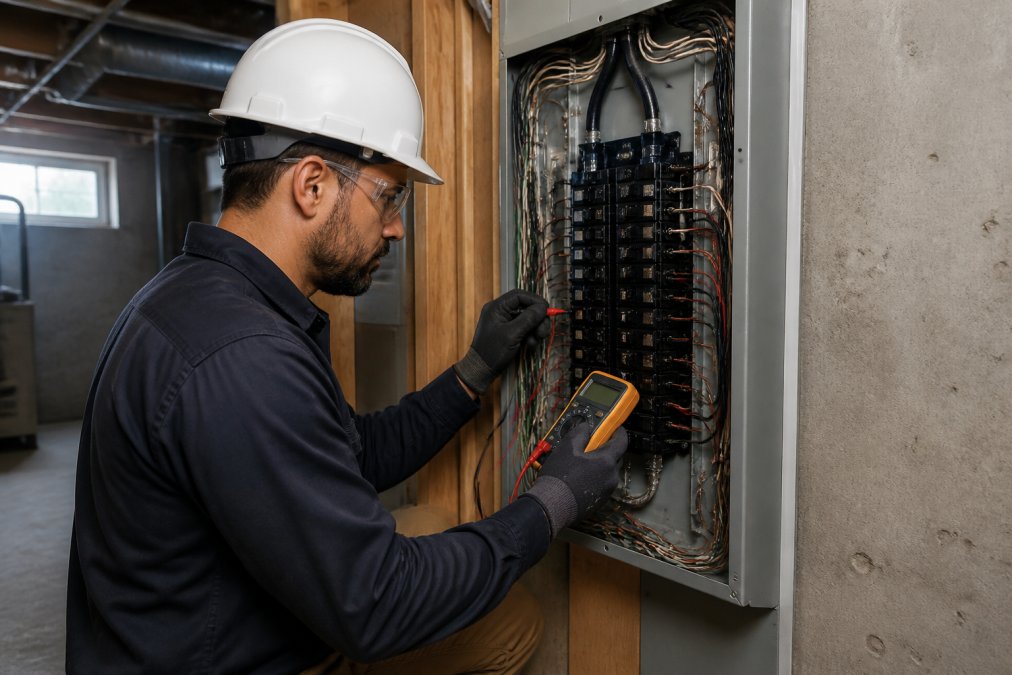
Determine whether you actually need 200 amps or if a different solution makes sense. A load calculation, performed by a licensed electrician, adds up your home’s electrical demands based on appliances, heating and cooling systems, and future additions like EV chargers.
Document what you’re planning to add or upgrade. If you want to install an EV charger, that’s a significant load. If you’re considering a heat pump for heating or adding a second air conditioning zone, that affects the calculation. Once you have a clear picture of your needs, you can decide whether upgrading to 200 amps makes sense.
Step 2: Obtain Required Permits and Inspections
Electrical panel upgrades require permits and inspections from your local authority having jurisdiction (AHJ). Permits ensure the work meets the NEC and local electrical code, and they create an official record that the work was done properly.
Contact your local building department to understand the permitting process. You’ll typically need to submit plans, pay a permit fee, and schedule inspections at specific stages: after the old panel is removed, after the new panel is installed, and after final connections are made.
An unpermitted panel upgrade creates liability if something goes wrong, complicates insurance claims, and can prevent you from selling your home without disclosure.
Step 3: Contact Your Utility Provider
Your utility company controls the service lateral and determines whether your location can support 200-amp service. Call your utility before hiring an electrician and explain that you’re planning to upgrade your panel to 200 amps.
They’ll assess whether your service drop capacity is adequate. If it’s not, they’ll tell you what upgrades they need to make and what that costs. The utility also needs to know when the upgrade is happening so they can de-energize your service if necessary during the switchover.
Getting the utility’s input early prevents surprises later.
Step 4: Hire a Licensed Electrician for Panel Replacement
A licensed electrician has the training, tools, and insurance to handle the job safely. When hiring, verify licensing through your state’s licensing board. Ask for references and examples of previous panel upgrades. Get a detailed written estimate that breaks down labor, materials, permits, and any utility coordination costs.
A reputable electrician will walk you through the process, explain what to expect, and coordinate with your utility and local inspectors.
Step 5: Complete the Installation
The actual installation typically happens in a single day. The electrician will coordinate with your utility to have your service de-energized if necessary. They’ll remove your old panel, disconnect all existing breakers and circuits, and remove the old service entrance conductors if they’re being replaced.
Next comes installation of the new panel, main breaker, and service entrance conductors. The electrician will reconnect all your existing circuits to new breakers in the new panel, ensuring proper breaker sizing for each circuit. Grounding electrode connections and bonding work are performed according to NEC standards.
Once everything is installed and checked, the utility reconnects your service and the panel is energized.
Step 6: Final Inspection and Approval
After installation is complete, the electrical inspector schedules a final inspection. They verify that the new panel meets code, that all connections are proper, and that the installation is safe.
Once the inspector approves the work, you receive a certificate of compliance. Keep this documentation, it’s important for insurance, future sales, and your own records.
After your panel upgrade is complete, take photos of the new panel for your records. Document the main breaker rating, the date of installation, and the inspector’s approval.
NEC Electrical Panel Code Compliance and Safety Requirements
The National Electrical Code (NEC) is the standard that governs electrical installations in the United States. Local jurisdictions often adopt the NEC with amendments, so your specific requirements depend on your location.
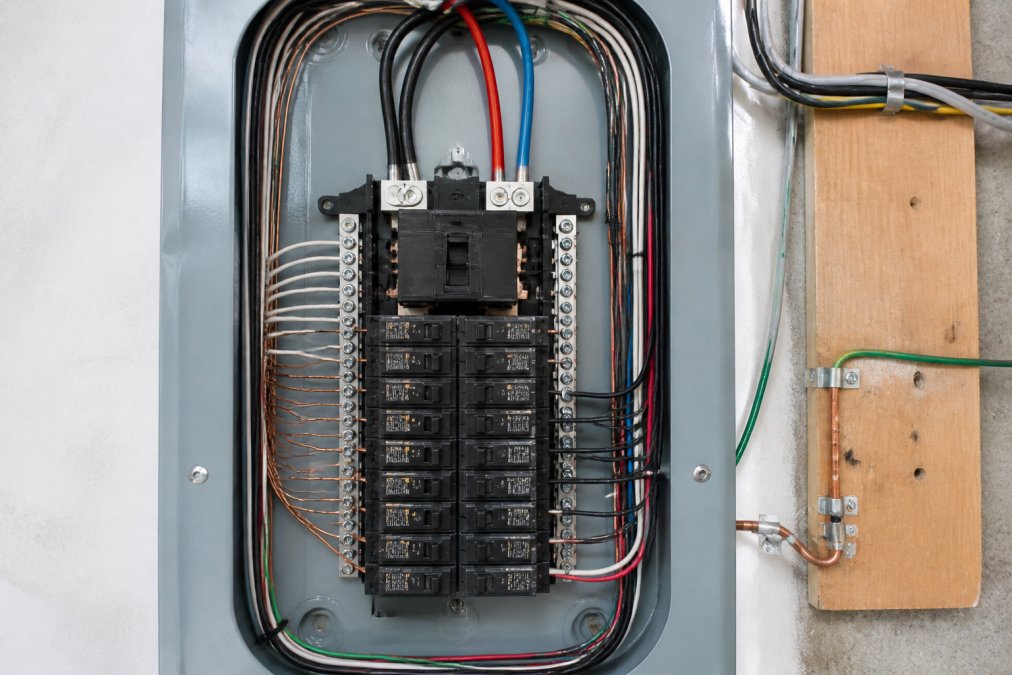
The main breaker must be properly sized for your service entrance conductors. If you’re upgrading to 200 amps, your main breaker is 200 amps, and your service entrance conductors must be rated for 200 amps. This isn’t negotiable, undersizing creates fire risk.
All circuits must be protected by properly sized overcurrent protection devices (breakers). A 20-amp circuit needs a 20-amp breaker. This matching of breaker to wire size prevents wires from overheating if a fault occurs.
Grounding and bonding are critical safety requirements. Your panel must be connected to a grounding electrode, typically a ground rod driven into the earth near your home. All metal parts of your electrical system must be bonded together, creating a continuous low-resistance path.
Arc-fault circuit interrupters (AFCIs) and ground-fault circuit interrupters (GFCIs) are required in specific locations (nfpa.org). AFCIs protect against arc faults that can cause fires. GFCIs protect against ground faults that can cause shock.
The panel itself must be accessible and properly labeled. Every breaker must be clearly labeled to indicate what circuit it controls. Ventilation and clearance around the panel are required, typically 3 feet of clear space in front.
All connections must be tight and secure. Loose connections generate heat, which can lead to fires. Your local electrical inspector verifies compliance with all these requirements during the final inspection.
Code compliance isn’t bureaucratic overhead, it’s the difference between a safe electrical system and a fire hazard.
Professional Installation vs. DIY Considerations
Panel upgrades are not DIY projects. Working inside an electrical panel exposes you to lethal voltage even when the main breaker is off. The utility’s service lateral still carries full voltage to your meter and main breaker.
Improper installation creates long-term dangers. Loose connections overheat. Undersized conductors melt. Improperly sized breakers fail to protect circuits. Grounding errors prevent fault current from dissipating safely. Any of these can cause fires or electrocution.
Insurance won’t cover damage from unpermitted or improperly installed electrical work. Building inspectors will catch unpermitted work during home inspections or appraisals, creating disclosure obligations and potentially killing a sale.
A licensed electrician has the training, tools, and insurance to do the work safely and legally. Voltedge Electrical’s licensed and insured electricians handle panel upgrades regularly. They manage all coordination with utilities and inspectors, pull permits, and ensure the work meets code.
Upgrading your 100-amp panel to 200 amps is the right move if your home needs more capacity for modern appliances, EV chargers, or future expansion. The process requires coordination with your utility, local inspectors, and a licensed electrician, but it results in a safe, code-compliant electrical system designed for decades of reliable service.
If you’re ready to explore a panel upgrade for your home, Voltedge Electrical can assess your electrical needs, coordinate with your utility company, handle all permitting and inspections, and complete the installation to code. Our licensed and insured electricians bring deep local expertise and a commitment to safe, transparent workmanship. Inquire now to schedule an electrical assessment and get started on powering your home safely and efficiently.
| Upgrade Step | Timeline | Who Handles It |
|---|---|---|
| Load calculation and assessment | 1-2 weeks | Licensed electrician |
| Permit application | 1-2 weeks | Building department |
| Utility coordination | 1-2 weeks | Utility company / electrician |
| Panel installation | 1 day | Licensed electrician |
| Final inspection | 1 week | Local electrical inspector |
| Total Process | 4-8 weeks | Multiple parties |
Frequently Asked Questions
What are the main signs that I need to upgrade my 100 amp panel?
Common indicators include frequent breaker trips, dimming lights when multiple appliances run, an inability to power new devices like EV chargers or HVAC systems, and a panel that’s over 25 years old. Older panels may also lack proper arc fault and ground fault protection required by modern NEC code. If you’re planning to add significant electrical loads, a professional assessment can determine if your 100 amp service is sufficient or if an upgrade to 200 amp service is necessary.
Can I upgrade my electrical panel myself, or do I need a licensed electrician?
Electrical panel upgrades involve high-voltage work that poses serious safety risks and must comply with NEC code and local building codes. Only a licensed electrician should perform this work. The process requires permits, inspections, and coordination with your utility provider. Attempting DIY work could result in electrical shock, fire, code violations, insurance issues, and fines. Hiring a licensed electrician ensures the job meets all safety and compliance requirements.
How much does it cost to upgrade a 100 amp panel to 200 amp service?
The cost depends on several factors including your location, whether the utility service drop needs upgrading, local permit fees, inspection costs, and labor rates. Additional expenses may include disconnecting and reconnecting the service lateral, upgrading the meter socket, and installing new grounding electrodes. For an accurate estimate, contact a licensed electrician who can evaluate your specific situation and provide transparent pricing based on your home’s requirements.
Do I need a permit to upgrade my electrical panel?
Yes, an electrical permit is required for any panel upgrade. The permitting process ensures the work meets NEC code and local building codes. Your electrician will typically handle permit applications and coordinate with the local authority having jurisdiction. After installation, a final inspection confirms the upgrade is code-compliant before the utility company energizes the new service. Skipping permits can result in fines, insurance denial, and resale complications.
