


Table of Contents
- Why Finding a Reliable Electrician Matters
- How to Verify an Electrician’s License and Credentials
- Check References and Past Project Work
- Questions to Ask an Electrician Before Hiring
- Get Written Quotes and Understand Average Cost of Electrical Services
- Review Online Ratings and Customer Feedback
- Red Flags to Watch For
- Frequently Asked Questions
Last Updated: September 19, 2026
Why Finding a Reliable Electrician Matters
Electrical work is not a DIY project for most homeowners. A single mistake can cause fires, injuries, or costly damage. When you hire an electrician, you’re trusting them with your home’s safety and your family’s wellbeing.
The stakes are high. Bad electrical work kills roughly 400 people per year and injures thousands more, according to the National Fire Protection Association. Faulty wiring causes about 13% of all residential fires. That’s why knowing how to find reliable electricians is one of the most important decisions you’ll make as a homeowner.
This guide shows you how to vet an electrician: verify credentials, ask the right questions, and spot red flags.
Start your search early. Don’t wait until you have an electrical emergency to find a contractor. The best electricians book up weeks in advance, and you’ll make better decisions when you’re not in crisis mode.
How to Verify an Electrician’s License and Credentials
The first step in finding reliable electricians is confirming they’re licensed. Every state requires documented apprenticeship hours and a passing exam. A licensed electrician has proven they know electrical codes and safety standards.
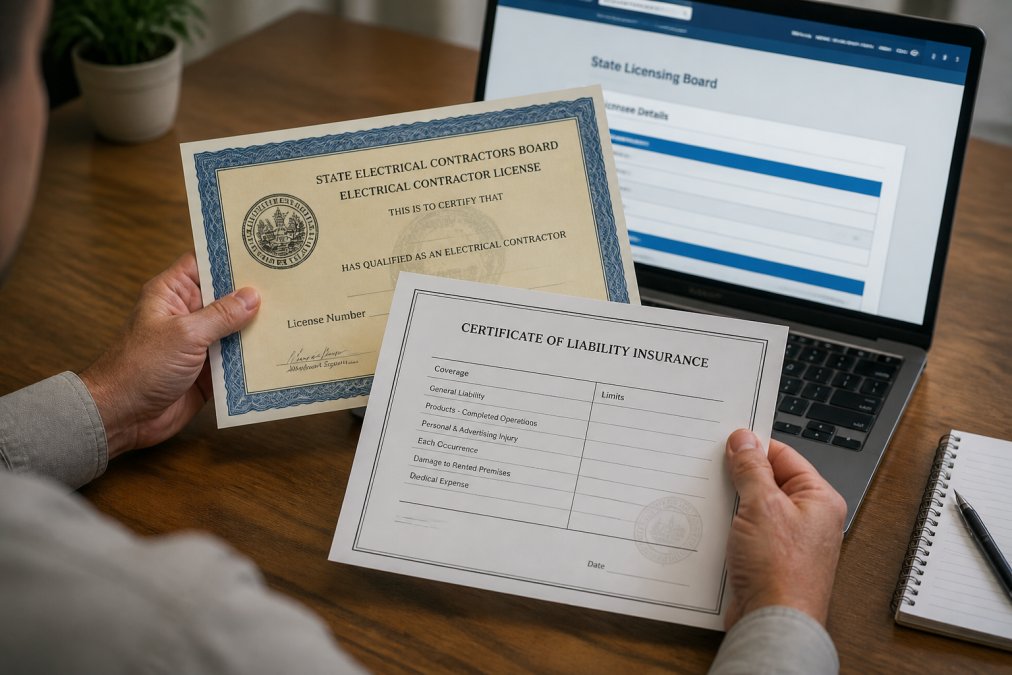
How to Look Up a License in Real Time
Here’s how to verify a license:
Identify your state’s licensing authority. Most states have a Department of Labor or Department of Professional Regulation that oversees electrician licensing. Search “[Your State] electrician license lookup” or visit your state’s official government website.
Gather the electrician’s information. You’ll need their full name and license number. Ask for both before you meet. If they hesitate to provide a license number, that’s a red flag.
Search the state database. Most states offer a free license verification tool. You’ll see the license status, type, dates, complaints, and disciplinary actions.
Check for complaints and violations. Look for multiple recent complaints, suspensions, or fines. One old complaint is less concerning than a pattern of recent issues.
Understanding License Types
There are three main types of electrical licenses:
- Master electrician: Can design systems, supervise others, and work independently. This is the highest level. Most states require 8,000+ hours of apprenticeship and a passing exam.
- Journeyman electrician: Can work independently but cannot supervise apprentices in most states. Typically requires 4,000-8,000 hours of documented apprenticeship.
- Apprentice: Works under supervision while learning the trade. Cannot work alone.
For residential work, hire a master or journeyman electrician. If they’re vague about their license type, move on.
Verify Insurance Independently
Verify they carry liability insurance by calling the insurance company directly. Ask for the company name, policy number, coverage limits (minimum $300,000 for residential work), and effective dates. Confirm the policy is active and covers the work they’ll do.
Never hire an unlicensed electrician, even if they claim they’re “just as good” and charge half the price. Unlicensed work voids your homeowner’s insurance coverage if something goes wrong. You could face liability issues and costly repairs. Additionally, unpermitted electrical work may be discovered during a home inspection or sale, creating legal and financial complications.
Check References and Past Project Work
Ask for at least three references from work completed in the last two years. Call them and ask: Did they show up on time? Was work completed on schedule? Were there hidden costs? Would you hire them again? Enthusiastic references are a good sign; hesitant ones are a warning.
Ask to see photos of past work. Look for clean installations and professional workmanship. For major projects, ask if you can visit a completed job site to see the work in person.
References from real past projects are worth more than any online review. A homeowner who hired them for a similar job can tell you exactly what to expect.
Questions to Ask an Electrician Before Hiring
Before you sign anything, have a detailed conversation with the electrician. The right questions reveal whether they understand your project and can deliver quality work.
Project-Specific Questions
Ask about their approach, timeline, what’s included in the estimate, and whether they’ll handle permits and inspections. Permits are mandatory, if they say you can skip them, that’s a red flag. Ask if they follow the National Electrical Code. If they hesitate, find someone else.
Licensing and Insurance Questions
Ask if they’re licensed, carry liability insurance, and are bonded. A bond protects you if the contractor fails to complete work. Ask about warranty on their labor, most offer one year.
Get everything in writing. A verbal agreement about price, timeline, and scope means nothing if there’s a dispute. A written contract protects both you and the electrician.
Get Written Quotes and Understand Average Cost of Electrical Services
Get at least three written estimates. A written quote should include: detailed description of work, materials, labor costs, timeline, permit costs, inspection fees, and total price with payment terms.
What a Written Quote Should Look Like
Compare this vague quote against a detailed one:
Weak quote: “Electrical work: $3,000”
Strong quote: “Install new 200-amp main panel with 40 breaker spaces, including removal of old 100-amp panel, all new copper wire, breaker installation, permits, inspections, and cleanup. Materials: $1,200. Labor: 16 hours at $85/hour = $1,360. Permits and inspections: $440. Total: $3,000. Work begins [date], estimated completion [date]. 50% deposit due upon signing, 50% due upon final inspection.”
The detailed quote tells you exactly what you’re paying for. If an electrician won’t provide this level of detail, ask why. Vague quotes often hide surprises.
Emergency vs. Routine Pricing: A Critical Difference
One of the biggest pricing gaps competitors ignore is the difference between emergency and routine rates. This directly affects your decision on when to call.
Routine work (scheduled in advance, during business hours):
- Standard hourly rate: $75-$150 per hour, depending on region and complexity
- Flat-fee projects: $500-$5,000+ depending on scope
- Electrician can plan materials and timeline efficiently
Emergency work (nights, weekends, holidays, or urgent same-day service):
- Emergency surcharge: typically 1.5x to 3x the routine rate
- A $100/hour routine job becomes $150-$300/hour after hours
- Minimum service call: $150-$300 just to show up
- Electrician is pulling away from other work to prioritize you
Example: A simple outlet repair might cost $150 during business hours but $400-$600 for an emergency evening call. A panel replacement might be $3,000 scheduled versus $6,000+ as an emergency.
This is why scheduling non-urgent work in advance saves money. If your lights flicker occasionally but aren’t dangerous, get it on the calendar for next month rather than calling for emergency service.
Spotting Pricing Red Flags
Watch for lowball quotes that lead to surprise charges mid-project. Red flags: hidden permit costs, material markups without transparency, charging for estimates, and pressure to pay in full upfront. Standard practice is 25-50% deposit, balance on completion.
Payment Terms and Deposits
Ask about payment terms explicitly. Most electricians require a deposit before starting work. Typical deposits are 25-50% of the total. The balance is due upon completion or final inspection.
Never pay in cash for large jobs unless you’re getting a significant discount and you trust the person completely. Credit card or check creates a paper trail and gives you recourse if the work is poor.
For multi-day projects, ask if they’ll accept progress payments. For example: 25% upfront, 25% when materials arrive, 25% when rough-in is complete, 25% upon final inspection. This protects both of you.
Review Online Ratings and Customer Feedback
Online reviews give you insight into the electrician’s customer service and reliability. Check Google, Yelp, and the Better Business Bureau.
Look for patterns in the reviews. One negative review doesn’t mean much.
Online reviews are one data point, not the whole picture. Combine them with references, credentials, and your gut feeling about the person.
Red Flags to Watch For
Some warning signs should disqualify an electrician immediately:
No license or insurance. This is non-negotiable. Walk away.
Pressure to decide quickly. A good electrician doesn’t need to pressure you into hiring them. They’re busy enough. If someone pushes hard or says “this price is only good today,” that’s a sales tactic, not a professional approach.
| Verification Step | What to Check | How to Verify |
|---|---|---|
| License | Active license status | State licensing board website |
| Insurance | Liability coverage active | Request proof of insurance |
| References | Past customer satisfaction | Call 3+ recent clients |
| Written Estimate | Detailed scope and pricing | Compare 3+ quotes |
| Online Reviews | Customer service patterns | Google, Yelp, BBB |
| Red Flags | Pressure, cash-only, no permits | Ask questions, trust your instincts |
Frequently Asked Questions
What is the best way to verify an electrician’s license and insurance?
Contact your state’s licensing board directly, most maintain searchable online databases where you can verify an electrician’s license status, journeyman or master certification, and any disciplinary history. Ask the electrician for proof of current insurance and bonding, then call the insurer to confirm coverage is active. Licensed and insured electricians are essential for protecting you from liability if something goes wrong during the job.
What questions should I ask an electrician before hiring?
Ask about their experience with your specific project type (panel upgrades, EV charger installation, code compliance, etc.), whether they pull permits and handle inspections, their warranty on work, and emergency availability if needed. Request references from similar projects, clarify if pricing is hourly or flat fee, and ask what’s included in the estimate. These questions to ask an electrician before hiring help you assess whether they’re truly reliable and transparent.
How much should I expect to pay for electrical work?
The average cost of electrical services varies widely based on project scope, complexity, and local market rates. Simple service calls may cost less than panel upgrades or new installations. Request written quotes from multiple electricians to compare pricing. Be cautious of quotes significantly lower than others, they may indicate cut corners or hidden fees. Always ask for a detailed breakdown of labor, materials, and any permits or inspection costs.
How can I tell if an electrician is qualified for my specific project?
Ask about their experience with your exact project type and request references from similar work. Verify they hold the appropriate license level, master electricians can handle complex installations, while journeymen work under supervision. Check if they’re familiar with current building codes and safety standards for your area. Licensed electricians stay current on code compliance, which is critical for electrical safety and home inspections.
