


Table of Contents
- Why Hiring Licensed Electricians in Florida Matters
- Current Electrician Job Market and Demand in Florida
- Verify Electrician License Insurance Before You Hire
- Questions to Ask Before Hiring an Electrician
- Cost of Hiring an Electrician per Hour in Florida
- Understanding Licensing Reciprocity and Career Paths
- How to Apply for Electrical Jobs and Find the Right Fit
- Conclusion: Building a Safer Electrical Future in Florida
- Frequently Asked Questions
Last Updated: September 4, 2026
Why Hiring Licensed Electricians in Florida Matters
The decision to hire a licensed electrician in Florida is the single most important factor in protecting your property, your family, and your investment. Electrical work is not a place for guesswork; faulty wiring and improper installations are leading causes of residential fires and equipment damage (fema.gov). When you hire a licensed electrician, you are securing a professional who has passed state exams, met rigorous experience requirements, and committed to ongoing education in the National Electrical Code.
At Voltedge Electrical, we have seen the aftermath of unlicensed work, and the cost of fixing mistakes almost always exceeds the cost of doing the job right the first time. Hiring licensed electricians in florida ensures that every connection, panel upgrade, or new installation meets the strict standards set by state and local authorities. The value is not just in the workmanship but in the accountability and the peace of mind that comes with knowing a professional is behind the job.
The real question isn’t whether you can find someone to do the work, but whether you can find someone who will do it safely and stand behind it. That distinction is what separates a temporary fix from a lasting solution.
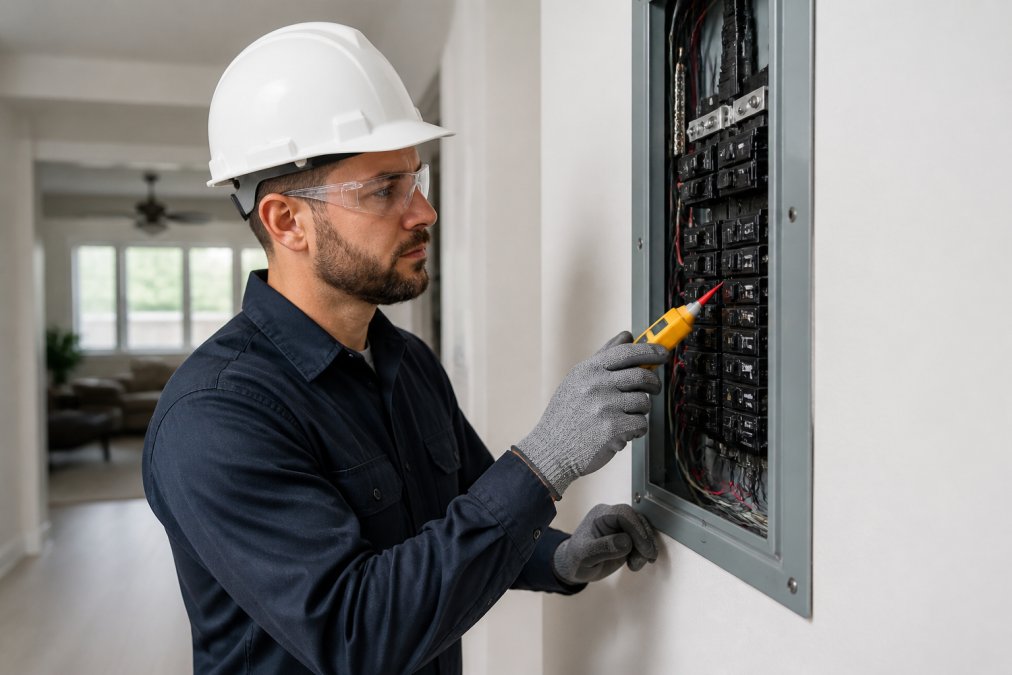
Current Electrician Job Market and Demand in Florida
Florida’s construction and development boom has created sustained demand for qualified electrical professionals across the state. From residential new builds in the suburbs to large-scale commercial projects in urban centers, the need for skilled electricians continues to outpace the available workforce. This market dynamic means that for property owners and managers, finding a qualified contractor requires a strategic approach rather than a quick search.
The demand spans several specializations. Residential electricians focus on wiring, installation, and troubleshooting in homes, while commercial electrical contracting requires expertise in larger, more complex systems. Industrial electricians work with high-voltage equipment and machinery, and a master licensed electrician often oversees projects and ensures code compliance. Understanding which type of professional you need is the first step in a successful hire.
For electricians themselves, this market represents significant opportunity. The electrical trade offers stable career paths, from electrical apprenticeship programs to journeyperson electrician roles and ultimately to master licensed electrician status. For employers, the challenge is finding candidates who not only have the technical skills but also the professionalism to represent a company well on site.
Verify Electrician License Insurance Before You Hire
Before any work begins, you must verify that your electrician holds a valid state license and carries adequate insurance. This is not a formality; it is your primary protection against liability, property damage, and substandard work. A Florida electrical license confirms that the individual or company has met the state’s requirements for training and examination.
To verify electrician license insurance, request the license number and check it against the state’s official database. Confirm that the license is active and in good standing. In addition to the license, request a certificate of insurance that shows both general liability and workers’ compensation coverage. This protects you if an accident occurs on your property or if an uninsured worker is injured.
Never accept a verbal assurance of licensing. If a contractor cannot provide a license number and proof of insurance, do not hire them. The risk of significant financial loss and legal liability is too high.
It is also worth asking about permits. A licensed electrician will typically secure the necessary permits for code-compliant work, ensuring that the installation is inspected and approved by local authorities. This process adds a layer of oversight that protects your investment for years to come.
Questions to Ask Before Hiring an Electrician
Interviewing a potential electrician is your opportunity to gauge their expertise and professionalism. Ask questions to before hiring an electrician that go beyond the price quote. Inquire about their experience with your specific type of project, whether it is a panel upgrade, a new build, or a complex troubleshooting issue. A specialist in residential wiring may not be the best fit for a commercial build-out.
Ask for references from recent, similar projects and follow up on them. A reputable contractor will be happy to provide references. Also, ask about their process for handling unexpected issues. Electrical work often reveals hidden problems once walls are opened, and a clear communication plan for change orders prevents surprises on your final bill.
Other key questions to consider:
- How long have you been in business in this area?
- Who will be performing the work on site, and are they employees or subcontractors?
- Do you offer a warranty on your workmanship?
- How do you handle the permitting process?
- What is your policy on clean-up and daily site maintenance?
The answers to these questions will give you a clear picture of how the contractor operates and whether they align with your expectations for quality and communication.
Cost of Hiring an Electrician per Hour in Florida
The cost of hiring an electrician per hour in Florida is not a single number; it’s a range shaped by certification level, job complexity, and your location within the state. Understanding these drivers helps you budget accurately and evaluate quotes with a critical eye.
As a baseline, you can expect to pay for a licensed journeyperson electrician. A master electrician, who holds the credential required to pull permits and act as a business qualifier, will command a premium. These rates reflect not just the labor but the overhead of maintaining a licensed, insured operation.
However, the hourly rate is only one component of your final bill. Most professional contractors provide a flat-rate quote for defined projects like a panel upgrade or a new circuit installation. This quote bundles labor, materials, and overhead into a single price, protecting you from the uncertainty of a time-and-materials arrangement. For example, a standard panel upgrade or installing a new dedicated circuit for an EV charger or a hot tub will be quoted based on the specific project.
Geographic location also plays a significant role. Electricians in high-cost metropolitan areas often charge more than their counterparts in more rural parts of Central or North Florida. This premium reflects higher business operating costs, including rent, insurance, and wages, which are passed on to the consumer.
Be wary of quotes that are significantly lower than the prevailing market rate. A low bid often signals unlicensed work, inadequate insurance, or a plan to cut corners on materials and code compliance. The cost of fixing a failed inspection or a safety hazard will far exceed any initial savings.
When you request a quote, ask for a detailed line-item breakdown that separates labor, materials, and permit fees. This transparency allows you to compare bids on an apples-to-apples basis and ensures you are not paying for vague ‘miscellaneous’ charges. A clear, itemized quote is the first sign of a professional who values clarity and accountability.
Understanding Licensing Reciprocity and Career Paths
For an out-of-state electrician, the path to a Florida license is not a simple transfer. Florida does not have blanket reciprocity with any state, but it does offer a streamlined endorsement process for applicants who hold a valid license from a state with comparable standards. The Florida Department of Business and Professional Regulation (DBPR) currently recognizes licenses from a specific list of states. If your license is from one of these states, you may be able to obtain a Florida license by endorsement, which typically requires passing a state-specific laws and rules exam rather than the full trade exam.
For electricians from states not on the endorsement list, the process is more involved. You must document your work experience, provide proof of your current license, and pass the full Florida electrical contractor exam. This exam is rigorous, covering the National Electrical Code (NEC) as adopted by Florida, along with state-specific building codes and business practices. Many out-of-state electricians find it beneficial to take a Florida exam prep course to familiarize themselves with the state’s specific amendments to the NEC.
For those entering the trade, the career path in Florida is structured and well-defined, offering a clear trajectory from apprentice to master. The journey begins with a state-registered apprenticeship, which requires a minimum of 144 hours of classroom instruction per year and 8,000 hours of on-the-job training under a licensed electrician (floridajobs.org). This typically takes four to five years to complete. Upon finishing the apprenticeship, you can apply to become a journeyperson electrician, a certification that allows you to work independently on most residential and commercial projects.
After accumulating at least two years of experience as a journeyperson, you are eligible to sit for the master electrician exam. A master license is the highest credential in the trade, granting you the authority to pull permits, act as a business qualifier, and supervise other electricians. This progression is not just a formality; it represents a deepening of knowledge and a commitment to safety that directly benefits the consumer.
When you hire a master electrician, you are not just paying for their ability to wire a circuit. You are paying for a decade or more of accumulated expertise, a deep understanding of the Florida Building Code, and the legal accountability that comes with holding the highest state credential.
The state’s official licensing database, maintained by the DBPR, is the definitive resource for verifying an electrician’s license status and understanding the specific requirements for reciprocity or endorsement. This structured system ensures that every licensed electrician working in Florida has met a consistent, high standard of competence.
How to Apply for Electrical Jobs and Find the Right Fit
For electricians seeking new opportunities, the application process requires more than submitting a resume. Highlight your specific certifications, such as journeyperson or master electrician status, and your experience with relevant systems like electrical blueprints, preventative maintenance, and troubleshooting. Demonstrating knowledge of OSHA standards and safety protocols is critical, as it signals your commitment to a safe work environment (osha.gov).
Job seekers should also look for employers who offer a clear benefits package and opportunities for career advancement. A company that invests in its team’s continuing education is a sign of a healthy, forward-thinking organization. For those looking to work in Southern Florida, targeting your search to the region will yield more relevant results than a broad statewide query.
When you hire a professional who is actively engaged in their career development, you are securing a team member who is up to date on the latest technologies and best practices. This is particularly important for specialized installations, such as EV charger installations or whole house surge protection, where the technology is rapidly evolving. The right fit is a partnership built on mutual respect and a shared commitment to quality.
Conclusion: Building a Safer Electrical Future in Florida
Hiring licensed electricians in florida is about more than filling a job; it is about building a foundation of safety and reliability for homes and businesses across the state. The process of vetting licenses, asking the right questions, and understanding the market ensures that you are making an informed decision that protects your property and your peace of mind.
At Voltedge Electrical, our team of certified professionals brings deep local expertise and up-to-date knowledge of the latest codes and technologies to every project. We offer customized solutions for residential and commercial clients throughout Southern Florida, backed by 24/7 emergency support and a commitment to prompt, transparent service. When you choose to work with us, you are choosing a partner dedicated to powering your property safely and efficiently.
Get started with Voltedge Electrical and ensure your next electrical project is handled with integrity, reliability, and future-ready innovation. Inquire now to discuss your needs with our licensed and insured team.
=== FAQ ANSWERS (ARTICLE CONTENT, AUDIT EACH ONE SEPARATELY, SAME RULES) ===
[1] Q: How do I verify if an electrician is licensed in Florida?
A: Ask for their state-issued license number and verify it through the Florida Department of Business and Professional Regulation (DBPR) online database. You can also ask to see their physical license card and check that the name matches. This is the only way to confirm you are hiring licensed electricians in Florida who have met the state’s training and exam requirements. Never skip this step, as working with an unlicensed contractor can void your insurance and lead to code violations.
[2] Q: What is the hourly rate for an electrician in Florida?
A: Hourly rates for electricians in Florida vary by location, job complexity, and the contractor’s experience level. Rates are typically quoted per hour, but many jobs are bid at a flat project cost. To get a clear picture, request itemized quotes from a few licensed professionals. The total cost reflects the electrician’s time, materials, and overhead. Always ask for a written estimate before work begins to avoid surprises.
[3] Q: Is there a demand for electricians in Florida?
A: Yes, demand for skilled electricians in Florida remains strong, driven by new construction, population growth, and the need to upgrade older electrical systems to meet current code. This high demand applies to both residential and commercial projects. For property owners, this means booking a licensed electrician in advance is wise, especially for large projects like panel upgrades or EV charger installations. For professionals, it signals strong job security and career advancement opportunities within the electrical trade.
[4] Q: What insurance requirements should I look for when hiring an electrician?
A: When you verify electrician license insurance, you should confirm they carry both general liability insurance and workers’ compensation coverage. General liability protects your property if the work causes damage, while workers’ comp protects you from liability if an electrician is injured on your job site. Ask for a certificate of insurance and check the policy dates are current. This protects you and the contractor, and it is a hallmark of a professional, established business.
[5] Q: Why should I avoid hiring unlicensed electrical contractors?
A: Hiring an unlicensed contractor is risky on several levels. They are not required to follow Florida’s electrical code compliance standards, which means their work may be unsafe and could fail inspection. If they cause a fire or damage, your homeowner’s insurance may not cover the loss. You also have no official channel to file a complaint. Hiring licensed electricians in Florida ensures the work is done by a trained professional who is accountable to the state.
Frequently Asked Questions
How do I verify if an electrician is licensed in Florida?
Ask for their state-issued license number and verify it through the Florida Department of Business and Professional Regulation (DBPR) online database. You can also ask to see their physical license card and check that the name matches. This is the only way to confirm you are hiring licensed electricians in Florida who have met the state’s training and exam requirements. Never skip this step, as working with an unlicensed contractor can void your insurance and lead to code violations.
What is the hourly rate for an electrician in Florida?
Hourly rates for electricians in Florida vary by location, job complexity, and the contractor’s experience level. Rates are typically quoted per hour, but many jobs are bid at a flat project cost. To get a clear picture, request itemized quotes from a few licensed professionals. The total cost reflects the electrician’s time, materials, and overhead. Always ask for a written estimate before work begins to avoid surprises.
Is there a demand for electricians in Florida?
Yes, demand for skilled electricians in Florida remains strong, driven by new construction, population growth, and the need to upgrade older electrical systems to meet current code. This high demand applies to both residential and commercial projects. For property owners, this means booking a licensed electrician in advance is wise, especially for large projects like panel upgrades or EV charger installations. For professionals, it signals strong job security and career advancement opportunities within the electrical trade.
What insurance requirements should I look for when hiring an electrician?
When you verify electrician license insurance, you should confirm they carry both general liability insurance and workers’ compensation coverage. General liability protects your property if the work causes damage, while workers’ comp protects you from liability if an electrician is injured on your job site. Ask for a certificate of insurance and check the policy dates are current. This protects you and the contractor, and it is a hallmark of a professional, established business.
Why should I avoid hiring unlicensed electrical contractors?
Hiring an unlicensed contractor is risky on several levels. They are not required to follow Florida’s electrical code compliance standards, which means their work may be unsafe and could fail inspection. If they cause a fire or damage, your homeowner’s insurance may not cover the loss. You also have no official channel to file a complaint. Hiring licensed electricians in Florida ensures the work is done by a trained professional who is accountable to the state.
