


Table of Contents
- What Qualifies as an Electrical Emergency
- How to Find a Licensed Electrician for 24 Hour Repairs
- Understanding Emergency Electrician Cost and Pricing
- What to Do While Waiting for Your 24 Hour Electrician
- Preventing Electrical Emergencies Before They Happen
- Why 24 Hour Availability Matters for Electrical Emergencies
- Frequently Asked Questions
Last Updated: August 31, 2026
What Qualifies as an Electrical Emergency
An electrical emergency is any situation where faulty wiring, a power outage, or equipment failure creates an immediate risk to your home’s safety or your family’s wellbeing. Understanding which problems demand emergency service versus those that can wait could save your life.
Immediate Dangers That Require Emergency Service
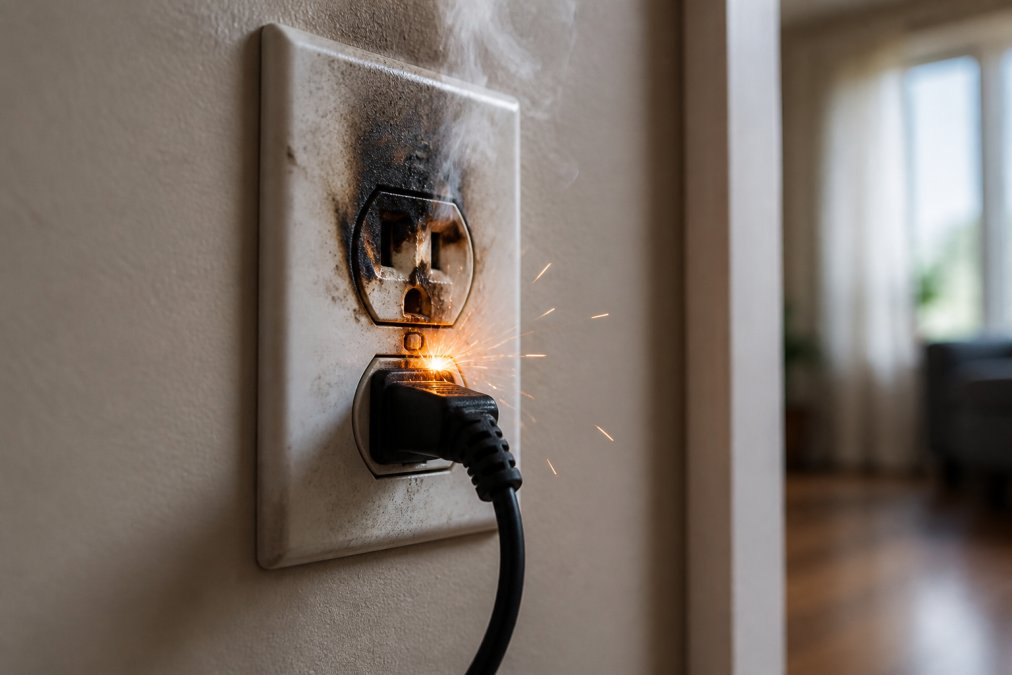
A burning smell from an outlet, visible sparking, or flickering lights paired with buzzing all signal immediate danger. Stop using the affected circuit and call for emergency service.
A short circuit occurs when two wires touch and create an unintended path for electricity, generating heat that can ignite surrounding materials (nfpa.org). Faulty wiring behind walls produces a telltale burning smell. If you notice it, turn off power to that area at the electrical panel and call for help.
Water exposure to electrical systems is another clear emergency. If you’ve experienced flooding, a pipe burst near wiring, or water dripping onto an outlet or light fixture, the combination creates electrocution risk. Have a licensed electrician inspect the affected areas before restoring power.
A tripped circuit breaker that won’t stay reset, especially if it trips repeatedly, indicates an overload or fault condition. Your electrical panel is designed to protect you by cutting power when something goes wrong. If it keeps tripping after reset, the underlying problem needs professional diagnosis.
Power outages affecting only your home (while neighbors have power) suggest a problem at your meter, service entrance, or main panel. Call for emergency service to determine whether the issue is on your property or with the utility.
When to Wait vs. When to Call Now
A single outlet that stopped working, with no burning smell or sparking, can wait until business hours. The same goes for a light switch that no longer controls its fixture or a dimmer that behaves erratically.
Flickering lights throughout your home warrant faster attention. This could indicate a loose connection at the main panel or utility line that worsens over time. If flickering is isolated to one room, it’s less urgent. If it’s happening everywhere, call within 24 hours.
A breaker that trips once and then holds is often a one-time overload. Unplug something and move forward. But if it trips again within hours or without added load, that’s a fault condition deserving professional attention.
Outlets that are warm to the touch are a red flag. Heat at an outlet means resistance in the circuit, which generates more heat over time. This is a fire hazard that should be addressed within 24 hours.
The key distinction: Does the situation pose an immediate risk of fire or electrocution right now? If yes, call for emergency service. If the risk is building but not imminent, schedule service within 24 hours.
How to Find a Licensed Electrician for 24 Hour Repairs
Finding a qualified professional at 3 a.m. on a Sunday is harder than during business hours, which is why vetting electricians before an emergency happens is smart.
Confirm that any electrician you’re considering is actually licensed in your state. Licensing requirements protect you. A licensed electrician has passed exams demonstrating knowledge of electrical code, safety practices, and proper installation techniques.
Ask directly: “Are you licensed, bonded, and insured?” A legitimate electrician will answer without hesitation and provide proof. Bonding protects you if the electrician damages your property or fails to complete work as promised. Insurance covers injuries if something goes wrong on your property.
Voltedge Electrical maintains full licensing and insurance specifically because emergency situations demand accountability.
Verification Steps Before Hiring
Before you need emergency service, spend 15 minutes vetting one or two local electricians. Call their main line during business hours and ask:
Do they offer 24 hour service, and what’s the response time? Some say they’re available but take hours to arrive. Others have technicians on call and arrive within 30 minutes.
What is their emergency call-out fee, and is it separate from the service charge? Understanding the structure prevents sticker shock when you’re stressed.
Will they provide an estimate before starting work? A reputable electrician will assess the problem and give you a cost range before proceeding.
How do they handle payment? Do they take credit cards, or cash only? Can you pay by phone before they arrive?
Ask for references from customers who’ve used them for emergency calls. Someone who’s been through a 2 a.m. electrical crisis can tell you whether the electrician actually showed up, worked efficiently, and communicated clearly.
Red Flags to Avoid
A contractor who refuses to provide a license number or insurance information is not someone to hire. The same goes for anyone who quotes prices over the phone without seeing the problem or pressures you to decide immediately.
Watch for electricians who suggest replacing major components before diagnosing the actual problem. A qualified professional will explain what’s wrong, show you the evidence, and discuss repair options.
Be skeptical of anyone who guarantees they can fix anything in under an hour or won’t give you an estimate range. An honest electrician will say, “I need to look at it first, but based on what you’re describing, this typically takes 2-4 hours and costs between $X and $Y.”
Avoid contractors with no online presence, no reviews, or fabricated reviews. A real business with real customers has a track record you can verify.
Understanding Emergency Electrician Cost and Pricing
Emergency electrical service costs more than routine work because electricians who maintain 24 hour availability must staff their business differently, with people on call ready to leave their homes at any hour. That overhead gets passed to you as a higher rate.
The cost structure typically includes three components: a call-out fee, an hourly labor rate (typically higher after hours), and the cost of any parts or materials needed. Some companies bundle the call-out fee into their labor charge; others keep it separate.
What matters most is transparency. A good electrician will tell you upfront what the call-out fee is, what their emergency labor rate is, and what they estimate the parts will cost. If they can’t give you a range until they’ve diagnosed the problem, that’s reasonable, but they should still explain the process and get your approval before exceeding the estimate.
What to Do While Waiting for Your 24 Hour Electrician
The minutes between calling for help and the electrician’s arrival are critical. What you do during that window can prevent the situation from worsening.
Safety Steps You Can Take Immediately
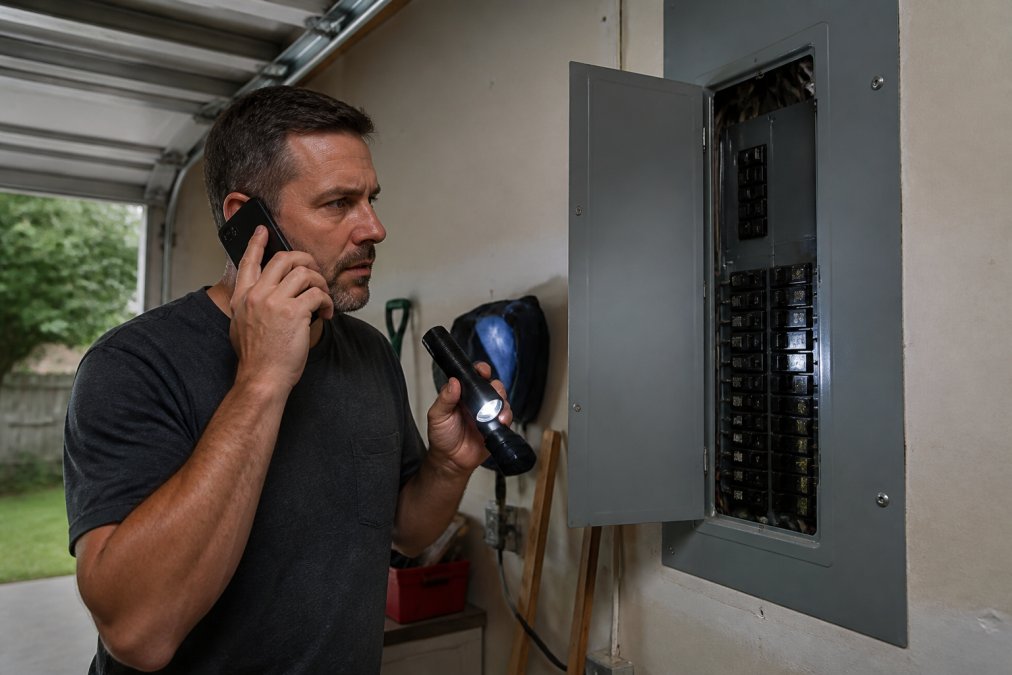
If you smell burning or see sparks, turn off power to that area immediately at the circuit breaker. If you can’t identify which breaker controls the affected circuit, turn off the main breaker. Yes, this plunges your home into darkness, but it stops the immediate hazard.
Do not touch the affected outlet, switch, or wiring. Do not pour water on sparking electrical equipment. Do not attempt to unplug anything from a sparking outlet. Your job is to isolate the problem and stay safe until help arrives.
If water is involved, turn off power to that area and keep people and pets away from the wet zone. Do not walk through standing water near electrical equipment.
If someone has been electrocuted, call 911 immediately. Do not touch the person if they’re still in contact with the electrical source. Turn off power at the breaker if you can do so safely, or use a non-conductive object to separate them from the source. Once they’re clear, begin CPR if they’re unresponsive and not breathing.
Open windows and doors to ventilate if you smell burning. Fresh air helps, but the real solution is getting power off and having a professional assess the damage.
Information to Prepare for the Call
When you call for emergency service, have these details ready:
Describe exactly what you’re experiencing. “Sparks coming from the outlet in the kitchen” is more useful than “something’s wrong with my electricity.”
Know your address and the best way to access your home. If you live in an apartment building, provide the unit number and gate code.
Tell them what you’ve already done. “I turned off the main breaker” helps the electrician understand the current state.
If you know when the problem started, mention it. “This started 20 minutes ago when the storm hit” tells a different story than “this has been happening for three days.”
Have your phone number confirmed and know if you’ll be answering from a cell phone or landline.
Ask for an estimated arrival time, but understand that emergency calls are prioritized by urgency.
Preventing Electrical Emergencies Before They Happen
The best emergency is the one that never occurs. Many electrical emergencies are preventable if you catch warning signs early.
Have your electrical panel inspected every 5-10 years, especially if your home is older (nfpa.org). An aging panel accumulates wear, corroded connections, and outdated components that increase failure risk.
Pay attention to flickering lights, warm outlets, or breakers that trip occasionally. These are warning signs that something is gradually getting worse. Address them within weeks, not months.
If your home was built before 1980, your wiring may be outdated (cpsc.gov). Older homes often have aluminum wiring (which corrodes and creates fire risk) or knob-and-tube wiring (which lacks grounding and overheats easily). If you’re planning renovations, have an electrician assess whether your existing wiring is safe.
Install surge protection at your main panel. A whole-house surge protector prevents damage from lightning strikes and utility line surges.
Don’t overload circuits. If you find yourself using multiple extension cords and power strips in one area, have an electrician add a new circuit instead of daisy-chaining power strips.
Keep water away from electrical systems. Do not run outlets or switches in areas prone to splashing or moisture. If you have outdoor electrical installations, ensure they’re installed to code with proper grounding and GFCI protection.
Why 24 Hour Availability Matters for Electrical Emergencies
Electrical problems don’t follow business hours. A lightning strike at midnight, a short circuit at 3 a.m., or a flooded basement discovered on a Sunday morning happen when electricians are off the clock. That’s why 24 hour electrical repairs exist.
The alternative to finding a 24 hour electrician is waiting. Waiting through a night with sparks flying from your panel or waiting until Monday morning with water pooling around your wiring puts you and your property at serious risk. Fires spread fastest at night when people are asleep.
A true 24 hour service means someone picks up the phone at 2 a.m., understands the urgency, and dispatches a qualified technician to your location. It’s insurance against catastrophe.
Voltedge Electrical maintains round-the-clock availability because emergencies are part of the job. Our team understands that a circuit breaker doesn’t fail during business hours just because it’s more convenient. When you call at any hour with an electrical hazard, you get a licensed professional who can diagnose the problem, explain your options, and fix it safely.
Electrical emergencies demand fast, qualified response. The difference between a minor repair and a house fire often comes down to whether you can reach a licensed electrician immediately. Voltedge Electrical’s 24 hour emergency service, licensed technicians, and transparent approach to diagnosis and repair mean you’re never alone when an electrical crisis hits. When sparks are flying or water is pooling near your wiring, you need someone who answers the phone and arrives ready to work. Inquire Now to confirm we’re your emergency contact, and rest easier knowing qualified help is available whenever you need it.
Frequently Asked Questions
Q: What is considered an electrical emergency?
A: An electrical emergency includes sparking outlets, burning smells from outlets or panels, flickering lights throughout your home, exposed wiring, power loss affecting your entire house, or any situation where you suspect a short circuit or electrical fire risk. If you’re unsure whether your situation qualifies, call an emergency electrician, they can assess over the phone and advise whether immediate service is necessary.
Q: Do 24 hour electricians charge more for emergency calls?
A: Many emergency electricians charge higher rates for after-hours service, including nights, weekends, and holidays. Pricing depends on the complexity of the repair and your location. Ask for upfront pricing or an estimate before work begins. Licensed electricians should provide transparent pricing and explain any additional charges for emergency dispatch or after-hours labor.
Q: How can I verify if an emergency electrician is licensed and insured?
A: Ask the electrician for their license number and insurance certificate before they begin work. You can verify licensing through your state’s electrical licensing board. Request proof of liability insurance and workers’ compensation coverage. Licensed professionals will provide this information without hesitation, it’s a sign of a reputable contractor who stands behind their work.
Q: What should I do while waiting for an emergency electrician to arrive?
A: Turn off power to affected areas using your circuit breaker if safe to do so. Avoid touching sparking outlets or exposed wiring. Move away from the hazard and keep family members and pets clear. If there’s a burning smell, evacuate and call emergency services. Have your home’s electrical panel information and a description of the problem ready to share with the electrician when they arrive.
This article was written using GrandRanker
