


Table of Contents
- Do You Need a Permit for an EV Charger Installation?
- Step 1: Gather Your Documentation and Site Plan
- Step 2: Submit Your Permit Application
- EV Charger Installation Permit Cost and Fees
- Average Timeline for EV Charger Installation Approval
- Hiring a Licensed Electrician for EV Charger Installation
- What to Do If Your Permit Is Denied
- Scheduling the Final Inspection
- Frequently Asked Questions
Last Updated: September 6, 2026
Do You Need a Permit for an EV Charger Installation?
Most residential EV charger installations require a permit (energy.gov). The permitting process exists to verify that your new charging station meets the National Electrical Code (NEC) and local safety standards, protecting your home from fire and electrical hazards. While the rules vary by municipality, almost every jurisdiction treats a dedicated EV circuit as a permanent modification that requires review. We handle this process for homeowners across Southern Florida, and we know how a little preparation prevents major delays.
The permit exists because a Level 2 charging station draws a continuous, heavy load. An inspector needs to confirm that your wiring, breaker, and connections are rated for that demand. Skipping the permit can void your homeowner’s insurance, create liability if something fails, lead to expensive fines, and complicate a future home sale when the buyer’s inspection uncovers unpermitted work.
Step 1: Gather Your Documentation and Site Plan
Start by assembling the paperwork your local building department will request. A complete application package is the single fastest way to avoid back-and-forth with reviewers. Most departments require a site plan showing where the charger will mount, the path of the new conduit, and the location of your electrical panel.
Expect to provide a detailed description of the equipment, including voltage requirements and amperage capacity, and to identify whether you are installing a hardwired unit or a plug-in model, as this affects inspection criteria. Your licensed electrician typically prepares these documents, which is one reason hiring a professional simplifies the experience.
Load Calculation and Panel Capacity
The most common rejection reason is an inadequate electrical service. Your electrician must perform a load calculation to prove your existing panel can handle the additional demand of the EV supply equipment (EVSE). Many older homes, particularly those built before 2000, operate on a 100-amp panel already near capacity.
If your calculation shows the panel is maxed out, you face an electrical service upgrade before the permit can be approved. This is critical because the inspector will check the math against the NEC. A 50-amp circuit for a typical Level 2 charger requires significant headroom, and an upgrade to 200-amp service is often the solution. We can pair charger installations with panel upgrades to ensure code compliance.
Step 2: Submit Your Permit Application
With your documentation complete, you submit the permit application to your local building department along with the required fee. The application typically asks for your property address, the contractor’s license number, the scope of work, and the specific equipment model, plus your site plan and load calculation.
The building department will review your package for compliance with zoning requirements and the NEC against a fixed checklist. If everything is in order, they issue the permit, and you can schedule the installation work.
Online Portals vs. In-Person Submissions
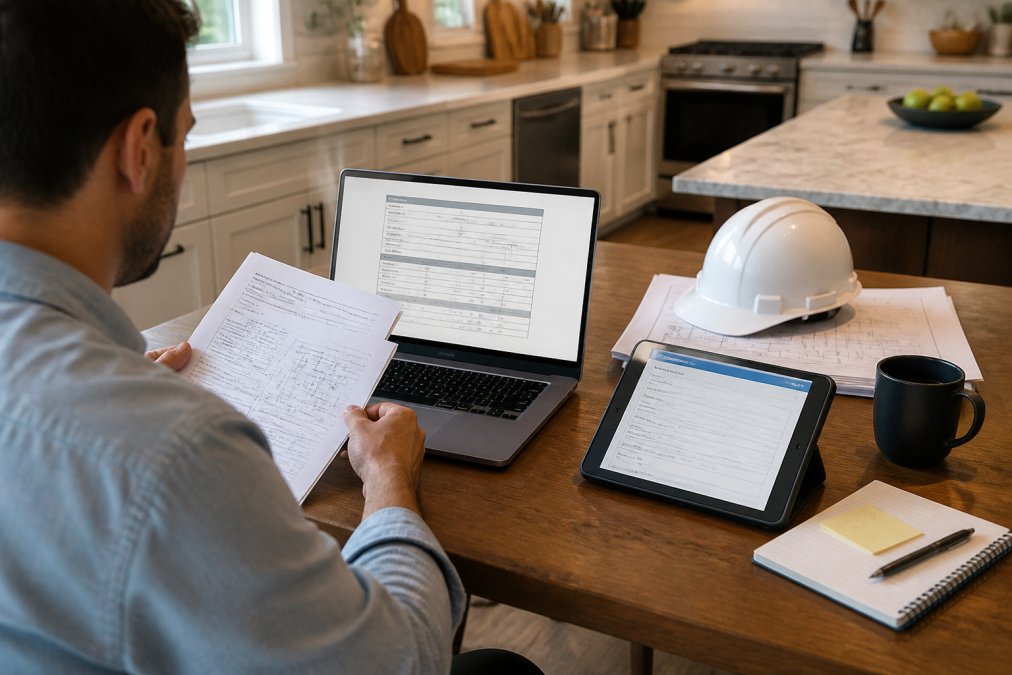
Many municipalities now operate an online portal for permit applications, allowing you to upload PDFs, pay fees, and track your approval timeline digitally. This is usually the fastest route, as it eliminates the need to visit in person.
In-person submissions still exist in some jurisdictions, particularly for complex commercial packages. The trade-off is speed versus guidance: a counter agent can flag missing documents on the spot, whereas an online portal may take a few days to request corrections. For a straightforward residential installation, the online portal is almost always the better choice.
EV Charger Installation Permit Cost and Fees
The permit cost is a line item that surprises many homeowners, but it is rarely the budget-breaker. While a national flat rate does not exist, you can expect to pay a fee that is a small fraction of the total installation cost.
Most municipalities structure their fees in one of three ways:
- Flat Fee: A fixed charge for any new residential circuit. This is common in many mid-sized cities.
- Sliding Scale by Project Value: Some jurisdictions charge a fee based on the declared value of the electrical work.
- Time-and-Materials Review: For complex projects, such as those requiring a service panel upgrade, the building department may charge an hourly rate for plan review. This is less common for residential EV installs.
Beyond the base permit fee, budget for potential add-ons. Some municipalities charge a separate fee for the final inspection, while others bundle it into the initial cost. If your project requires a zoning review, more common in historic districts or for commercial properties, an additional fee may apply.
A critical financial angle is the connection between your permit and utility rebates. Many utility providers offering EV-specific time-of-use rates or charger rebates require proof of a permitted and inspected installation before issuing a rebate check (energy.gov). Skipping the process can mean forfeiting a rebate that might cover the permit cost several times over.
To get the exact number for your address, check your local building department’s online fee schedule for the line item labeled “Electrical Permit – Residential” or “New Circuit.” If unclear, a quick call to the permit counter with your project scope, “installing a 50-amp circuit for a Level 2 EV charger“, will get you a precise quote. A licensed electrician will also include this fee in their proposal, so ask for it in writing before work begins.
Average Timeline for EV Charger Installation Approval
The average timeline for approval ranges from a few days to several weeks. A residential application submitted through an online portal with complete documentation is often approved within 3 to 5 business days (hud.gov). Applications requiring plan revisions or an electrical service upgrade take longer, as the reviewer may need to check new panel specs against utility requirements.
The timeline depends heavily on how busy your local building department is, and review queues stretch during peak construction season. A common mistake is waiting until after the charger arrives to start the permitting process. Since the approval timeline is outside your control, file as early as possible. A licensed electrician can flag potential issues before submission, preventing the most common cause of delay: a rejection that sends you back to the drawing board. Our familiarity with local requirements helps keep the timeline as short as possible.
Hiring a Licensed Electrician for EV Charger Installation
Hiring a licensed electrician is not just a recommendation; it is a requirement in most jurisdictions. The permit application itself often demands the contractor’s license number, meaning you cannot pull the permit as an unlicensed homeowner in many areas. Even where DIY permits exist, the complexity of the load calculation and the high amperage involved make professional installation the safer choice.
A licensed electrician brings two critical assets: the knowledge to pass inspection and the insurance to protect you if something goes wrong. They also handle coordination with the building department, from submitting the application to scheduling the final inspection. When you hire a professional, you are paying for their familiarity with the code, not just the physical labor.
The Multi-Unit Dwelling (MUD) and HOA Permitting Maze
The single-family home process is straightforward compared to the permitting reality for condos, apartments, and townhomes governed by a homeowners association (HOA). If you live in a multi-unit dwelling, the process expands to include layers of approval that a detached-home owner never sees, a critical gap in most online guides, which assume you own the walls and the parking spot outright.
Here is what a licensed electrician must navigate for a MUD installation:
- HOA Architectural Review: Before you even contact the building department, your HOA or condo board likely requires an architectural review application. This is a separate approval process focused on aesthetics and common-area impact. You may need to submit photos of the proposed charger location, the conduit path, and a plan for how the wiring will cross shared property. HOA approval can take anywhere from a week to over a month, depending on board meeting schedules.
- Common Area Easements: In a condo building, the electrical panel may be in a shared mechanical room, and the conduit may need to run through a common hallway or garage. This triggers an easement or right-of-way review. The building department will want to see that you have the legal authority to modify common areas, which often requires a board resolution or a signed maintenance agreement.
- Metering and Sub-metering: A licensed electrician must determine whether the new circuit can be tied to your individual utility meter or if it must be sub-metered. In many older MUDs, the parking area is on a common meter, meaning your charger’s electricity would be billed to the HOA. This requires a separate agreement with the HOA for energy reimbursement, and it may require a more complex electrical design to isolate your usage.
- Fire-Rated Wall Penetrations: When running conduit through a wall that separates a parking garage from living space, the electrician must maintain the fire-resistance rating of that wall. This often requires a specific fire-stop sealant and a different inspection step than a standard residential install. The inspector will check this penetration closely, and a failure here means a re-inspection.
- Parking Space Ownership: If your parking spot is not deeded, but is a common area assigned by the HOA, you may need a formal lease or license agreement for that space to be included in your permit application. The building department may require proof that you have the right to install a permanent fixture in that spot.
A licensed electrician with MUD experience will know which layers apply to your building and will coordinate the sequence: HOA approval first, then the building permit, then utility coordination. Attempting this without a professional who understands the interplay between HOA covenants, local zoning, and the NEC is a recipe for months of delays. Ask any prospective electrician: “How many EV charger permits have you pulled for condos or HOAs in this city?” If the answer is vague, keep looking.
What to Do If Your Permit Is Denied
A permit denial is not the end of the road; it is a request for more information. The most common reasons are an incomplete site plan, an inadequate load calculation, or a panel that lacks capacity for the new circuit. Read the denial letter carefully, as it will cite the specific code section or missing document that triggered the rejection.
Do not attempt to bypass the system by proceeding without approval. The consequences include fines, a stop-work order, and difficulty selling your home. Instead, address the cited issues. If the denial stems from an electrical service upgrade, that work must be completed and inspected first. A qualified electrician can revise the load calculation or recommend the panel upgrade needed to satisfy the reviewer.
Scheduling the Final Inspection
After the installation is complete, you schedule the final inspection with the building department. The inspector will visit your property to verify that the work matches the approved plan and meets the NEC. This is the last hurdle, and it is not a formality, the inspector checks the breaker size, wiring gauge, grounding, and physical mounting of the unit.
Post-Installation Inspection Checklist
Before the inspector arrives, run through this checklist to avoid a failed inspection:
- Confirm the charger is mounted securely at the approved location
- Verify the breaker in the panel matches the amperage rating on the permit
- Check that all wiring connections are tight and enclosed in approved conduit or cable
- Ensure the ground fault protection is functioning correctly
- Clear the area around the panel and charger for easy inspector access
- Have your permit number and approval documents ready to show
A failed inspection means a re-inspection fee and a second visit. Preparing for the final inspection is the last step to getting your charger operational and code-compliant. Once the inspector signs off, you receive a certificate of completion, and your installation is officially legal and safe.
Navigating the EV charger installation permitting process requires attention to detail, from the initial load calculation to the final inspection sign-off. The paperwork can feel overwhelming, but the process protects your home and ensures your new charger operates safely for years. Voltedge Electrical handles this entire journey for homeowners and commercial clients throughout Southern Florida. Our licensed and insured electricians manage the permit application, coordinate with the building department, and work to ensure your installation passes inspection. With our up-to-date knowledge of the latest codes and our focus on transparent service, you can focus on driving electric while we handle the compliance. Inquire Now to start your installation with a team that brings the permit expertise to you.
Frequently Asked Questions
Do I need a permit to install an EV charger in Florida?
Yes, in most Florida jurisdictions, you need an electrical permit to install an EV charger. Because a charging station is a new, dedicated circuit, local building departments require a permit to verify the work meets the National Electrical Code (NEC). This rule applies to both hardwired units and new 240-volt outlets for plug-in chargers. Installing without a permit can lead to fines and problems when you sell your home. A licensed electrician will typically pull the permit for you as part of the installation process.
How long does the EV charger permitting process typically take?
The average timeline for EV charger installation approval varies by location. Many online portals now offer same-day permit approval for straightforward residential installations that meet code. If your project requires plan review, such as a panel upgrade or a commercial submittal package, expect a few business days to a couple of weeks. Delays often happen when the application is missing a site plan or load calculation. Asking your electrician to double-check the paperwork before submission is the fastest way to avoid a hold-up.
Can I install an EV charger myself or do I need a licensed electrician?
While it is legal for a homeowner to pull a permit and do their own electrical work in some areas, it is not recommended. An EV charger installation involves high voltage, load calculations, and strict code compliance. A licensed electrician for EV charger installation understands local requirements and will ensure your panel has enough amperage capacity. Mistakes made during a DIY install can create fire hazards and void your equipment warranty. Most inspectors also look more carefully at work done without a licensed contractor.
What documents are required to submit an EV charger permit application?
A standard residential permit application requires a site plan showing where the charger and electrical panel are located. You will also need a load calculation to prove your panel can handle the new circuit. Many building departments ask for a single-line diagram and the specifications for your EV supply equipment (EVSE). Your electrician usually prepares these documents. A complete project submittal prevents delays and is the key to a smooth approval timeline.
