


Table of Contents
- What Counts as an Electrical Emergency?
- Emergency Electrical Services vs. Standard Call-Out Fees
- How Emergency Electrical Services Pricing Is Calculated
- Cost Breakdown by Common Emergency Repair Type
- When to Call for 24 Hour Electrical Repairs
- How to Reduce the Cost of Emergency Electrical Services
- Frequently Asked Questions
Last Updated: September 7, 2026
What Counts as an Electrical Emergency?
An electrical emergency is any situation presenting immediate risk to life, safety, or property, such as active sparking, burning odors from outlets, or a hot service panel. These conditions demand immediate attention because they can escalate into electrical fires or fatal shocks within minutes. Understanding what warrants an urgent call helps you act decisively.
Common emergencies include visible arcing or sparking, a persistent burning smell with no apparent source, power outages accompanied by buzzing from the panel, and repeatedly tripping circuit breakers that reset and fail again. Signs of electrical emergency also extend to warm wall plates, flickering lights that coincide with appliance use, and any crackling sound from switches.
Do not attempt to investigate a suspected electrical fire or severe shock hazard yourself. Evacuate the area if you smell burning plastic or see smoke, and contact emergency services before calling an electrician.
Emergency Electrical Services vs. Standard Call-Out Fees
The primary difference between standard and emergency electrical services is the timing of the response and the associated cost structure. A standard service visit is scheduled during normal business hours, allowing efficient routing and a conventional hourly rate with a basic service call fee.
Emergency electrical services command a premium because they require immediate dispatch of an on-call technician, often outside normal operating windows. This pricing model covers the labor costs of maintaining 24/7 availability and the overhead of rapid deployment.
How Emergency Electrical Services Pricing Is Calculated
Pricing for emergency electrical services is determined by combining a dispatch or diagnostic fee with the repair labor, then applying multipliers for urgency and time of day.
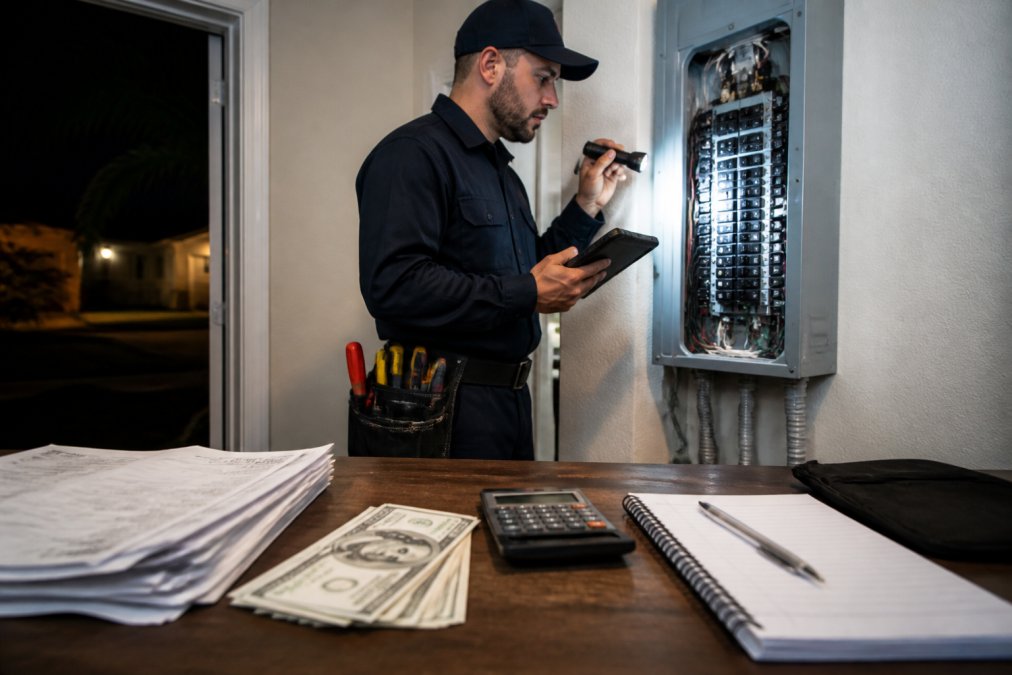
Several variables influence the final invoice, including the complexity of the repair, the age of your electrical system, the parts required, and the condition of your service panel. Because every home differs, the only reliable way to understand your cost is through a detailed on-site assessment rather than a phone estimate.
Hourly Rates vs. Flat-Rate Pricing
Electricians generally price emergency work using one of two models: an hourly rate with time-and-materials billing, or a flat-rate price agreed upon before work begins. Hourly rates are transparent but can create uncertainty if troubleshooting takes longer than expected. Flat-rate pricing gives you a fixed cost estimate for the entire repair, protecting you from surprise charges.
For homeowners worried about unexpected expenses, flat-rate pricing offers the clearest protection. A professional contractor should provide this estimate after diagnosing the issue but before starting the repair, ensuring you approve labor costs in advance.
After-Hours, Weekend, and Holiday Surcharges
Emergency work outside standard business hours carries additional surcharges reflecting the premium for immediate response. Expect higher rates for evening, overnight, weekend, and holiday calls, when a technician is pulled from personal time.
These surcharges stack on top of the base hourly rate and the emergency service call fee. While the total can feel steep, the alternative is often extended exposure to hazards or a complete power outage.
Cost Breakdown by Common Emergency Repair Type
While every emergency is unique, understanding typical cost structures for common repairs helps you budget. The figures below represent national averages for emergency calls (including the after-hours surcharge) and are a planning baseline, not a quote. Actual pricing varies by location, wiring age, and the contractor’s rate card. professional generator installation costs.
| Emergency Repair | Typical National Price Range (Emergency Call) | What Drives the Cost | Typical Time on Site |
|---|---|---|---|
| Tripping circuit breaker (single) | $250 – $450 | Diagnostic time to find the root cause (overloaded circuit vs. faulty breaker), the cost of the new breaker (standard vs. AFCI/GFCI which cost more), and the after-hours labor multiplier. | 1 – 2 hours |
| Short circuit in an outlet | $300 – $600 | The need to trace the wiring back to the junction box to find the damage, cost of rewiring a section of Romex cable, and the replacement outlet. If the short caused damage to the drywall, that is a separate repair. | 1.5 – 3 hours |
| Service panel failure (main breaker) | $1,500 – $4,000+ | This is a high-cost, high-liability job. It requires a new panel or main breaker, a permit from your local building department, and often a coordination visit from your utility provider to disconnect and reconnect service. The price escalates if your panel is outdated (e.g., Federal Pacific or Zinsco) and requires a full upgrade to meet current code. | 4 – 8 hours (often requires a follow-up inspection) |
| Power outage (single circuit) | $300 – $700 | Troubleshooting a single dead circuit is labor-intensive. The electrician must check the panel, the first outlet on the circuit, and all connections in between. The cost is driven by the time to isolate the break in the line, which could be a loose connection at a receptacle or a damaged wire behind a wall. | 2 – 4 hours |
| Burning odor from a switch or outlet | $350 – $800 | This is a fire hazard that demands a full circuit inspection. The electrician must identify the source of the heat, which often means pulling the device out and checking the wire insulation. The cost includes the inspection, the replacement of the damaged device, and potentially the cost of a thermal imaging scan to rule out hidden hot spots in the wall. | 2 – 3 hours |
Why the Price Range is So Wide
The single biggest variable is the time-of-day multiplier. A call at 3:00 AM on a Sunday carries a steeper surcharge than one at 7:00 PM on a Tuesday. The second is parts availability. A standard 20-amp breaker is common stock, but an obsolete breaker for a 1970s panel may require a special order, adding a trip fee and delaying the fix (homedepot.com). Finally, local code requirements play a role. In many jurisdictions, an outlet replacement near a water source now requires a GFCI, and a panel upgrade may require bringing the whole system up to current arc-fault code, adding significant labor (nfpa.org).
A low-ball quote for a service panel replacement should be a red flag. This is a job where the cost of a mistake is a house fire. A reputable contractor will not cut corners on permits or inspections to save you a few hundred dollars.
The ‘Time-and-Materials’ Trap on Complex Repairs
For complex diagnostics like a burning odor or a short circuit, be wary of a contractor who quotes a flat rate before opening up the walls. The true extent of the damage is often hidden. A more honest approach is a time-and-materials estimate with a cap. For example, a contractor might say, “We’ll troubleshoot for up to one hour, and the repair parts will be at cost plus 20%. The total will not exceed a pre-approved amount without your approval.” This protects you from an open-ended bill while giving the contractor flexibility to find the root cause. Always ask for this type of capped estimate in writing before authorizing diagnostic work that involves opening walls or tracing circuits.
When to Call for 24 Hour Electrical Repairs
Call for 24 hour electrical repairs when you face any condition that could cause fire, serious injury, or significant property damage before morning. This includes active sparking, smoke from fixtures, a hot breaker panel, or complete power loss during extreme weather.
A common mistake is waiting until business hours for issues that worsen overnight. Flickering lights that progress to a burning smell, or a breaker that will not stay reset, indicate deteriorating wiring that demands urgent attention. If uncertain, err on the side of safety and place the call.
Before calling, locate your main service panel and shut off the affected circuit if you can do so safely. This reduces the immediate hazard and can lower the complexity of the repair the technician performs on arrival.
How to Reduce the Cost of Emergency Electrical Services
Reducing the cost of an emergency electrical call is less about haggling at 2:00 AM and more about decisions you make before the crisis hits. Beyond preventative maintenance, two immediate levers exist when a problem occurs: understanding your insurance coverage and taking safe, damage-limiting action while you wait.
The Insurance Angle: What Your Homeowners Policy Covers
Most homeowners do not realize their standard policy may cover a portion of the emergency electrical repair bill, but only under specific circumstances. The key distinction is cause. If the failure results from a covered peril, such as a lightning strike, a utility power surge, or a fire caused by an electrical fault, your policy typically pays for the wiring repair and damaged appliances, minus your deductible.
However, if the issue is wear and tear, like a corroded connection or a rodent chewing through a wire, it is a maintenance issue and not covered. The critical step: do not authorize major repairs before calling your insurance company. If the repair likely exceeds your deductible, call your claims department before work starts. They may send their own adjuster or preferred vendor. If you authorize a panel replacement and then file a claim, the insurer may only reimburse the actual cash value of the damaged part, not the full repair cost.
Ask the electrician for a written diagnosis that states the cause of the failure (e.g., “surge damage” vs. “corroded terminals”). This documentation is essential for your insurance claim. A reputable contractor will not falsify a cause to help you get a claim paid, but they will accurately document what they see.
The ‘Wait Time’ Protocol: How to Shrink the Bill
While waiting for the technician, your actions can directly reduce the time they spend on the job, and time is money on an emergency call. The goal is to make the diagnosis as fast and safe as possible.
- Isolate the Problem, Don’t Fix It: Go to your service panel and identify which breaker controls the affected area. If tripped, do not reset it; leave it ‘off’. This tells the electrician which circuit is compromised and prevents the hazard from re-energizing.
- Clear the Work Area: Move furniture, rugs, and storage boxes away from the affected outlet, switch, or panel. The electrician needs clear access to work safely; a cluttered space slows them down.
- Document the Symptoms: Write down exactly what happened. Did you hear a pop? Did lights flicker before going out? Did you smell something burning? This history is the most valuable diagnostic tool you can provide, potentially saving 20 minutes of guesswork.
- Turn Off Sensitive Electronics: If the issue is a partial outage or flickering, unplug computers, televisions, and other sensitive electronics on other circuits to protect them from voltage fluctuations while the electrician works.
Vetting an Emergency Electrician (Before You Need One)
The single most effective cost-reduction strategy is to have a vetted contractor on speed dial before an emergency occurs. When panicking at midnight, you are in no position to compare quotes and will likely call the most expensive advertiser. Spend 15 minutes now to establish a relationship.
- Verify Licensing and Insurance: Look up your state’s licensing board to confirm the company holds a valid electrical contractor’s license. Ask for a certificate of insurance showing both general liability and workers’ compensation coverage, protecting you if the electrician is injured on your property (osha.gov).
- Ask About Their Emergency Pricing Model: Call during business hours and ask, “What is your after-hours surcharge structure? Do you quote flat-rate or time-and-materials for emergencies?” A clear, structured answer over the phone suggests a transparent bill later.
- Check for a ‘No-Trip-Fee’ Guarantee: Some companies waive the diagnostic fee if you hire them for the repair. This is a common practice, but you should confirm it applies to emergency calls.
These steps transform you from a desperate consumer into an informed buyer. You will save money and ensure the work is done safely and correctly the first time, the ultimate cost saver.
Frequently Asked Questions
Are emergency electrical rates higher than standard service calls?
Yes. Emergency electrical services cost more than standard appointments because the provider must dispatch a licensed electrician outside normal business hours. The premium reflects immediate availability, on-call technician readiness, and the need to prioritize urgent calls. You are paying for guaranteed response time, not better workmanship.
What qualifies as a true electrical emergency?
A true emergency poses an immediate safety threat: burning smells near outlets or your service panel, visible sparks, a buzzing circuit breaker that won’t stay reset, or partial power loss accompanied by a burning odor. These can indicate wiring issues that risk an electrical fire. If you have no power but no smell, sparks, or heat, it is usually a service issue, not an emergency, and a standard appointment will cost less.
Is a handyman cheaper than an emergency electrician?
A handyman may charge less per hour, but they are not qualified for emergency electrical repairs. Electrical work requires a licensed electrician who knows the electrical code and understands electrical hazards. Hiring an unlicensed worker can lead to code violations, improper repairs, and greater property damage. For issues involving your service panel, circuit breaker, or wiring, the cost difference is not worth the safety risk.
Does homeowners insurance cover emergency electrical repairs?
Often, yes. Homeowners insurance typically covers sudden and accidental electrical damage, such as a short circuit that damages wiring or a power surge that ruins appliances. It rarely covers the repair cost if the issue stems from lack of preventative maintenance or an outdated system. Check your policy and ask your provider whether the diagnostic fee and service visit are claimable. Document the damage with photos before the electrician arrives.
