


Table of Contents
- Signs You Need a New Electrical Panel
- Best Electrical Panel Upgrade Options Compared
- Smart Electrical Panel Benefits Worth Knowing
- 200 Amp Panel Upgrade Cost: What Drives the Price
- Permitting, NEC Compliance, and DIY vs. Professional Liability
- How to Choose the Right Electrical Panel Upgrade for Your Home
- Frequently Asked Questions
Last Updated: August 26, 2026
Most homeowners don’t think about their electrical panel until something goes wrong. A tripped breaker, flickering lights, or a failed home inspection suddenly makes it urgent. The Voltedge Electrical team works with Southern Florida homeowners and property managers on this problem daily: outdated electrical infrastructure creates safety risks and blocks modern upgrades like EV chargers and whole-home generators. This guide breaks down the best electrical panel upgrade options available in 2026, costs to consider, and how to choose the right path for your home.
Quick Picks:
- Best for most homes: Upgrade to a 200-amp load center, covers standard modern electrical loads
- Best for high-demand homes: 400-amp service entrance, required for whole-home electrification
- Best budget fix: Add a subpanel, expands capacity without full panel replacement
- Safety priority: Replace a fuse box with a modern circuit breaker panel immediately
Signs You Need a New Electrical Panel
An electrical panel upgrade is necessary when your current system can no longer safely handle your home’s electrical load.
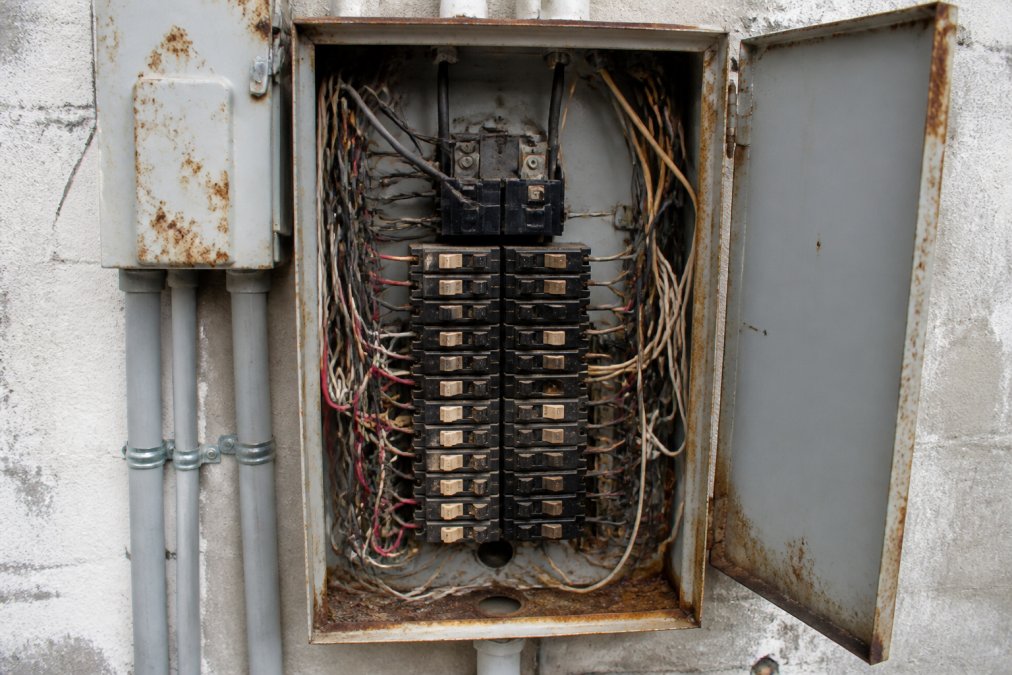
Common indicators include:
- Frequent breaker trips on circuits that aren’t overloaded
- Flickering or dimming lights when appliances start up
- Burning smell or discoloration around the panel or outlets
- Breakers that won’t reset after tripping
- A fuse box still in service instead of a modern circuit breaker panel
- Insufficient circuits for a home addition, EV charger, or heat pump installation
- Panel rated below 100 amps in a home built before 1980
A home running on 60-amp or 100-amp service was designed for a fraction of today’s loads. An EV charging station alone draws 48 amps continuously.
Step-by-Step Panel Inspection Checklist
Use this checklist before calling an electrician to communicate accurately and give the contractor a head start.
| Inspection Item | What to Look For | Action Required |
|---|---|---|
| Panel amperage rating | Label inside panel door | Note: 60A, 100A, 150A, or 200A |
| Breaker condition | Tripped, corroded, or double-tapped breakers | Document and photograph |
| Wiring type | Aluminum wiring vs. copper | Flag for electrician review |
| Fuses present | Round glass fuses instead of breakers | Schedule immediate replacement |
| Rust or moisture | Water staining, corrosion inside panel | Urgent: safety hazard |
| Available slots | Count open breaker positions | Determines if subpanel is needed |
| Grounding and bonding | Ground wire connected to rod and neutral bar | Verify during inspection |
| AFCI/GFCI coverage | Check breaker labels | NEC compliance requirement |
Take photos of your panel before the electrician arrives. A clear image of the label and wiring layout cuts diagnostic time significantly.
Never open your main panel yourself to inspect internal wiring if you’re not a licensed electrician. The service entrance cables remain energized even when the main breaker is off. Contact with these conductors is fatal.
Best Electrical Panel Upgrade Options Compared
Choosing the right upgrade depends on your current amperage, planned loads, and budget.
| Upgrade Option | Best For | Typical Amperage Added | Complexity |
|---|---|---|---|
| 200-amp load center upgrade | Most homes under 150A | Up to 200A total | Moderate |
| Fuse box replacement | Pre-1960s homes | 100A-200A | Moderate |
| Subpanel addition | Garages, additions, shops | 60A-100A branch | Low |
| 400-amp service entrance | High-demand/EV/solar homes | Up to 400A total | High |
Option 1: Upgrade to a 200-Amp Load Center
For most single-family homes, upgrading to a 200-amp load center handles standard modern loads: central air conditioning, washer and dryer, kitchen appliances, home office, and a Level 2 EV charger on a 50-amp circuit. A 200-amp panel provides 40 to 42 circuit breaker slots with arc fault circuit interrupter (AFCI) and ground fault circuit interrupter (GFCI) protection per current NEC standards.
Pros:
- Handles virtually all standard residential loads
- Supports Level 2 EV charging, heat pump installation, and whole-home surge protection
- NEC-compliant AFCI and GFCI protection included
- Widely available and well-supported by local utilities
Cons:
- May not be sufficient for multiple EV chargers or large battery storage systems
- Requires utility coordination for service entrance upgrade
If your home already has a 200-amp service entrance from the utility but an older panel, you may only need a panel replacement, not a full service upgrade. This distinction matters for cost and permitting scope.
Option 2: Replace a Fuse Box with a Modern Circuit Breaker Panel
A fuse box is outdated and a liability. Many homeowners insurance providers decline coverage or charge higher premiums for homes with active fuse boxes. The Consumer Product Safety Commission guidance on electrical safety identifies older electrical systems as a leading cause of residential fires.
Replacement involves removing the fuse box, installing a modern circuit breaker panel, and bringing grounding and bonding up to current code. This is typically done simultaneously with a service upgrade to 100 or 200 amps.
Pros:
- Eliminates fire and shock risks associated with fuse boxes
- Resettable breakers replace one-time-use fuses
- Opens the door to AFCI and GFCI protection
- Often required before selling or refinancing
Cons:
- Older homes often have aluminum wiring requiring additional remediation
- Full rewire may be necessary in some cases
If your home has a fuse box, this should be your first call.
Option 3: Add a Subpanel for Expanded Capacity
A subpanel is a secondary load center fed from the main panel, typically installed in a detached garage, home addition, or workshop. It doesn’t increase total amperage coming into your home but distributes power more efficiently and adds dedicated circuits where needed. A 60-amp or 100-amp subpanel is standard for most residential applications.
Pros:
- Lower cost than full panel replacement
- Ideal for detached structures or additions
- Reduces load on an otherwise adequate main panel
Cons:
- Does not increase total electrical service capacity
- Won’t solve the problem if the main panel is already at or near capacity
- Requires careful load calculation to avoid overloading the feeder circuit
Option 4: Upgrade to a 400-Amp Service Entrance
A 400-amp service entrance suits homes with serious power demands: multiple EV charging stations, large battery storage, whole-home generator, and heat pump for heating and cooling. It’s required for full home electrification when eliminating gas appliances.
This upgrade involves utility coordination to upgrade the service drop, replacing the meter base, and installing a 400-amp main panel. According to the U.S. Department of Energy’s home electrification guidance, homes pursuing full electrification often require service upgrades beyond 200 amps to accommodate simultaneous high-draw loads.
Pros:
- Future-proofs the home for full electrification
- Supports multiple EV chargers, solar inverters, and battery storage simultaneously
- Eliminates capacity constraints for decades
Cons:
- Highest cost and longest installation timeline
- Utility coordination required and may involve waiting periods
- Not necessary for most homes with moderate electrical loads
Smart Electrical Panel Benefits Worth Knowing
Smart electrical panels represent the most significant shift in residential power distribution in decades. A smart panel is a load center with integrated circuit-level monitoring, remote control via smartphone app, and automatic load management that prioritizes critical circuits during grid outages or peak demand periods.
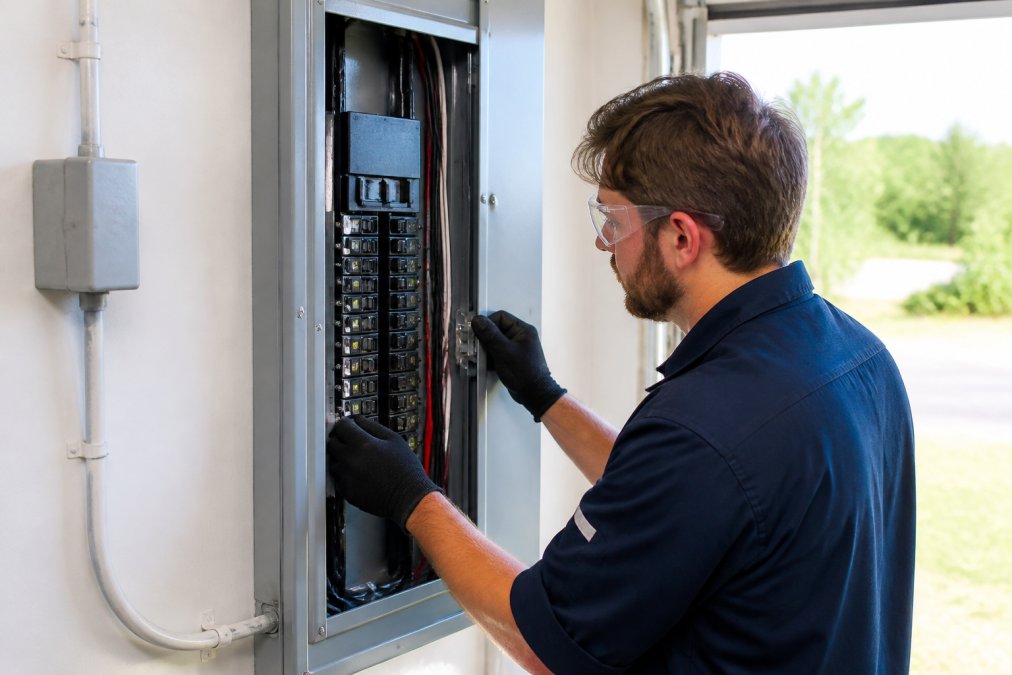
The core advantage is visibility. Traditional panels are black boxes: you know a breaker tripped, but you don’t know which appliance caused it or how much power each circuit draws. Smart panels give you circuit-level data in real time.
Key benefits include:
- Electrical load management: Automatically shed non-critical loads when the home approaches capacity
- Remote circuit control: Turn circuits on or off from anywhere
- Energy monitoring: Identify high-consumption appliances and optimize usage
- Backup power prioritization: During an outage, the panel automatically routes backup power to essential circuits first
Solar, Battery Storage, and EV Charging Integration
Smart panels are purpose-built for integrated home energy systems. A smart panel manages the connection between solar arrays, battery storage, and EV charging automatically: directing excess solar power to charge an EV or fill a battery, drawing from battery storage during peak-rate hours, and islanding the home on battery and solar during grid outages without manual intervention.
For homeowners installing an EV charging station, this integration is particularly valuable. A Level 2 charger on a 48-amp circuit can be throttled automatically during high-demand periods, preventing the panel from tripping while keeping the vehicle charged overnight.
200 Amp Panel Upgrade Cost: What Drives the Price
The 200 amp panel upgrade cost varies based on factors specific to each home. Primary cost drivers include:
- Current panel condition: Poor condition with corroded wiring or non-standard configurations requires more labor
- Service entrance scope: If the utility service drop needs upgrading, that adds coordination time and material cost
- Permit and inspection fees: Required for all panel work; fees vary by jurisdiction
- Distance from the panel to the meter: Longer runs require more wiring gauge material
- AFCI and GFCI upgrades: Adding required protection on NEC-mandated circuits adds to material cost
- Grounding and bonding remediation: Older homes frequently need grounding system upgrades to meet current code
The ENERGY STAR program guidance on electrical upgrades and rebates notes that some panel upgrades may qualify for federal tax credits under the Inflation Reduction Act when associated with energy efficiency improvements.
No legitimate electrician should offer to skip permitting on panel work. An unpermitted panel replacement creates insurance liability, problems at resale, and leaves the homeowner exposed if a fire occurs.
The 200 amp panel upgrade cost is not a fixed number. Get a site-specific quote from a licensed electrician who has physically assessed your service entrance, existing wiring, and local permit requirements.
Permitting, NEC Compliance, and DIY vs. Professional Liability
Panel work is one of the most heavily regulated residential electrical tasks. Every jurisdiction requires a permit for panel replacement or service upgrade, and an electrical inspection must follow before the panel is energized.
The National Fire Protection Association’s NFPA 70 National Electrical Code sets baseline standards for all panel installations. Local jurisdictions adopt the NEC with amendments, so regional code variations are real. Florida has adopted specific amendments affecting grounding requirements and AFCI circuit coverage.
DIY vs. Professional Liability: The honest answer
In Florida, electrical panel work requires a licensed electrical contractor. Attempting it without a license creates serious exposures: homeowners insurance may deny claims for fires or damage from unpermitted electrical work, the utility company may refuse to reconnect service, the work will fail inspection, and you face personal liability for any injury or damage resulting from the installation. Licensed electricians carry liability insurance precisely because panel work carries real risk. A licensed and insured contractor protects both the homeowner and the property.
How to Choose the Right Electrical Panel Upgrade for Your Home
The right upgrade depends on three inputs: your current capacity, planned loads, and timeline for future upgrades.
Start with a load calculation. A licensed electrician performs a load calculation based on all current and planned electrical loads. This determines whether a 200-amp service is adequate or whether a 400-amp service entrance is warranted.
Match the upgrade to your actual needs:
- 100-amp panel, modest home, no major additions planned: Upgrade to 200-amp load center
- Fuse box of any amperage: Replace immediately with a modern circuit breaker panel
- 200-amp panel, adding EV charger or heat pump: Evaluate load calculation before assuming you need more amperage; a subpanel may resolve the constraint
- Full home electrification, multiple EVs, solar plus battery storage: 400-amp service entrance or dual 200-amp configuration
- New construction or major renovation: Install a smart panel from the outset
Ask these questions before committing:
- Does my utility support 400-amp residential service at my address?
- Are there rebates or tax credits available for my upgrade type?
- What permits are required in my jurisdiction, and what’s the inspection timeline?
- Does my current wiring gauge support the planned service upgrade?
| Home Profile | Recommended Upgrade | Priority Level |
|---|---|---|
| Pre-1960s home with fuse box | Fuse box to circuit breaker panel | Urgent |
| 100A panel, standard loads | Upgrade to 200A load center | High |
| 200A panel, adding EV charger | Load calculation, then subpanel or 400A | Moderate |
| New EV + solar + battery storage | 400A service or smart panel | Planned |
| Detached garage or addition | Subpanel from existing main panel | Moderate |
The goal isn’t to buy the biggest panel available. It’s to install the right electrical infrastructure for how you actually live and plan to live over the next 20 years.
Outdated electrical panels are one of the most common reasons Southern Florida homes fail inspections, lose insurance coverage, or can’t support the upgrades homeowners actually want. Voltedge Electrical specializes in full-service panel upgrades, from the initial load calculation and permit application through installation, inspection, and utility coordination. Our licensed and insured electricians bring up-to-date knowledge of NEC compliance and Florida-specific code requirements to every project, with 24/7 availability for urgent situations. Inquire Now to get a site-specific assessment and a transparent quote for your electrical panel upgrade.
Frequently Asked Questions
How do I know if my electrical panel needs an upgrade?
Several warning signs point to a panel that needs replacing: circuit breakers that trip repeatedly, lights that flicker when appliances run, a panel that feels warm to the touch, a fuse box still in use, or a service rated below 100 amps. If your home runs heat pumps, an EV charging station, or other high-draw appliances, a load calculation by a licensed electrician will confirm whether your current electrical capacity is adequate or needs upgrading.
Is it worth upgrading to a 200-amp panel?
For most homes, yes. A 200-amp electrical service upgrade provides enough capacity to support modern appliances, EV chargers, heat pumps, and whole-house surge protection simultaneously. It also satisfies NEC compliance requirements and can improve your home’s resale value. Homes still running on 100-amp or 60-amp service often struggle with load management as energy demands increase, making the upgrade a practical long-term investment rather than an optional one.
What is the 80% rule for electrical panels?
The 80% rule means your electrical panel should not carry more than 80% of its rated amperage on a continuous basis. A 200-amp panel, for example, should not sustain more than 160 amps of continuous load. This buffer prevents overheating, protects circuit breakers from premature failure, and aligns with NEC guidelines for safe power distribution. If your home regularly approaches that threshold, a panel upgrade or subpanel addition is worth discussing with a licensed electrician.
What are the benefits of installing a smart electrical panel?
Smart electrical panels give homeowners real-time visibility into energy use at the circuit level. You can monitor kilowatt capacity, set load limits, receive alerts for unusual consumption, and integrate the panel with solar arrays, battery storage, and EV charging stations through a single app. They also simplify electrical load management and can qualify homes for utility incentives tied to demand response programs. The trade-off is a higher upfront cost compared to a standard load center.
Do I need a permit for an electrical panel upgrade?
Yes. An electrical panel upgrade requires a permit in virtually every jurisdiction, and the completed work must pass an electrical inspection before the panel is energized. The permit process ensures the installation meets NEC compliance standards and local code requirements, including proper grounding and bonding, correct wiring gauge, and arc fault circuit interrupter or ground fault circuit interrupter protection where required. A licensed electrician typically pulls the permit on your behalf and coordinates the inspection.
This article was written using GrandRanker
