


Table of Contents
- Burning Smells and Discoloration: First Signs of Trouble
- Flickering Lights and Voltage Fluctuations
- Constantly Tripped Breakers and Circuit Overload
- Sparks, Buzzing, and Arcing Sounds
- Signs of Electrical Fire Hazards You Can’t Ignore
- Finding 24 Hour Electrical Repairs When You Need Them
- Emergency Electrical Service Cost and What to Expect
- Why DIY Repairs Put Your Home at Risk
- Frequently Asked Questions
Last Updated: September 27, 2026
Burning Smells and Discoloration: First Signs of Trouble
A burning smell coming from your walls or electrical outlets is one of the clearest warning signs you need an emergency electrician. This smell often indicates overheating wires or insulation breaking down inside your walls. Don’t ignore it, it’s your home’s way of telling you something is dangerously wrong.
Discolored or darkened outlet faceplates are equally alarming. If you see brown, black, or charred marks around any outlet, the electrical system behind that wall is overheating. This discoloration means heat has already damaged the plastic and surrounding materials.
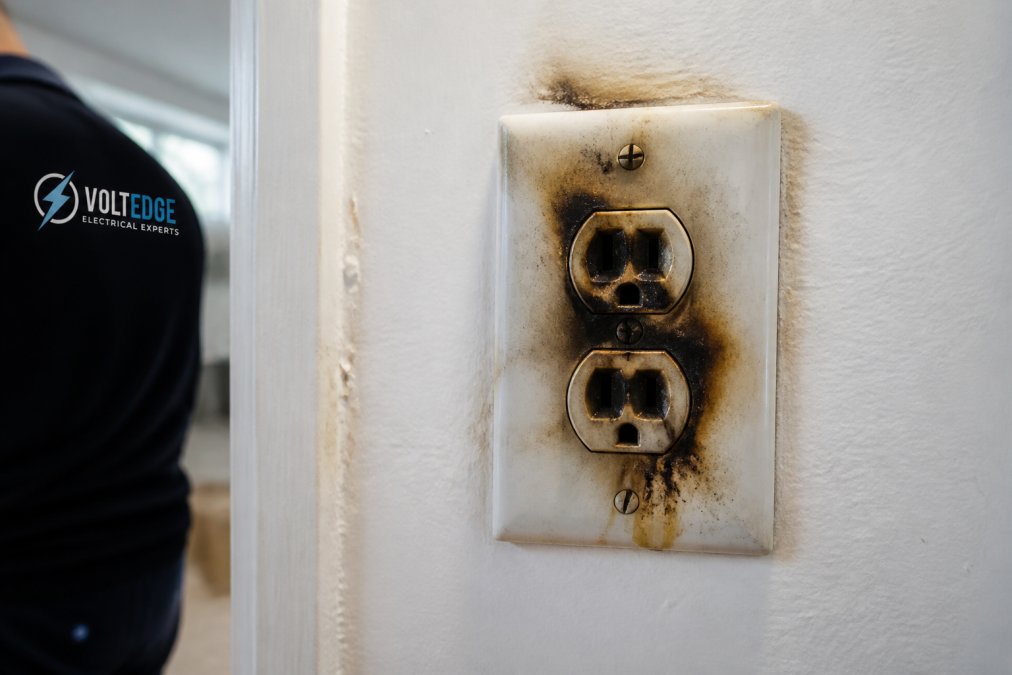
Warm faceplates that feel hot to the touch are another red flag. A normal outlet should be cool. If it’s warm, especially when nothing is plugged in, loose wiring or excessive load is creating dangerous heat buildup. Waiting longer only increases the fire risk.
Both burning smells and discoloration signal the same underlying problem: electrical arcing or insulation failure. These conditions can ignite fires within hours or days. Call an emergency electrician immediately if you notice either sign.
Flickering Lights and Voltage Fluctuations
Flickering lights might seem like a minor annoyance, but they often point to serious wiring issues. Lights that flicker consistently indicate loose connections or voltage fluctuations running through your electrical panel.
Voltage fluctuations cause more than just annoying flickers. They stress your appliances, shorten their lifespan, and can damage sensitive electronics like computers and televisions. Steady power keeps everything running safely, erratic power creates risk.
Common causes of flickering include:
- Loose wiring connections in the panel or at outlets
- Overloaded circuits pulling too much power
- Failing breakers that can’t regulate voltage properly
- Ground faults that disrupt the electrical circuit
If lights flicker when you turn on a major appliance like your air conditioner or dryer, you likely have a circuit overload. If flickering happens randomly throughout your home, the problem is probably in your main electrical panel.
Dimming lights are related but distinct from flickering. Dimming that occurs when you use certain appliances suggests those devices are drawing more power than your panel can safely deliver. This is especially common in older homes with 100-amp panels trying to support modern electrical demands.
Don’t wait for flickering to stop on its own. It won’t. An emergency electrician can diagnose whether the issue is a simple loose connection or a deeper problem with your electrical panel.
Constantly Tripped Breakers and Circuit Overload
Your circuit breaker is a safety device designed to trip when it detects too much current flowing through a circuit. A breaker that trips once in a while is normal. A breaker that trips constantly is telling you something is wrong.
Constantly tripped breakers mean your home is experiencing a circuit overload. Too many high-power devices are running on the same circuit, or there’s a short circuit somewhere in the line.
Here’s the difference:
- Circuit overload: You plug in too many devices and the breaker trips. Reset it, unplug something, and it stays on.
- Short circuit or ground fault: The breaker trips even when the circuit isn’t heavily loaded. This is more dangerous and requires professional attention.
If resetting the breaker temporarily fixes the problem, you likely have an overload issue. Rearrange your devices to different circuits or upgrade your panel to handle more power. But if the breaker trips repeatedly even after you’ve unplugged devices, call an emergency electrician, you may have a short circuit or ground fault that poses a fire risk.
Older homes with 100-amp panels are especially prone to this problem. Modern households use far more electricity than homes built in the 1970s or 1980s. A 100-amp panel that worked fine 20 years ago may be completely inadequate today. Panel upgrades are common solutions, and Voltedge Electrical provides comprehensive electrical solutions for residential and commercial clients throughout Southern Florida. Our team of certified professionals delivers high-quality workmanship, ranging from panel upgrades and lighting installations to 24/7 emergency services. We are dedicated to powering your property safely and efficiently with a focus on integrity, reliability, and future-ready innovation.
Never ignore a breaker that won’t stay reset. The breaker is protecting your home by shutting off power, forcing it to stay on or bypassing it altogether creates serious fire hazards.
Sparks, Buzzing, and Arcing Sounds
Sparks or visible arcing from an outlet or electrical panel are unmistakable danger signs. Arcing occurs when electricity jumps across a gap in the wiring, creating a spark. This spark generates extreme heat and can ignite nearby materials.
Any visible sparks demand an immediate call to an emergency electrician. Do not touch the outlet or panel. Do not attempt to investigate further. Leave the area and call for help.
Buzzing or humming sounds coming from your walls or electrical panel are equally serious. These noises indicate loose connections or arcing inside the walls where you can’t see it. The sound is electricity trying to complete a circuit across a gap.
Listen for these warning sounds:
- High-pitched buzzing from outlets or switches
- Humming that gets louder when you turn on appliances
- Crackling or popping sounds from the electrical panel
- Sizzling sounds coming from inside walls
Buzzing from a single outlet usually means that outlet has a loose connection. Buzzing from your main panel suggests a more serious problem, possibly a failing breaker or loose connection at the service entrance.
Arcing can happen inside walls where you can’t see or hear it directly. If you smell burning or notice discoloration around outlets, arcing may be occurring. The smell and discoloration are your only clues that dangerous arcing is happening behind the walls.
Never assume a buzzing outlet will fix itself. The loose connection causing the buzz will only get worse, generating more heat and increasing fire risk. Call an emergency electrician to locate and repair the problem.
Signs of Electrical Fire Hazards You Can’t Ignore
An electrical fire starts silently, often inside your walls where you can’t see it. By the time you notice smoke, the fire may have already spread significantly. Recognizing the early warning signs of electrical fire hazards can save your home and your life.
The primary signs of electrical fire hazards include:
- Burning smells with no visible source
- Discolored or charred outlet faceplates
- Warm or hot outlets and switches
- Sparks or visible arcing
- Flickering or dimming lights
- Constantly tripped breakers
- Buzzing or humming from walls or panels
Any combination of these signs means your home is in danger. Electrical fires spread quickly because they’re fueled by the wiring itself, once an arc starts, it can jump from wire to wire, consuming insulation and igniting wood framing.
Older homes built before modern electrical codes are at higher risk (CPSC Launches Program to Prevent Home Electrical Wiring System Fires).
Finding 24 Hour Electrical Repairs When You Need Them
Electrical emergencies don’t happen during business hours. They happen at 2 AM on a Sunday, or at midnight on a holiday. When you need an emergency electrician, you need one now, not tomorrow morning.
- Licensed and insured electricians (verify credentials)
- Actual 24/7 availability with fast response times
- Transparent pricing with no surprise charges
- Experience with your home’s age and electrical system type
- Positive customer reviews specifically mentioning emergency service
Emergency Electrical Service Cost and What to Expect
Emergency electrical service costs more than standard daytime repairs, that’s unavoidable. The electrician is responding outside normal business hours, and emergency calls demand priority scheduling. But you should understand what you’re paying for before work begins.
- Provide an estimate before starting major work
- Explain what the emergency call fee covers
- Break down labor, parts, and service costs separately
- Discuss payment options upfront
Why DIY Repairs Put Your Home at Risk
The urge to fix an electrical problem yourself is understandable, you want to save money and solve the problem quickly. But DIY electrical repairs are dangerous. Electricity can kill you instantly. Improper repairs can cause fires that destroy your home.
Here’s why DIY electrical work fails:
- Improper connections overheat and cause fires
- Incorrect wire gauge creates arcing and shorts
- Bypassing safety devices like breakers removes crucial protection
- Code violations create liability if someone is injured
- Insurance may not cover damage caused by unpermitted work
Frequently Asked Questions
What qualifies as an electrical emergency that needs immediate help?
An electrical emergency requires immediate attention if you notice sparks, burning smells, smoke, flames, or exposed wiring. Tripped breakers that won’t reset, partial power loss, or warm outlets also demand urgent response. Electrical shock hazards, signs of arcing, and flickering lights throughout your home indicate serious problems. Do not wait, these conditions can cause electrical fires or electrocution. Call an emergency electrician immediately rather than attempting any repairs yourself.
How do I find a 24 hour electrical repairs service I can trust?
Look for licensed and insured electricians who explicitly advertise 24/7 emergency availability. Verify their credentials with your state licensing board and confirm they carry current insurance. Ask about their response time and whether they answer calls directly or through a dispatch service. Check customer testimonials and ask for references. A reliable emergency electrician will answer your call, provide honest assessment, and explain what needs to be done before starting work.
Are there warning signs before an electrical fire happens?
Yes. Common warning signs include burning or acrid smells from outlets and walls, discolored or warm faceplates, sparks when plugging in devices, and buzzing or humming sounds from the electrical panel. Flickering lights, frequently tripped breakers, and partial power loss also indicate dangerous conditions. Outdated wiring systems and loose connections create fire hazards. If you notice any of these signs, stop using affected outlets and call an emergency electrician immediately. Do not ignore these warnings.
What should I do immediately after discovering an electrical hazard in my home?
Stop using the affected outlet or circuit immediately. Do not touch exposed wiring or attempt repairs. If you smell burning or see smoke, turn off power at the main panel if safe to do so, then evacuate and call 911. Contact an emergency electrician right away for professional diagnosis. Document any damage with photos for your insurance company. After repairs, ask your electrician about preventative maintenance and whether your home needs a full safety inspection to prevent future emergencies.
Electrical emergencies demand immediate professional attention. If you notice burning smells, discolored outlets, constantly tripped breakers, sparks, or any other warning signs, don’t wait. Voltedge Electrical’s licensed and insured electricians are available 24/7 to diagnose and repair dangerous electrical problems. We respond quickly, work transparently, and deliver the safe, reliable solutions your home needs. Contact Voltedge Electrical today for emergency electrical service you can trust.
